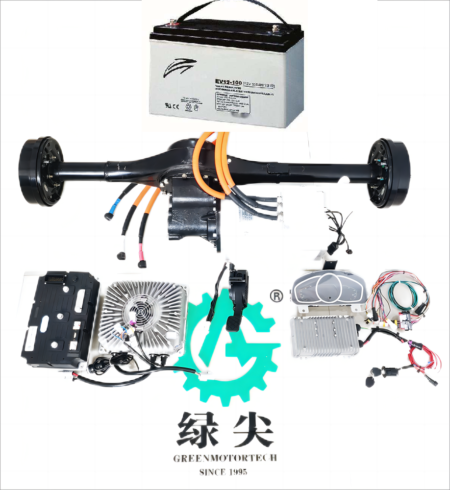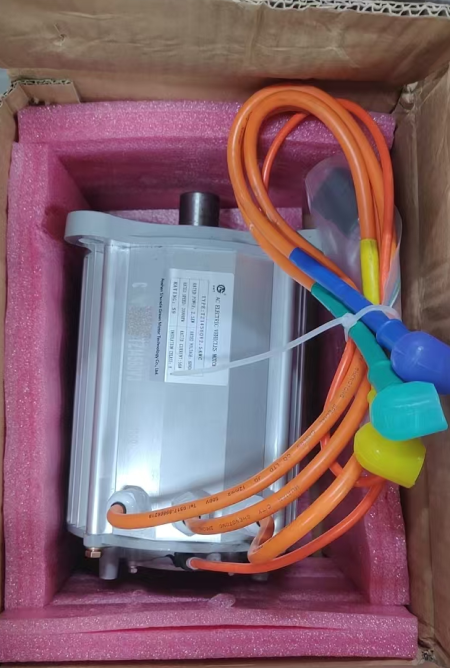
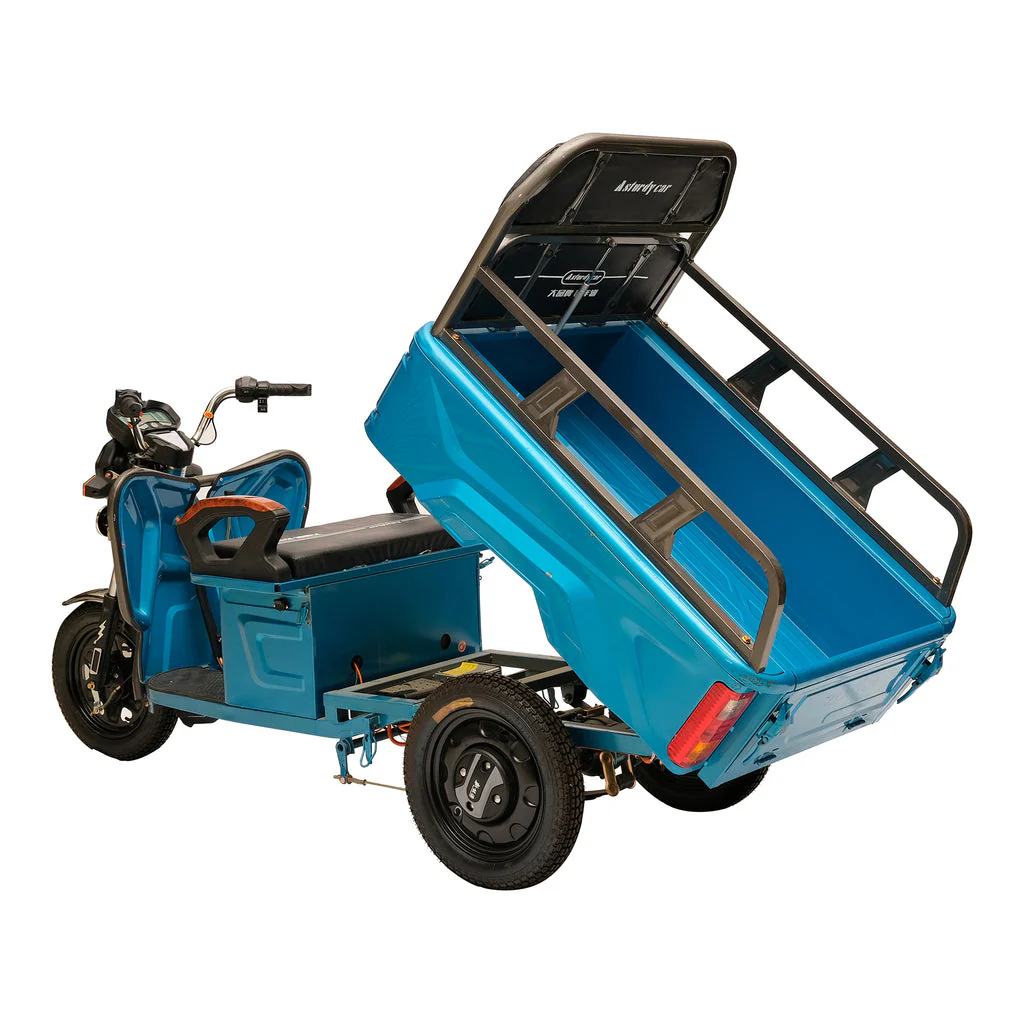
In many parts of the world, tricycles and cargo trikes are the backbone of last‑mile logistics, street vending, and daily commuting. They are affordable, agile, and deeply integrated into local economies. But most of them still run on polluting petrol or outdated lead‑acid batteries. Converting them to electric isn’t just a technical upgrade – it’s a transformation with real impact.
First, conversion gives old vehicles a second life. Instead of scrapping perfectly good frames and drivetrains, we replace only the dirty energy source with a clean, quiet electric system. That means less waste, lower cost, and faster deployment than buying a brand‑new electric trike.
Second, the economic case is powerful. For a small business owner – a vegetable vendor, a parcel courier, or a recycling collector – every rupee matters. An e‑conversion cuts daily energy costs by 60‑80%, drastically reduces maintenance (no engine oil, fewer moving parts), and pays for itself within months. That’s more profit to take home, not spend on fuel.
Finally, there’s the bigger picture: cleaner air, less noise, and a practical step toward decarbonising urban transport – without forcing everyone to buy expensive new vehicles. Conversion is inclusive, pragmatic, and scalable. It’s not about reinventing the wheel. It’s about making the wheel spin better.

Selecting the correct motor power and rear axle ratio is critical for electric tricycle performance. Unlike passenger EVs, cargo trikes usually operate under heavy-load and low-speed conditions, requiring higher wheel torque and stronger climbing capability.
For light-duty electric tricycles with a gross vehicle weight (GVW) below 800kg, a 3kW–5kW AC motor is generally sufficient. These systems normally achieve:
This configuration is suitable for passenger tricycles and light urban delivery applications.
For medium-duty cargo trikes with GVW between 800kg and 1500kg, a 7.5kW–10kW PMSM motor is recommended. PMSM systems provide higher low-speed torque and improved efficiency under frequent stop-start operation. Typical specifications include:
These systems are commonly used for logistics transport, agricultural cargo vehicles, and utility trikes.
For heavy-duty cargo trikes above 1500kg GVW, especially in mountainous or industrial environments, a 10kW–15kW liquid-cooled PMSM system is preferred. Continuous heavy-load operation generates significant motor heat, making liquid cooling important for reliability and service life. Typical parameters include:
Integrated reinforced rear axles with differential locking systems are highly recommended for these applications to improve durability and traction on rough roads.
Proper matching between motor speed, wheel diameter, and rear axle ratio not only improves climbing performance, but also reduces controller current demand, motor temperature rise, and battery energy consumption.

DC-DC converter typically falls into three voltage levels: low voltage platforms such as 48V and 72V, which are suitable for light-duty equipment and offer advantages in cost and safety but are limited in power output; medium voltage platforms including 96V, 144V, and 300V, which represent the mainstream solution and are widely used in applications such as baggage tractors, belt loaders, and small service vehicles; and high voltage platforms ranging from 300V to 600V or higher, typically used in aircraft tow tractors, large loading equipment, and high-demand systems such as GPU and air conditioning units, offering higher power capability and efficiency but with increased system complexity and cost.
We provide a full range of voltage platforms from 48V, 72V, 96V, 144V up to high-voltage solutions, allowing customers to select the most suitable configuration based on power requirements. Once the voltage and power level are defined, we further optimize the complete system architecture, including components such as DC-DC converters and other key parts, ensuring a fully matched and reliable electrification solution for each application.
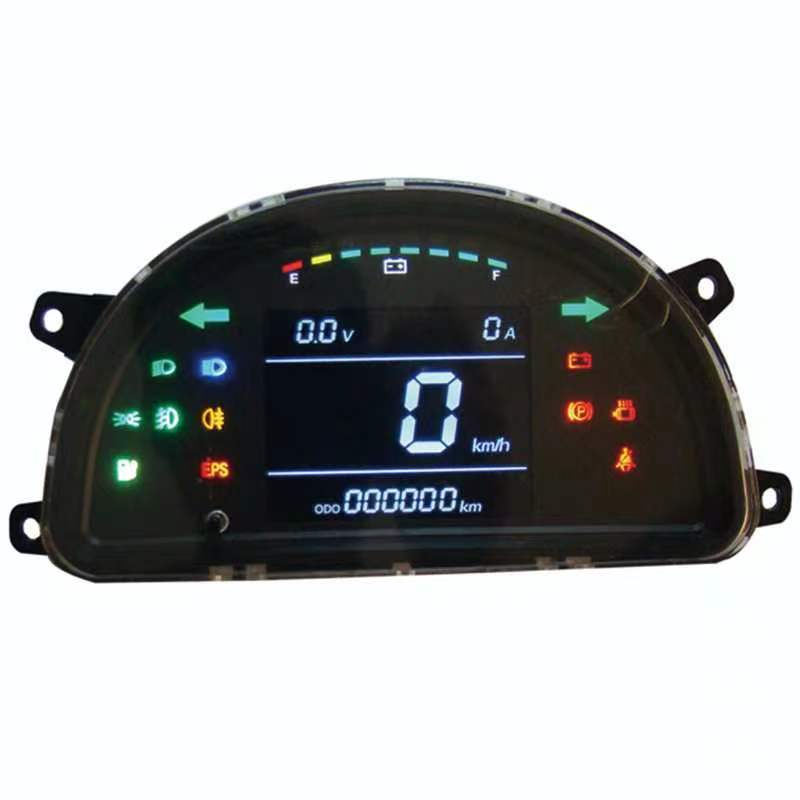
The dashboard plays an important role in electric tricycle and cargo trike conversions. A suitable dashboard should display speed, battery SOC, voltage, current, and fault warnings in real time. For heavy-duty cargo trikes, CAN communication dashboards are recommended for more accurate system monitoring. The dashboard must match the controller protocol and system voltage such as 72V or 96V. Waterproof and vibration-resistant designs are also important for commercial applications operating under rough road conditions.
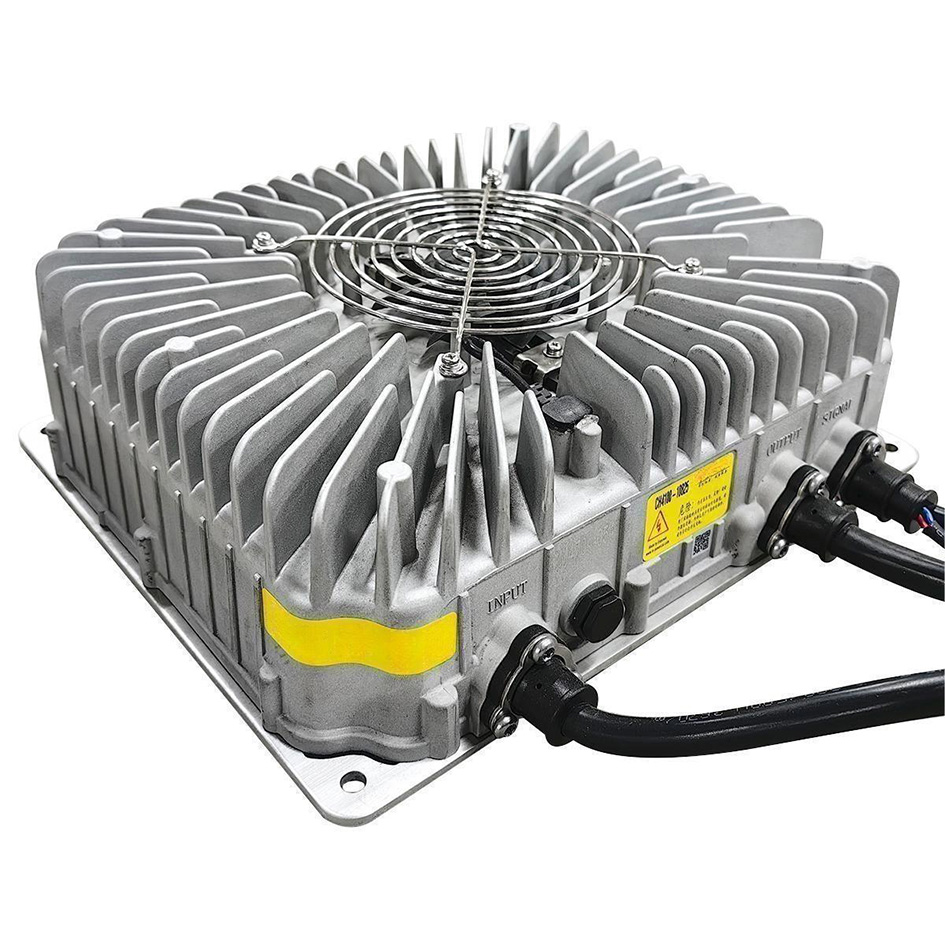
A compact on-board charger is an important component in electric tricycle and cargo trike conversion kits. Compared with external chargers, on-board chargers provide greater convenience for daily charging operations, especially for commercial delivery and utility vehicles.
Most electric tricycle systems use 72V, 96V, or 144V lithium battery platforms, requiring chargers with stable output voltage and intelligent charging protection. Compact high-frequency chargers offer higher efficiency, lower heat generation, and reduced installation space requirements.
For cargo trikes operating under harsh conditions, waterproof and vibration-resistant charger designs are highly recommended. CAN communication capability can also improve compatibility with the BMS, allowing real-time monitoring of battery temperature, charging current, and fault diagnostics.
A properly selected on-board charger improves charging safety, battery life, and overall system reliability

Battery installation space is one of the biggest challenges in electric tricycle and cargo trike conversions. Unlike factory-built EVs, conversion projects must fit the battery system within limited chassis space while maintaining proper weight distribution and cargo capacity.
To meet different power and range requirements, we provide multiple compact lithium battery pack options, including:
The 51.2V platform is suitable for light-duty passenger tricycles and short-distance delivery applications. The 73.6V system provides improved efficiency and climbing performance for medium-duty cargo transport. For heavy-duty cargo trikes and higher power motor systems, the 102.4V platform delivers lower operating current, better thermal performance, and higher drivetrain efficiency.
All battery packs use integrated BMS protection with functions including over-voltage, under-voltage, over-current, and temperature protection. Compact modular designs also simplify installation and future maintenance for commercial electric tricycle applications.


This is a customer from Japan, his project in Rwanda , who used 72v 7.5kw motor with rear axle and battery made by our company to make a tricycle for loading, max speed 60KMH no problem, climbing 40% easily. With loading 1500 tons. You can reach us to get a conversion video

You have successfully sent your inquiry, thank you, we will reply you as soon as possible.