Both 5kW and 7.5kW AC systems eliminate oil changes, exhaust, and vibration—lowering maintenance and improving the guest experience. Choose based on your route, typical load, and terrain. For mixed flat and hilly routes, the 7.5kW gives you flexibility without over‑speccing. Either way, your hotel shuttle fleet will run cleaner and quieter for years to come.

- Home
- Products
- Specific Vehicle Conversion Kits
- Conversion Kits
- Motors
- Controllers
- Drivetrain Components
- Batteries
- Chargers
- Residential Energy Storage System
- Industrial&Commerrial Energy Storage System
- Charging Stations
- DC-DC Converters
- Air Conditioning Kits
- EPS/EHPS
- Braking Systems
- Liquid Cooling Systems
- Instrumentation
- Accessories
- Electric Conversion Solution
- FAQ
- About Us
- Blog
- Video
- Contact Us
Conversion kit for resort and hotel shuttle services
HomeConversion kit for resort and hotel shuttle services

Why Convert? The Real Value of Electric Conversion for Resort & Hotel Shuttles
First, conversion elevates the guest experience through silence and comfort. Unlike noisy combustion engines, our EV conversion kits transform vintage-style shuttles into whisper-quiet vehicles. This allows guests to converse easily and enjoy the scenery without vibration or roar, perfectly matching the tranquil atmosphere of a high-end resort.
Second, the operational savings are immediate and significant. Resorts often operate shuttles continuously from early morning until late night. Electric conversions slash fuel costs by up to 70% and drastically reduce maintenance (no oil changes, fewer moving parts). The instant torque of electric motors also ensures smooth acceleration on hilly resort terrain, providing a safer, smoother ride for passengers compared to jerky gas engines.
Finally, it aligns your brand with eco-friendly values. Modern travelers prefer sustainable destinations. By electrifying your classic shuttles, you preserve their nostalgic charm while showcasing your dedication to green energy. It’s the smartest way to extend the life of your existing assets while upgrading to a cleaner, quieter, and more profitable future.
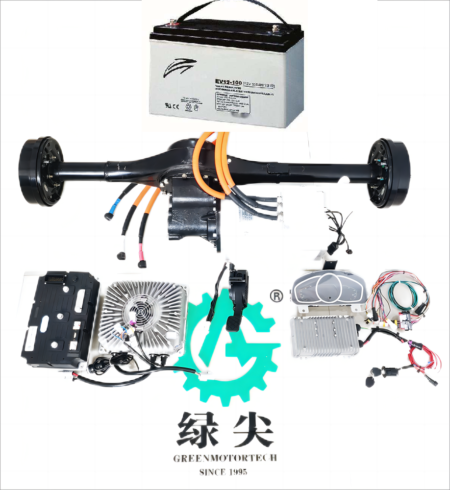
Parts Included in the Conversion kit for electric tricycles / cargo trikes
🔌 Electric Motor System
⚡ Power Electronics
🔋 Battery System
🧩 Vehicle Support Systems
We can also provide you with other modification parts, or customize modification solutions for you, please contact us

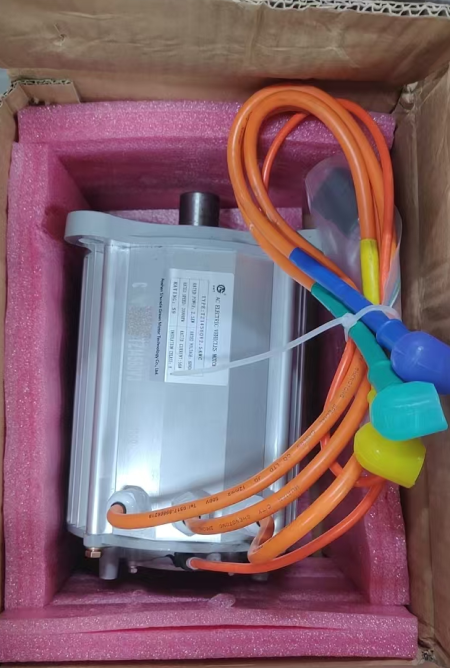
Choosing the Right 5kW or 7.5kW AC Motor for Resort & Hotel Shuttle Services
Electric shuttles are the backbone of resort and hotel transportation—quiet, clean, and guest‑friendly. Selecting the correct AC induction motor power level directly impacts passenger comfort, route efficiency, and operating costs.
When to choose a 5kW AC motor
For smaller properties with short, flat routes—such as a beachfront resort moving guests 1–2 km between lobbies and villas—a 5kW AC motor is often sufficient. It delivers smooth, low‑speed torque perfect for stop‑and‑go service. With a gross vehicle weight (GVW) under 1200 kg (e.g., 6‑passenger shuttles), you can expect a top speed of 30–35 km/h and a gradeability of 10–12%. Pair it with a rear axle ratio of 1:10 to 1:12 for responsive acceleration without jerky starts.
When to upgrade to a 7.5kW AC motor
Larger resorts with hills, longer loops (5–10 km), or 10–14 passenger shuttles need more power. A 7.5kW AC motor provides peak torque around 110–150 N·m, making light work of 15% gradients. It handles GVW up to 2000 kg, giving you a top speed of 35–45 km/h and a gradeability of 15–20%. Use a 1:12 to 1:16 axle ratio to keep motor RPM in its efficient range.

How to Choose the Right AC Motor Controller for Resort & Hotel Shuttle Services
The controller is the brain of your electric shuttle’s powertrain. For resort and hotel applications—where passenger comfort, quiet operation, and stop‑and‑go reliability are paramount—selecting the right AC induction motor controller is just as important as the motor itself.
Why AC controllers outperform DC for hospitality shuttles
Modern AC controllers use vector control algorithms to deliver smooth, jerk‑free acceleration and deceleration. This means no lurching when pulling away from the lobby or abrupt regen braking that spills coffee. Our MC3818 series, for example, offers programmable acceleration ramps and regenerative braking strength, allowing you to tune the ride for absolute guest comfort.
Match voltage and current to your motor
For 5kW – 7.5kW motors on 72V shuttles (the sweet spot for 8‑14 passenger vehicles), choose a controller rated at 400A peak current, such as the MC3818‑7240. Heavier 10‑14 passenger shuttles on longer or hillier routes benefit from the 96V 500A version (MC3818‑9640), which reduces current draw and heat while maintaining torque.
Key features for hotel fleets
-
Built‑in main contactor – simplifies wiring and improves safety.
-
IP67 protection – withstands daily washdowns and outdoor storage.
-
CAN communication – integrates seamlessly with modern dashboards and battery BMS for real‑time monitoring.
-
Natural air cooling – no fan noise, keeping shuttles whisper‑quiet.
Don’t forget tunability
A programmable controller lets you set maximum speed (e.g., 25 km/h for pedestrian‑only zones), soft start/stop ramps, and regen strength to match your resort’s specific terrain. Flat beachfront? Turn regen down. Hilly golf course? Increase it to save brake pads.
Choose a controller that matches your motor’s power class and your shuttle’s duty cycle. With the right AC controller, your hotel fleet will deliver a first‑class, silent, and smooth ride every time.

Choosing the Right Rear Axle for Resort & Hotel Shuttle EV Conversion
When converting a gasoline shuttle to electric, the rear axle is often overlooked—yet it directly affects durability, maintenance, and ride quality. For resort and hotel shuttles (8–14 passengers, GVW up to 2,500 kg), you face a choice: semi‑floating or full‑floating axle.
Semi‑floating axles are common in light‑duty shuttles. The axle shaft bears both the vehicle’s weight and driving torque. They are lighter, more affordable, and sufficient for flat resort roads with moderate loads. However, if a semi‑floating shaft breaks, the wheel can detach—a safety risk.
Full‑floating axles use separate bearings to support the vehicle’s weight; the axle shaft only transmits torque. Even if a shaft fails, the wheel stays on. They handle higher loads, rough terrain (speed bumps, cobblestones), and daily stop‑and‑go duty with less stress. The trade‑off: slightly higher cost and weight.
Our recommendation for hotel shuttles:
Choose a full‑floating rear axle if your routes include hills, speed bumps, or fully loaded passenger runs. The added safety and longevity justify the small extra investment. For very light, flat, low‑speed applications (e.g., 6‑passenger beach carts), a semi‑floating axle is acceptable.
Ensure the axle ratio matches your motor’s RPM range (typically 12:1 to 16:1 for 5–7.5kW motors) and that the axle housing is compatible with your chosen brakes. A well‑matched full‑floating axle keeps your hotel shuttle fleet safe, reliable, and low‑maintenance for years.
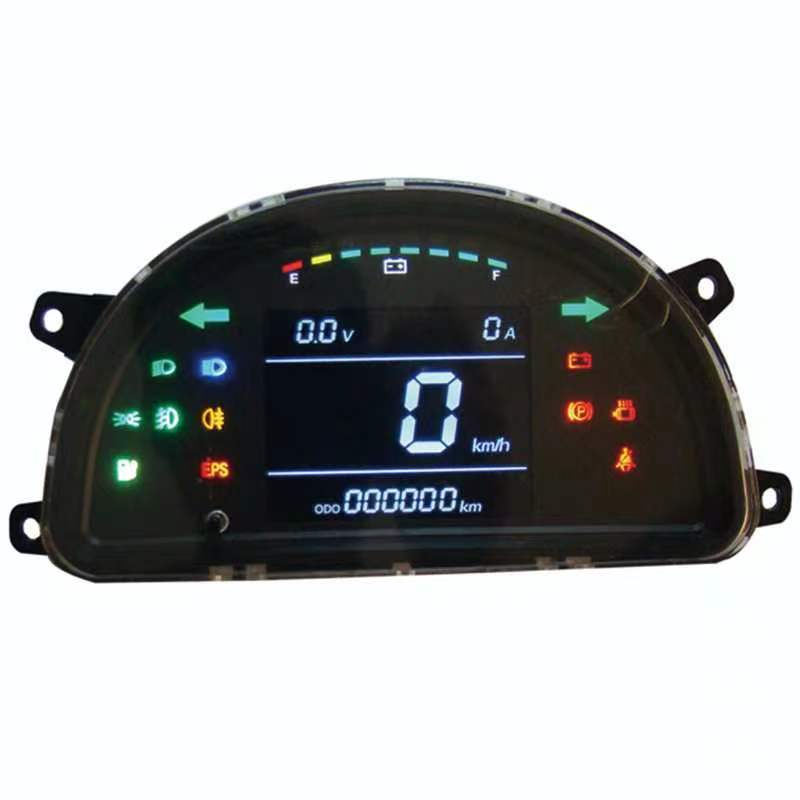
How to Choose the Right Dashboard for Resort & Hotel Shuttle EV Conversions
The most critical factor is CAN protocol compatibility. Your dashboard must speak the same CAN language as your motor controller and battery BMS. Without proper CAN matching, you’ll see incorrect SOC readings or no data at all. Always choose a CAN‑enabled dashboard that supports the J1939 or custom protocol used by your controller (e.g., MC3818 series). Many modern dashboards auto‑detect the baud rate and protocol, but verify with your supplier.
For hotel shuttles operating outdoors year‑round, prioritize IP65 waterproofing and vibration resistance. A large, backlit LCD or TFT screen (7–10 inches) ensures drivers can read data at a glance while navigating resort roads.
Extra features worth considering: odometer for maintenance scheduling, energy consumption meter for driver feedback, and optional reverse camera input for tight parking areas. A well‑integrated dashboard with seamless CAN communication keeps your shuttle fleet running efficiently and reduces driver confusion. Choose wisely—your operations team will thank you every shift.
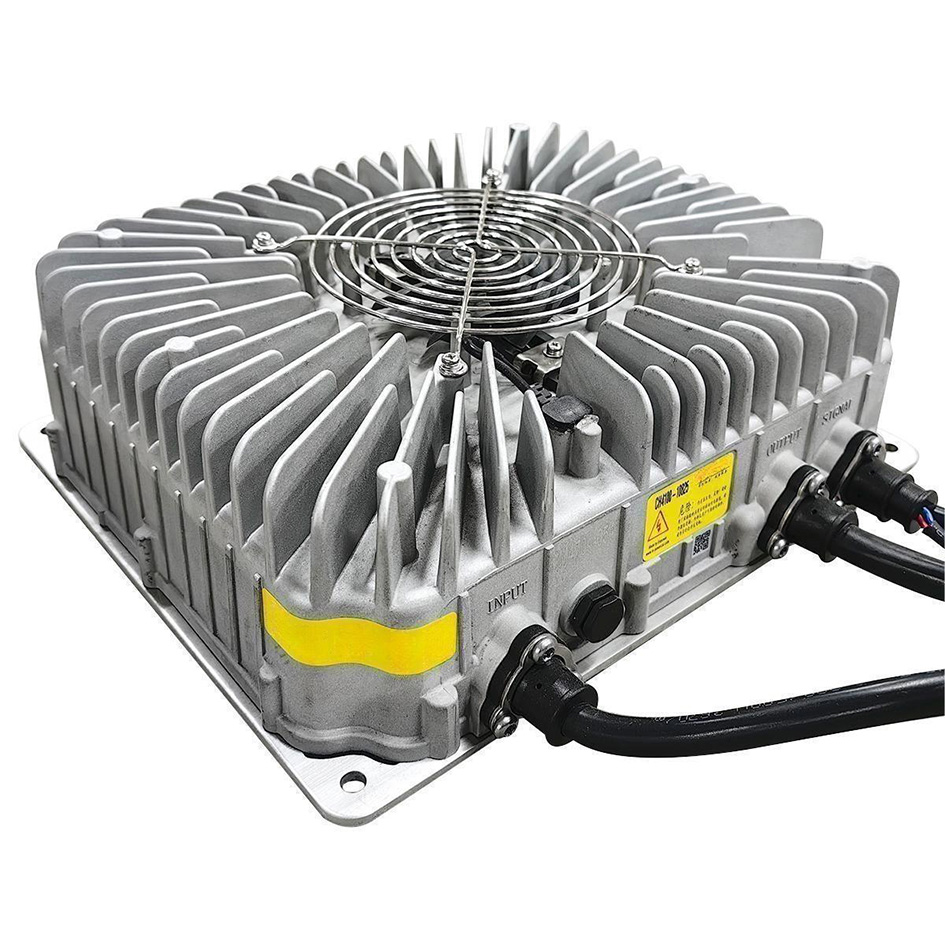
How to Choose an On-Board Charger for Resort & Hotel Shuttle EVs
A reliable on‑board charger keeps your hotel shuttle fleet ready for daily guest transport. When selecting a charger for 48V–96V lithium battery systems (common in 5kW–7.5kW shuttles), focus on three things: voltage match, durability, and CAN communication.
First, match the charger’s output voltage to your battery pack (e.g., 72V for a 72V LiFePO₄ system). A 25A–30A charger provides a full overnight recharge for 100–200Ah packs.
Second, choose a high‑frequency, compact unit with IP65 waterproofing and vibration resistance. Resort shuttles operate outdoors year‑round; the charger must survive rain, speed bumps, and daily washdowns.
Most importantly, ensure CAN bus compatibility with your battery BMS. A CAN‑enabled charger talks directly to the BMS, monitoring cell temperature, voltage, and current in real time. It automatically adjusts charging current and stops when the pack is full—preventing overcharge and extending battery life. Without proper CAN handshake, you risk incomplete charging or safety faults.
Finally, look for multi‑stage charging (CC/CV) and thermal protection. A well‑chosen on‑board charger simplifies operations: drivers just plug in at night, and the vehicle is ready by morning. Prioritize CAN integration for a safe, efficient, and worry‑free hotel shuttle fleet.

Space-Optimized Battery Packs forConversion kit for resort and hotel shuttle services
For resort and hotel shuttle services, the battery pack is the heart of your electric fleet. Choosing the right lithium pack ensures reliable daily operation, guest satisfaction, and low total cost of ownership.
Voltage selection matters – For 5kW–7.5kW shuttles carrying 8–14 passengers, 72V is the sweet spot. It balances efficiency, component cost, and safety. Lighter 6‑passenger shuttles on flat terrain can use 48V, while longer or hillier routes benefit from 96V (lower current, less heat).
Capacity determines range – A 72V 150Ah pack (≈10.8 kWh) typically delivers 60–80 km—enough for a full day of resort loops. For extended routes or multi‑shift operations, choose 200Ah–230Ah for 100–120 km range.
Successful Conversion Cases


A prominent resort and industrial park in Southeast Asia faced a dual challenge with their aging fleet of diesel-powered personnel carriers. The vehicles were creating excessive noise pollution for guests and incurring high maintenance costs. They needed a solution that preserved the classic aesthetic of their vintage shuttles while delivering modern electric performance. We provided a specialized EV conversion kit for resort shuttle buses, specifically engineered to integrate seamlessly into classic chassis designs without compromising their historical charm or structural integrity.