

As the global wave of automotive electrification sweeps across, an increasing number of internal combustion engine (ICE) vehicle owners are considering upgrading their classic cars to zero-emission electric vehicles. This modification, known as “EV Conversion,” not only extends the lifespan of classic models but also significantly reduces long-term operating costs. However, in the process of replacing the entire powertrain, there is a critical yet easily overlooked component – the Electric Car Adapter Kit.
This kit acts like a “connecting bridge,” enabling the electric motor to efficiently interface with the original transmission or drivetrain. It is the key engineering interface in the conversion process. This article will comprehensively analyze its definition, function, mainstream brands, and installation considerations, providing an in-depth understanding of this core technology in electric vehicle conversion.
I. The Rise of EV Conversion: The “Behind-the-Scenes Star” Role of the Adapter Kit
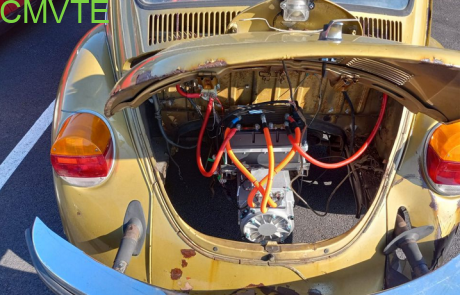
Since 2020, the electric vehicle conversion market has entered a phase of rapid development. Conversion cases are increasingly appearing among enthusiasts and businesses, involving classics like the VW Beetle, BMW E30, Jeep CJ, and Land Rover Defender.
Beyond replacing the motor and battery, many owners and conversion specialists realize that seamlessly connecting a brand-new electric motor to a decades-old mechanical transmission is not a simple task. This is precisely where the Electric Adapter Kit comes in. It fulfills the role of the connecting bridge, ensuring not only the robustness of the mechanical connection but also the efficiency and safety of power transmission.
II. What is an Electric Car Adapter Kit?
An Electric Adapter Kit is a mechanical component designed to precisely connect an electric motor to the original vehicle’s transmission or drivetrain. Its primary function is to enable the grafting of an electric powertrain onto an ICE vehicle platform without removing the entire drivetrain structure.
It typically includes the following core components:
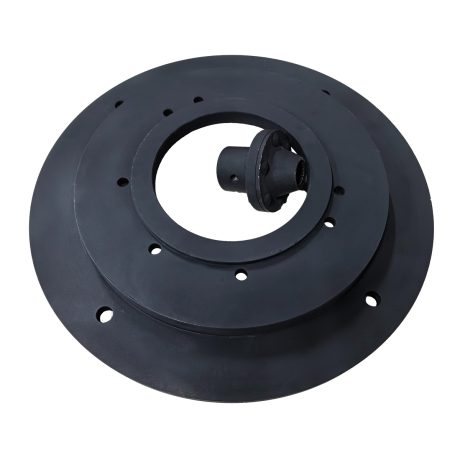
- Adapter Plate: Used to mount the electric motor to the transmission.
- Coupler/Spline Adapter: Connects the motor shaft to the transmission input shaft.
- Spacers, Seals, Mounting Bolts, etc.: Used for sealing and structural fastening.
- Torque Damping Structure (sometimes): Absorbs instantaneous shocks from the powertrain.
This design minimizes structural modifications, allowing the electric system to be compatible with the vehicle’s original mechanical systems, achieving a “semi-OEM” level power replacement.
III. Three Major Advantages of the Electric Adapter Kit in EV Conversion
1. Reduces Structural Modification and Cost Risks
In many classic car conversion cases, owners prefer to retain the original transmission system to preserve the authentic driving feel and external structure. Installing a complete “EV Conversion Kit” can be costly. However, by using an Adapter Kit, the existing transmission and mounts can be reused, requiring only the replacement of the motor and battery, leading to significant cost savings.
2. Improves Powertrain Compatibility
Adapter Kits can be customized to interface different brands, shaft lengths, and motor types – for example, connecting a Tesla motor to a BMW transmission, or a NetGain motor to a VW Beetle transmission. Without it, the motor simply couldn’t be mounted within the original structure, let alone drive the prop shaft or wheels.
3. Simplifies Installation Process and Technical Difficulty
For many DIY conversion enthusiasts, the Adapter Kit is the first step in starting their project. Many standardized Adapter Kits available on the market offer “plug-and-play” functionality, with pre-drilled holes and aligned interfaces, minimizing operational complexity and enabling successful conversions even for those without an engineering background.
IV. Comparative Analysis of Mainstream Electric Adapter Kit Brands
Currently, the main brands offering Adapter Kits for different vehicle models and motor types in the market are:
| Brand Name | Compatible Vehicles | Supported Motor Types | Power Output Range | Key Features |
|---|---|---|---|---|
| CMVTE | BMW, VW, Jeep, Honda, etc. | Tesla, NetGain, HPEVS | 30kW – 200kW | Modular interfaces, CAN bus expansion support, high precision |
| EV West | VW, Porsche, Ford | AC-50, Warp 9, Hyper9 | 50kW – 150kW | Mainstream in North America, fast delivery, wide compatibility |
| Zero EV | Mazda MX-5, BMW E36, Nissan | Tesla SDU, AC Series | 75kW – 300kW | Excellent precision, includes cooling interfaces, compatible with Tesla drive units |
| EV Europe | Citroën, Peugeot, Fiat Classics | Kostov, Enedrive | 20kW – 100kW | Specializes in European classics, offers small-batch customization |
| CANEV | Chevy, Ford, Pickup Trucks (Commercial) | Warp 11, AC-75 | 75kW – 250kW | Industrial-grade matching, suitable for heavy-duty & commercial EV conversions |
Prices vary between USD 300-900 depending on the brand, supported vehicle model, motor type, and customization service capabilities. Selection requires comprehensive consideration of your conversion motor brand and vehicle structure.
V. Technical Key Points for Installing an Adapter Kit
Although an Adapter Kit simplifies the conversion process, strict adherence to several technical points during installation is crucial:
- Coaxial Alignment: Perfect alignment between the motor shaft and the transmission input shaft is essential. Errors exceeding 0.1mm can cause rapid bearing wear.
- Installation Torque & Fastener Grade: Especially in high-power output systems, use Grade 10.9 or higher bolts and tighten them to the specified torque.
- Corrosion Protection & Cooling Structure Design: Some kits integrate coolant passages into the adapter plate; ensure adequate space is reserved for interfaces.
- Rubber Damping vs. Rigid Coupling: The former offers better vibration absorption, the latter higher efficiency. Choose based on the vehicle’s intended use.
VI. Future Trends: Standardization and Modularity
As the EV conversion market matures, Adapter Kits are evolving in the following directions:
- ISO Module Standardization: Through unified interface numbering and dimensional specifications, adapters from different brands could become interchangeable in the future, improving installation efficiency and reducing matching complexity.
- 3D Printed Manufacturing: An increasing number of manufacturers are using high-precision 3D printing to rapidly produce adapter plates and couplers, shortening lead times and reducing inventory and mold costs.
- Integrated Control Systems: Some advanced Adapter Kits now embed motor sensors or provide controller interfaces, enabling better integration with the vehicle’s CAN bus or VCU (Vehicle Control Unit) system, enhancing electronic control synergy.
These trends not only enhance the professionalism and intelligence of the kits but also lay a solid foundation for the future popularity and scaling of electric vehicle conversions.
VII. FAQ: Common Questions About Electric Car Adapter Kits
Q1: Is an Adapter Kit universally compatible with different car models?
No, not all models are universal. Adapter Kits usually need to be tailored to specific vehicle models and motor types.
Q2: Can I weld the motor directly to the drivetrain without using an Adapter Kit?
Theoretically possible, but it requires extremely high precision, carries significant risks, and is not recommended for non-professionals.
Q3: Will installing an Adapter Kit damage the original car structure?
No. The Adapter Kit is designed precisely to avoid modifications to the chassis and enhance compatibility.
VIII. Conclusion: Small Component, Significant Mission
Although the Electric Adapter Kit may not be as eye-catching as the battery or motor, it is the bridge connecting the past and the future. Without it, even the most advanced powertrain couldn’t operate within a classic car’s architecture.
For conversion enthusiasts, choosing a well-adapted, maturely engineered Adapter Kit not only saves time and money but also significantly enhances the stability and safety of the entire EV conversion project.
If you are considering an EV conversion project, the Adapter Kit is the “invisible core” for the stable operation of the entire system. Before launching your project, take the time to select a suitable adapter solution to lay a solid foundation for your electric journey.

