

Have you ever felt anxious about the limited range of electric vehicles? Have you been troubled by searching for charging piles and enduring long waits during long-distance trips?
As the global wave of electric vehicles sweeps in, consumers’ expectations for range and charging efficiency are driving a silent technological revolution.
When the 800V battery architecture replaces the traditional 400V system with the advantages of “reducing losses and improving performance”, a game about “how to make the battery charge faster and run farther” is quietly unfolding.
Today, consumers’ demand for EVs continues to rise. To compete with traditional internal combustion engine vehicles, electric vehicles must extend their range.
There are mainly two ways to solve this problem: one is to increase the battery capacity without significantly increasing the battery size or weight; the other is to improve the operating efficiency of key high-power devices such as the main drive inverter.
However, the conduction losses and switching losses of electronic components can cause huge power losses. To address this situation, automobile manufacturers have chosen to increase the battery voltage to increase the vehicle’s range.
As a result, the 800V battery architecture is becoming more and more popular and is very likely to eventually replace the currently widely used 400V technology.
For EVs, the larger the battery capacity, the longer the charging time usually is. This undoubtedly becomes a major concern for car owners, as it means facing a long wait if they need to charge the battery midway before reaching their destination.
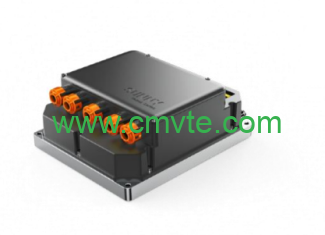
Therefore, just as it is crucial to increase the battery voltage, automobile manufacturers must also keep up with the development pace of OBCs.
The primary task is to ensure that the OBC can support the 800V battery architecture and handle higher voltages. This requires the current standard 650V rated chip components to gradually transition to chip components with a rated voltage of up to 1200V.
In addition, to speed up the battery charging rate, the market’s demand for OBCs with higher rated power is also increasing.
The main function of the OBC is to convert alternating current into direct current, enabling the car to charge using an alternating current power source such as the power grid. The output peak of the charging station will significantly limit the charging speed. Similarly, the peak power handling capacity of the OBC is also a key factor affecting the charging speed.
In the existing charging infrastructure, charging piles are divided into three levels:
Level 1 has a maximum power of 3.6kW.
Level 2 has a power range from 3.6kW to approximately 22kW, which is equivalent to the maximum capacity of the OBC.
Level 3 provides direct current and does not require the use of an OBC, with a power ranging from 50kW to 350+kW.
Although the faster Level 3 DC charging stations are already in use, their global distribution is relatively limited. Therefore, the OBC is still indispensable at this stage.
Moreover, many enterprises are working hard to improve the performance of the existing Level 2 charging infrastructure and actively promote the application of higher voltage battery technologies. It is expected that the market’s demand for more energy-efficient OBCs will continue to grow.
To speed up the charging process and meet consumers’ needs, the automotive industry has begun to shift towards more powerful three-phase OBCs. However, it should be noted that the actual charging time of electric vehicles is affected by various factors.
Charging is not a linear process. When the battery approaches full capacity (usually over 80%), the charging speed slows down to protect the battery’s health. That is to say, the fuller the battery is, the slower the speed at which it can accept electricity.
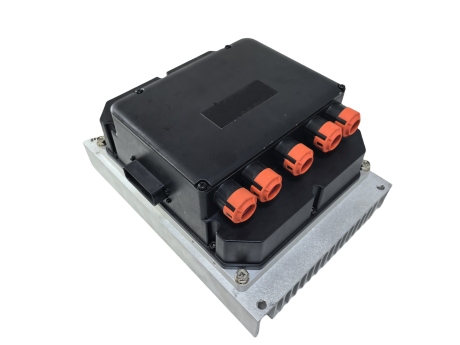
In addition, the electrification trend is gradually extending to various vehicle types such as buses, trucks, heavy vehicles, agricultural vehicles, and the marine field. The OBC will continue to develop with the goal of achieving higher power levels above 22kW.
If automobile manufacturers want to increase the charging speed at Level 2 charging stations by building more powerful OBCs, they need to use cost – effective and reliable electronic components to achieve higher voltages (800V instead of 400V) and higher power levels.
For the design of higher – performance OBCs, in addition to the two key factors of rated power and battery voltage, many other aspects need to be considered.
Thermal management is one of them. Although increasing the size and weight of the OBC can solve the heat dissipation problem to some extent, this simple method is not ideal. Because the internal space of electric vehicles is limited, it is difficult to accommodate an overly large OBC, and the increase in weight will lead to a shorter vehicle range.
In addition, factors such as packaging limitations, device costs, electromagnetic compatibility (EMC), and potential demand for bidirectional charging cannot be ignored.
Although the 800V battery architecture has many advantages such as reducing conduction losses, improving performance, and accelerating charging and power transmission speeds, it also brings a series of complex problems to designers.
In terms of device supply, it is not easy to find devices that can operate safely and stably at 800V; to ensure reliability, even qualified devices may need to be derated, that is, operate at a power lower than their maximum capacity; higher – voltage systems place higher requirements on insulation and safety functions, and safety issues become the top priority in the design; and the process of verifying high – voltage systems is more complex and often requires specialized equipment and professional knowledge.
To solve these problems, components with higher breakdown voltages are needed, especially for MOSFETs. Practice has proven that in higher – voltage applications such as OBCs that require faster MOSFET switching, using high – performance silicon carbide (SiC) components will bring many benefits. When developing the PCB layout, it is crucial to fully consider the voltage level, as it may be necessary to correspondingly increase the spacing between components and the distance between PCB traces. Similarly, other devices exposed to higher voltages, such as connectors, transformers, and capacitors, also need to have higher ratings.
Against the background of the global transition to sustainable energy sources such as solar and wind energy, the power supply of the power grid may sometimes fall short of demand.
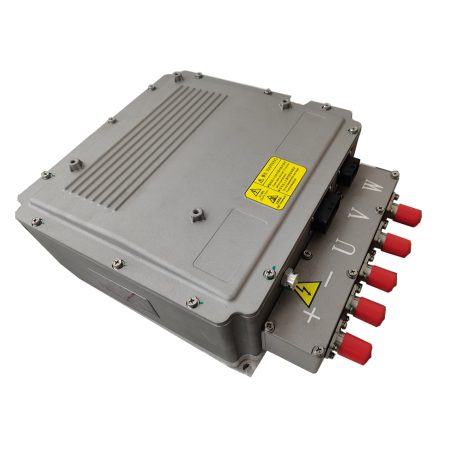
At this time, fully charged electric vehicles can serve as important energy storage resources to support the peak demand of the power grid or play a role in emergency situations when the main power supply of a building is damaged.
OBC technology is in a stage of vigorous development. It can not only help automobile manufacturers meet consumers’ needs for electric vehicles but also effectively address the challenges brought about by new technological trends such as the 800V battery architecture.
From range anxiety to the charging revolution, the co – evolution of the 800V architecture and high – performance OBCs is reshaping the value chain of electric vehicles. When we see silicon carbide devices break through the heat dissipation constraints with their “high – frequency and low – loss” characteristics, and when bidirectional charging technology turns vehicles into mobile energy storage power stations, the end of this technological marathon is not just “faster charging” but the construction of an energy ecosystem integrating “vehicles – power grid – renewable energy”.


