


First, motor type: AC vs. DC – matching drivetrain and luxury positioning
The XC60’s modern architecture and performance expectations limit motor choices to AC solutions, with DC only suitable for budget‑oriented front‑drive conversions. The key is to match the motor to the XC60’s drivetrain layout and your priorities.
⚡ AC motor – the luxury & AWD choice
AC motors are the superior choice for XC60 conversions. They align with the SUV’s luxury character and handle AWD integration seamlessly.
- Advantages: High efficiency, silent operation, smooth power delivery. Permanent magnet motors offer exceptional torque density – instant response without the noise/vibration of DC motors. They also support AWD better; inverters can sync torque distribution with the XC60’s factory electronic stability control.
- Best for: Any XC60 conversion seeking luxury, efficiency, or AWD. A single 150‑200 kW AC motor works for front‑drive conversions, delivering 300‑400 Nm – matching the stock 2.0T engine. For AWD, dual 120‑150 kW AC motors produce 400‑500 Nm combined – surpassing the XC60 T8 PHEV performance while retaining all‑weather capability.
- Key specs: Operating voltage 300‑400V, paired with 60‑80 kWh NMC/LFP battery packs. Ensure motor length ≤40 cm for FWD, and ≤35 cm per motor for AWD builds.
🔋 DC motor – budget FWD only (compromises luxury)
DC motors are an option for budget‑oriented front‑drive XC60 conversions, but they involve compromises that conflict with the SUV’s luxury positioning.
- Advantages: Lower cost, simpler wiring. An 80‑100 kW brushless DC motor delivers 250‑300 Nm – adequate for daily commuting but below XC60 stock performance.
- Best for: Strictly budget‑focused FWD XC60 conversions for city use. Paired with 48‑72V 30‑40 kWh LFP packs yields 150‑200 km range.
- Key limitations: DC motors are noisier, disturbing the XC60’s quiet cabin. They lack the torque density for AWD and cannot integrate with factory ESC – compromising safety, a core Volvo value.
Power and torque: match XC60 weight and luxury performance
The XC60’s electrified weight and luxury positioning demand a motor system that delivers smooth, ample power. Too little power makes the SUV sluggish; too much adds drivetrain stress and reduces range.
🏎️ Power: 150‑200 kW (FWD) / 240‑300 kW (AWD) for balanced performance
Front‑drive conversions: 150‑200 kW AC motor is ideal. It delivers 201‑268 hp – matching the XC60’s original T5 engine performance while maintaining 8‑10 kWh/100 km efficiency. This power level achieves 0‑100 km/h in 7‑8 seconds, preserving the “effortless” driving character.
AWD conversions: Dual 120‑150 kW AC motors (240‑300 kW total) replicate XC60 T8 performance, delivering 322‑402 hp. This configuration achieves 0‑100 km/h in 5.5‑6.5 seconds and handles steep grades or light off‑road duty. It also synchronizes with the XC60’s factory torque‑vectoring system for enhanced cornering stability.
Avoid overpowering: Do not exceed 350 kW total. XC60 stock drivetrain components cannot sustain over 550 Nm – even upgraded parts risk premature failure.
🌀 Torque: 300‑400 Nm (FWD) / 400‑500 Nm (AWD) for smooth acceleration
Front‑drive: 300‑400 Nm ensures the XC60 accelerates confidently from rest, merging safely onto highways. A 180 kW permanent magnet motor can deliver 350 Nm – a perfect balance between performance and efficiency.
AWD: 400‑500 Nm total torque provides all‑weather traction without sacrificing ride comfort. Split torque 60:40 front/rear to match the XC60’s factory AWD bias – preventing understeer and maintaining the SUV’s predictable handling.
Key tip: For AWD, choose motors with identical torque curves to avoid mismatched torque – eliminating “jerk” during acceleration and reducing drivetrain stress.
Drivetrain integration: FWD vs. AWD – preserve safety and handling
The XC60’s drivetrain layout is the biggest factor in motor selection. AWD conversions require dual motors and careful synchronization with the SUV’s electronics, while FWD conversions are simpler but still need drivetrain adaptation.
🚗 Front‑drive conversions
- Option 1: Motor‑to‑transaxle adapter – Use a custom adapter plate to bolt an AC motor to the XC60’s factory front transaxle input shaft. This retains the SUV’s original gear ratios and minimizes fabrication – ideal for clean FWD builds. Note: Automatic transaxles require a 12V electric pump to maintain oil pressure.
- Option 2: Direct drive – Replace the transaxle with a direct‑drive AC motor mounted to the front subframe. Direct drive eliminates shifting for smoother acceleration but requires modifying the front suspension to accommodate the motor – recommended only for experienced converters.
🔄 AWD conversions: dual motors with ESC sync
- Front & rear motor layout – Install a 120‑150 kW AC motor on the front subframe and a second motor on the rear subframe. Use CAN‑bus controllers to synchronize torque between the two motors – ensuring the system works with the XC60’s factory ESC, traction control, and hill‑start assist.
- Rear motor integration – The XC60’s rear subframe has space for a compact AC motor. Use custom brackets to mount the motor to the rear differential – reuse the original rear half‑shafts to save cost.
- Critical safety check – Ensure the dual‑motor system communicates with the XC60’s CAN bus to disable torque output when ESC detects wheel slip. This preserves Volvo’s safety legacy – never bypass ESC, which is vital for AWD stability on wet or icy roads.
Physical fit: navigate XC60 chassis and space constraints
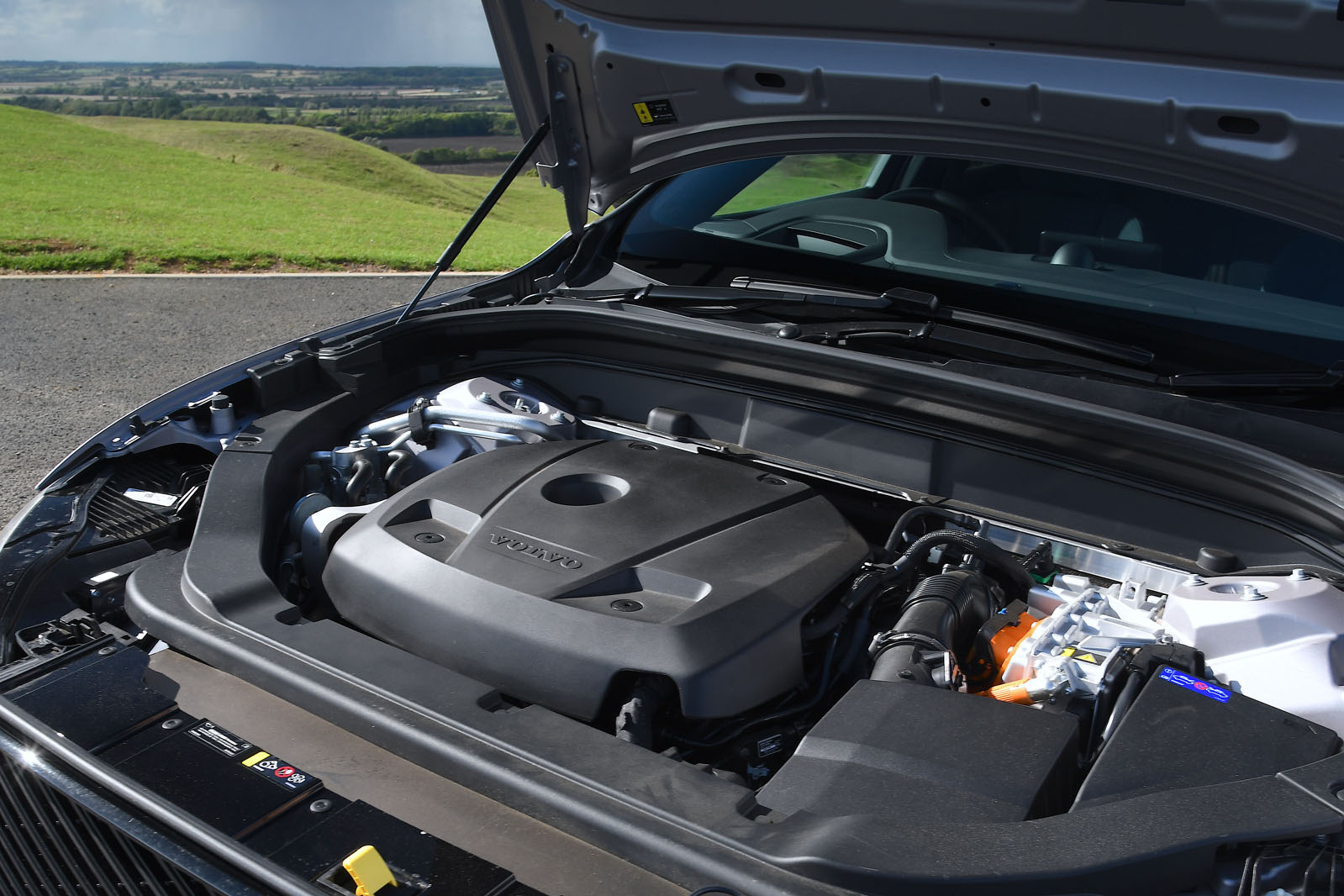
The XC60’s unibody leaves limited room for large components – especially in the engine bay and rear subframe. Motor dimensions and placement are critical for a clean, safe installation.
🏎️ Engine bay
Size limits: Front engine bay accommodates AC motors up to 40 cm length, 25 cm width, 20 cm height. Tesla Model Y rear motor and Hyundai Ioniq 5 motors fit perfectly. Avoid motors wider than 25 cm – they block the XC60’s front radiator, causing overheating.
Mounting: Use modified factory engine mounts to secure the motor to the front subframe. This preserves the SUV’s original weight balance and avoids chassis modifications – critical for maintaining crash safety.
📦 Rear subframe
Size limits: Rear subframe can house motors ≤35 cm length, ≤22 cm width, ≤18 cm height. Tesla Model 3 rear motor is dimensionally ideal – compact enough to fit without removing rear suspension components.
Weight balance: The rear motor adds 30‑40 kg to the rear axle – paired with a rear‑mounted battery pack, this maintains the XC60’s weight distribution close to factory. This prevents the excessive understeer typical of front‑heavy SUVs.
Compatibility with XC60 electronics
The XC60’s modern electronics demand a motor system that integrates without triggering errors or disabling safety features. Focus on two critical compatibility checkpoints.
🔌 CAN bus integration
- Motor controller CAN sync: Use AC motor controllers with CAN 2.0B to communicate with the XC60’s CAN bus. This allows the motor system to send data to the smart dashboard and receive signals from the ESC.
- Error prevention: Install a CAN bus filter to prevent the motor controller from sending conflicting signals to the XC60’s ECU. This avoids triggering warning lights that could disable critical safety features.
🔋 12V auxiliary power
- DC‑DC converter integration: The motor system’s HV battery pack requires a 12V DC‑DC converter to power the XC60’s auxiliary systems. Mount the converter near the front motor – ensure stable 12V ±0.5V output to avoid damaging the SUV’s sensitive electronics.
✅ Final selection checklist
- Choose motor type: AC for luxury/efficiency/safety (150‑200 kW FWD, dual 120‑150 kW AWD); DC only for budget FWD.
- Match torque: 300‑400 Nm (FWD) or 400‑500 Nm (AWD) to avoid drivetrain stress.
- Integrate drivetrain: FWD: adapter plate to transaxle or direct drive; AWD: dual motors with CAN sync to ESC.
- Check physical dimensions: front motor length ≤40 cm, rear motor length ≤35 cm.
- System sync: Ensure CAN bus compatibility and stable 12V supply to preserve safety features.
❓ FAQ – Motor for Volvo XC60 EV conversion
Can I use a Tesla drive unit in my XC60?
Yes, Tesla Model 3/Y rear drive units are popular for front‑drive XC60 conversions. The Model Y unit (200 kW) fits the front engine bay with custom mounts. For AWD, you’ll need two units – one front, one rear – and CAN integration to sync torque. Ensure you use a compatible inverter and BMS.
What is the best motor for retaining XC60 AWD and ESC?
Dual AC permanent magnet motors (e.g., 120‑150 kW each) with CAN‑bus controllers that talk to the XC60’s ESC system. Configure the controllers to respect torque limits when ESC detects slip. This keeps the SUV’s stability and traction systems fully functional.
How do I fit a motor without sacrificing the XC60’s ground clearance?
Use compact motors (Tesla Model 3/Y rear units) and mount them high in the subframe. For the front motor, raise it using custom brackets to keep the lowest point above the subframe. For the rear, use a motor that fits within the subframe’s recess. Never let any part hang below the factory crossmembers.
Will a DC motor work for a budget XC60 EV?
DC motors can work for front‑drive XC60 conversions if you accept lower performance and louder operation. Use a 80‑100 kW brushless DC motor with a 48‑72V battery. However, you’ll lose ESC integration, so you must drive conservatively in slippery conditions.
Do I need to upgrade the XC60’s half‑shafts for an AWD conversion?
For total power under 300 kW and torque under 500 Nm, the stock half‑shafts are usually sufficient. Above that, consider aftermarket reinforced shafts. For high‑power builds (350+ kW), upgrade to custom shafts with stronger CV joints to avoid failures under heavy acceleration.
How do I keep the XC60’s electronic power steering and climate control working?
These systems run on 12V. A quality DC‑DC converter (1.5‑2 kW) ensures stable voltage. For EPS, keep the original EPS module powered and connected to the CAN bus – it does not need engine RPM input. For climate control, the HVAC blower will work as long as 12V is present; the compressor (if electric) may need CAN signals, which you can simulate with a CAN bridge.
By focusing on AC motor technology, AWD compatibility, and integration with the XC60’s safety systems, you’ll select a motor system that transforms this luxury SUV into a sustainable EV – continuing Volvo’s commitment to safety and comfort while embracing electric mobility. 🇸🇪


