

Why the Miata Needs a DC-DC Converter
Your Mazda Miata's original alternator generated 12V from the engine's crankshaft. After EV conversion, the alternator goes away with the engine — but every electrical component still needs 12V power: headlights, wipers, cooling fans, radio, ECU, contactor coils, and the 12V auxiliary battery itself.
The DC-DC converter replaces the alternator. It steps down the high voltage from your traction battery (144V–400V) to a regulated 12V output that powers all your Miata's original systems.
Without it, your high-voltage battery could be fully charged but your car would not start, lights would not turn on, and the contactors would not close.
Power Requirements: What Does a Miata Actually Need?
| Component | Typical Load (Watts) | Notes |
|---|---|---|
| Headlights (low beam) | 110W | 55W each × 2 |
| Windshield wipers | 60W | Intermittent use |
| Radiator cooling fan | 200W | Runs after drives in hot weather |
| Stereo / amplifier | 50–150W | Depends on setup |
| ECU / BMS / contactors | ~50W | Always-on when car is active |
| Brake vacuum pump | 120W peak | Intermittent, during braking |
| EPS (power steering) | 180–360W peak | Only when turning |
| Total peak load | ~800–1050W | All systems on simultaneously |
A DC-DC converter rated 1000–1200W provides enough headroom for a Miata with all accessories running, plus charging the 12V auxiliary battery.
CMVTE DC-DC Converter Options
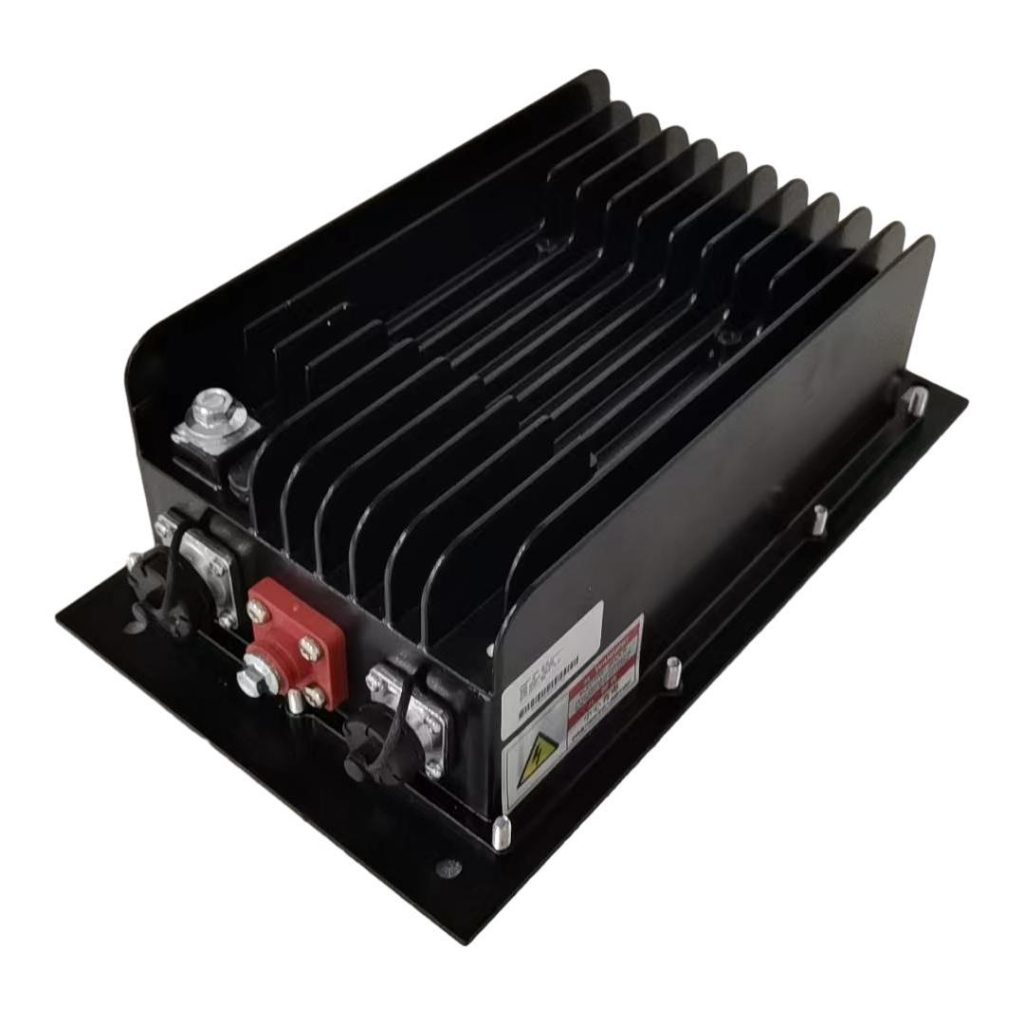
CMVTE offers DC-DC converters designed for EV conversions. Key specifications to match for a Miata:
| Specification | Requirement for Miata | Why |
|---|---|---|
| Input Voltage | Must cover battery's full range (e.g., 200–450V for a 350V pack) | Battery voltage varies from empty to full; converter must handle both |
| Output Power | 1000–1200W (80–100A at 12V) | Covers all accessories + battery charging with margin |
| Output Voltage | 13.8–14.4V DC (regulated) | Matches alternator output; charges 12V battery properly |
| Cooling | Liquid-cooled recommended for Miata engine bay | Tight engine bay has limited airflow; liquid cooling is silent and reliable |
| CAN Bus | Supported | Enables status monitoring on your dashboard |
Installation in the Miata
- Mount location: Firewall or inner fender — keep away from heat sources and potential water ingress
- High-voltage input: Connect to the main battery pack through a fused line (30–50A fuse recommended)
- 12V output: Connect directly to the auxiliary 12V battery terminals, not through the chassis
- Cooling: If air-cooled, ensure unobstructed airflow. If liquid-cooled, plumb into the motor cooling loop
- Grounding: Use thick-gauge wire (~4 AWG) for the 12V ground to avoid voltage drop
FAQ
Can I use a DC-DC converter from a Prius or other hybrid?
Yes, but OEM converters often require CAN bus handshaking to activate. CMVTE converters are designed for standalone use — they power on automatically when they detect high-voltage input.
Do I still need a 12V battery?
Yes. The 12V auxiliary battery buffers the DC-DC output and provides surge current for contactors, EPS, and vacuum pump. The converter keeps it charged, just like an alternator would.
What happens if the DC-DC converter fails while driving?
The 12V battery provides temporary power. You will lose 12V systems once the battery drains (typically 20–40 minutes depending on load). Install a low-voltage warning on your dashboard to alert you before shutdown.
Can I connect the DC-DC output directly to the 12V systems without a battery?
Not recommended. The 12V battery absorbs voltage spikes and provides stable power for contactor coils. Running without it risks damaging the converter and intermittent system behavior.
Does the converter need to be fused on the high-voltage side?
Yes — always. Install a fuse or circuit breaker rated for the converter's maximum input current on the HV line. This protects the wiring in case of a short.
Choose Your Miata DC-DC Converter
Browse CMVTE's DC-DC Converters collection to find the right unit for your Miata EV conversion.
Not sure which DC-DC converter matches your battery voltage? Contact our team with your pack voltage and total 12V load — we will recommend the correct unit.
View DC-DC Converters Contact Support
Related Miata conversion guides:

