

Explore the complete guide to Direct Torque Control for Permanent Magnet Synchronous Motors. Deeply understand how DTC provides superior torque response, its working principles, advantages and disadvantages compared to Field-Oriented Control, and how to choose the best solution for your application.
Introduction
In modern high-performance drive fields such as electric vehicles, industrial robotics, and aerospace, Permanent Magnet Synchronous Motors (PMSM) are highly favored for their high power density and efficiency. However, to fully unleash the potential of PMSM, a fast, precise, and reliable control system is essential. Among various control strategies, Direct Torque Control stands out with its extremely rapid dynamic response and relatively simple control structure, making it one of the preferred solutions for high-performance applications. This article serves as the ultimate guide to DTC, providing a comprehensive understanding of its working principles, advantages, challenges, and future development directions.
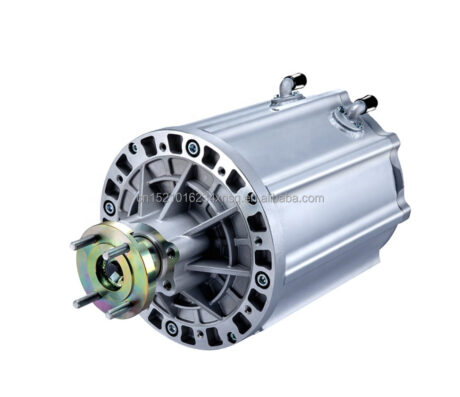
What is Direct Torque Control for PMSM?
Direct Torque Control is a "bang-bang" control method. Unlike traditional Field-Oriented Control, which requires complex coordinate transformations and modulation algorithms like "fine navigation," DTC is more like a "decisive decision-maker." Its core concept is very straightforward: by real-time monitoring of the motor's stator flux and electromagnetic torque and comparing them with given values, it directly utilizes a predefined switching table to select the optimal inverter switching state, thereby achieving direct and independent control of motor torque and flux.
How Does DTC Work?
The DTC system appears simple, but its underlying control logic is very sophisticated. Its typical control structure includes the following core components:
- Measurement and Estimation: The system measures the motor's phase currents and DC bus voltage through sensors. Based on these measurements, it directly estimates two key physical quantities in the "stator coordinate system": stator flux and electromagnetic torque.
- Hysteresis Comparators: This is the "brain" of DTC. It compares the estimated flux and torque with their reference values. The hysteresis comparator does not pursue precision to every point but controls the error within a certain tolerance range.
- Flux Hysteresis Controller: Typically two-level, outputting signals for flux to "increase" or "decrease."
- Torque Hysteresis Controller: Typically three-level, outputting signals for torque to "increase," "decrease," or "maintain."
- Switching Table: This is a pre-designed lookup table. Based on the output signals from the hysteresis comparators and the current sector position of the stator flux, it directly outputs the corresponding optimal switching combination for the inverter (such as voltage vectors in SVPWM). This switching state will directly act on the inverter to drive the motor.
This "measure -> estimate -> compare -> lookup -> drive" closed-loop process repeats at high speed in each control cycle, enabling DTC to achieve nearly instantaneous torque control.
Core Advantages and Benefits of Direct Torque Control
The unique working principle of DTC brings a series of unparalleled advantages:
- Extremely Fast Dynamic Response: Due to the omission of complex coordinate transformations and PWM modulation, DTC's response speed to torque commands is among the fastest of all control strategies. This is crucial for applications requiring frequent start-stop and rapid speed changes (such as servo stamping).
- Strong Parameter Robustness: DTC's control algorithm is insensitive to changes in motor parameters (such as rotor resistance). This means that when motor parameters change due to temperature rise during operation, DTC's performance degradation is much smaller than FOC, and system stability is higher.
- Simple Control Structure: No need for PI regulator tuning or complex modulation algorithms, making implementation simpler and computational burden relatively lower.
- Excellent Torque Control: Directly targeting torque control, it can provide extremely high starting torque and overload capacity.
Challenges and Disadvantages
No technology is perfect; traditional DTC also has some inherent challenges:
- Torque and Current Ripple: Due to the nature of hysteresis control, during steady-state operation, the motor's torque and current will have significant pulsations, especially more noticeable at low speeds. This may lead to noise, vibration, and additional losses.
- Low-Speed Performance Challenges: In the low-speed region, the back EMF is low, and the influence of stator resistance voltage drop becomes prominent, leading to decreased accuracy in flux and torque estimation and degraded control performance.
- Variable Switching Frequency: Hysteresis control causes the inverter's switching frequency to be non-fixed, which makes filter design and electromagnetic compatibility planning difficult.
Discussing these shortcomings honestly is to better solve them. Fortunately, modern control technology has found ways to improve them.

DTC vs FOC: Comprehensive Comparison
This is the most common dilemma engineers face. The table below clearly shows the core differences between the two:
| Feature | Direct Torque Control | Field-Oriented Control |
|---|---|---|
| Dynamic Response | Extremely Fast | Fast |
| Control Structure | Simple | Complex |
| Parameter Dependency | Low (Strong Robustness) | High |
| Torque Ripple | Higher | Lower |
| Steady-State Performance | Average | Excellent |
| Computational Complexity | Lower | Higher |
| Suitable Applications | High-performance dynamic applications (servo, traction) | Wide speed range smooth operation (home appliances, fans) |
Modern Improvements and Future Development of DTC
To overcome the shortcomings of traditional DTC, researchers and engineering teams like ours have developed various advanced DTC variants:
- Space Vector Modulation-based DTC: SVM-DTC replaces hysteresis control and switching tables with fixed switching frequency and SVPWM modulation. This significantly reduces torque and flux pulsations, improves steady-state performance, while retaining the core advantage of DTC's fast dynamic response.
- Model Predictive Control: MPC-DTC uses online rolling optimization to predict the next behavior of all possible switching states and selects the optimal one. It provides higher control flexibility and performance potential.
Conclusion and How to Choose
Direct Torque Control is a powerful and efficient control strategy for Permanent Magnet Synchronous Motors. With its unparalleled dynamic speed and inherent robustness, it occupies an unshakable position in high-end industrial drives and traction fields.
How to Make the Right Choice for Your Application?
- If your application scenario is: high-performance servo systems, electric vehicle main drives, industrial occasions requiring fast torque response, then DTC (especially its modern improved versions) should be your first choice.
- If you are more concerned about: low-speed smoothness, low noise, cost-sensitive applications like home appliances, then FOC may have more advantages.
Frequently Asked Questions (FAQ)
Need a High-Performance Direct Torque Control Solution for Your PMSM Application?
Our expert team has deep knowledge of DTC and its advanced variant algorithms. We can provide you with a one-stop solution from core algorithms to complete hardware drives.
Contact our engineers today to evaluate your specific needs and tailor the optimal motor control strategy for your application.

