What is the difference between BLDC and PMSM motors

Brushless DC motor and permanent magnet synchronous motor are both permanent magnet motors, but their performance is very different. In the field of electric vehicles, as the core driving component, the performance of motor directly determines the acceleration, endurance and driving experience of the vehicle.

🔄

Permanent Magnet Synchronous Motor (PMSM)

Sine-wave driven, sinusoidal back EMF

  • Stator winding: Distributed short-pitch windings
  • Magnetic field distribution: Sinusoidal
  • Control method: Field-oriented control (FOC)
  • Torque ripple: Minimal, smooth operation
  • Efficiency: Generally higher

Basic Structure: Difference in Similarity

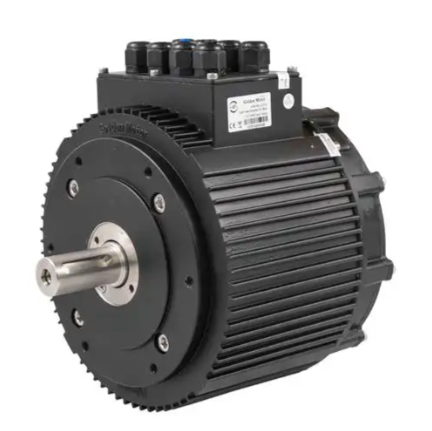
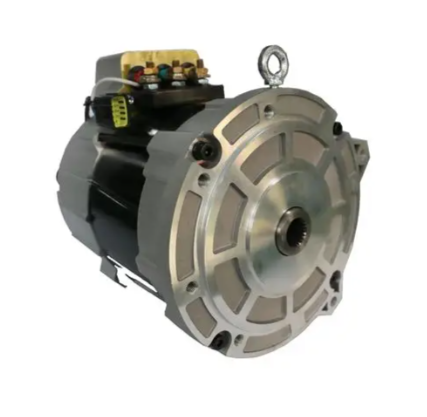
From the appearance, BLDC and PMSM are indeed very similar. Their basic structure consists of a permanent magnet rotor and a winding stator. This is one of the reasons why many people have difficulty distinguishing between the two.

However, details determine success or failure, and it is the difference in internal details that leads to the huge difference in performance between the two.

Electric Motor Structure

The stator of brushless DC motor usually adopts concentrated winding, and the rotor magnetic circuit is designed to produce trapezoidal magnetic field distribution. On the contrary, the stator of permanent magnet synchronous motor (PMSM) mostly uses distributed short-pitch windings, and the shape of rotor magnetic pole is specially optimized to produce sinusoidal magnetic field distribution.

This structural difference directly determines the back EMF waveform of the two types of motors — the BLDC presents a trapezoidal wave, while the PMSM presents a sinusoidal wave. This structural difference directly affects the installation space of the motor and the matching with the transmission system. PMSM, with its better magnetic field distribution, can often achieve higher power density, which is particularly important for space-constrained electric vehicle chassis layout.

Driving Principle: The Essential Difference Between Square Wave and Sine Wave

The driving principle is the core to distinguish between BLDC and PMSM.

The brushless DC motor is driven by a square wave (also known as the six-step commutation method), and each electrical angle cycle is divided into six steps, with each step conducting 60 degrees of electrical angle. This control method is relatively simple, which only needs to control the on-off sequence of inverter power transistors according to the rotor position signal.

Motor Control Diagram

Permanent magnet synchronous motor (PMSM) is driven by sine wave, which generates three-phase sinusoidal alternating current to control the operation of the motor. This drive requires continuous and precise control of the amplitude and phase of the current to ensure that the stator and rotor magnetic fields are always synchronized.

It is this difference in driving mode that leads to the difference in torque generation mechanism between the two. Because BLDC is driven by square wave, it has obvious torque ripple problem, especially in the case of low speed and light load. The PMSM, on the other hand, achieves smooth torque output with almost no pulsation.

For electric vehicle drivers, this difference translates directly into a different driving experience — the smooth acceleration and low-noise operation provided by PMSM are significantly better than slight vibration caused by the torque ripple of BLDC.

Control Strategies: Simple and Complex Tradeoffs

Control strategy is one of the areas where BLDC and PMSM differ the most.

The control of brushless DC motor is relatively simple, mainly using position sensor feedback or back EMF detection. The direction and magnitude of the current are controlled by detecting the position of the rotor to determine the commutation timing. This control strategy has a small amount of calculation and low requirements for the processor.

Permanent magnet synchronous motor (PMSM) usually uses complex algorithms such as field oriented control (FOC) or vector control. These algorithms need to estimate the rotor position and magnetic field direction in real time, and decompose the three-phase current into excitation component and torque component through coordinate transformation to realize decoupling control.

Control Characteristics Brushless DC Motor (BLDC) Permanent Magnet Synchronous Motor (PMSM)
Control method Six-step commutation, square-wave driven Field-oriented control, sine-wave driven
Algorithm complexity Relatively simple Complex, requiring coordinate transformation
Processor requirements Lower Higher performance controller
Position detection Hall sensor or back EMF method High precision encoder or resolver
Implementation cost Lower Higher

This difference in control strategy directly affects the cost and development difficulty of the electronic control system. Although PMSM has superior performance, it requires more powerful processors and more complex software algorithms, which increases the complexity and cost of the system.

Performance Features: Each Has Its Own Advantages

BLDC Performance

  • Large starting torque and wide speed range
  • Can run at full power at any speed
  • Good external characteristics
  • High efficiency and strong overload capacity
  • Cost-effective solution

🔄 PMSM Performance

  • Higher efficiency and power factor (close to 1)
  • Smaller stator currents
  • Higher power density
  • Lower noise and vibration
  • Smooth torque output

📈 Efficiency Comparison

PMSM motors generally maintain higher efficiency across a wider load range, especially under light load conditions where the efficiency of PMSM drops very little compared to BLDC motors.

Application Scenario: Different Market Positioning

Based on the above differences, BLDC and PMSM have found their own application scenarios in the field of new energy vehicles.

BLDC Applications

Widely used in auxiliary systems of new energy vehicles:

  • Air conditioning compressor
  • Cooling water pump
  • Fans and blowers
  • Power steering pumps
  • Window regulators

These applications require less torque smoothness, but more cost and reliability.

PMSM Applications

First choice for mainstream electric vehicle drive systems:

  • Main drive motor for EVs
  • Hybrid vehicle traction motors
  • High-performance industrial drives
  • Precision motion control systems
  • Servo drives for robotics

High efficiency directly translates into longer range, and smooth torque output provides a more comfortable driving experience.

Future Outlook: Technology Convergence and Innovation

Brushless DC motor (BLDCM) and permanent magnet synchronous motor (PMSM), as the key technologies of modern new energy vehicles, have their own unique advantages and application scenarios. BLDC occupies a place in the auxiliary system with simple control and low cost. PMSM has become the first choice of the main drive system because of its excellent performance.

There is no absolute advantage or disadvantage, only whether it is suitable for specific application requirements.

Need Help Choosing the Right Motor for Your Application?

Our experts can help you determine whether BLDC or PMSM technology is best suited for your specific requirements. Get personalized recommendations based on your performance needs, budget, and application constraints.

Get a Free Motor Selection Consultation

Frequently Asked Questions

Which is more efficient, BLDC or PMSM?
PMSM motors are generally more efficient, especially at partial loads, with power factors close to 1. BLDC motors have good efficiency but typically slightly lower than PMSM, particularly in light-load conditions.
Can a BLDC motor be controlled like a PMSM?
Yes, with advanced control algorithms, some BLDC motors can implement sinusoidal control similar to PMSM, reducing torque ripple and improving low-speed performance, though this requires more sophisticated controllers.
Which motor type is more cost-effective?
BLDC motors are generally more cost-effective due to simpler control electronics and lower manufacturing costs. PMSM motors have higher initial costs but may provide better long-term value through energy savings in high-usage applications.
What are the main applications for each motor type?
BLDC motors excel in applications where cost, reliability, and simplicity are priorities (fans, pumps, basic drives). PMSM motors are preferred for applications requiring high efficiency, smooth operation, and precise control (EV traction, industrial servos, high-end appliances).
How do I choose between BLDC and PMSM for my project?
Consider your priorities: choose BLDC for cost-sensitive applications with less stringent performance requirements. Choose PMSM when you need maximum efficiency, smooth operation, precise control, and can justify higher initial costs.
Previous Post

Comprehensive Analysis of 500-800W Permanent Magnet Synchronous Motor Selection and Application

Next Post

Microchip PMSM Control

Leave a Reply

Shopping cart