

So, you’re diving into the electrifying world of EV conversions, transforming your trusty Renault Express pickup from a fossil-fuel burner into a silent, torque-rich electric workhorse. Congratulations! While the focus often lands on batteries, motors, and controllers, one critical system demands your utmost attention: braking. In an EV conversion, the traditional engine-driven vacuum booster is left without its power source. Choosing the right vacuum braking system isn’t just about stopping; it’s about safety, pedal feel, and system reliability. Let’s navigate the options for your Express.
The Core Problem: A Vacuum Void
In the original Renault Express, the internal combustion engine naturally created manifold vacuum, which was piped to a brake booster. This booster dramatically reduces the pedal effort required to clamp the brakes. Remove the engine, and you’re left with a physically demanding, potentially unsafe manual braking system.
Solution 1: The Electric Vacuum Pump
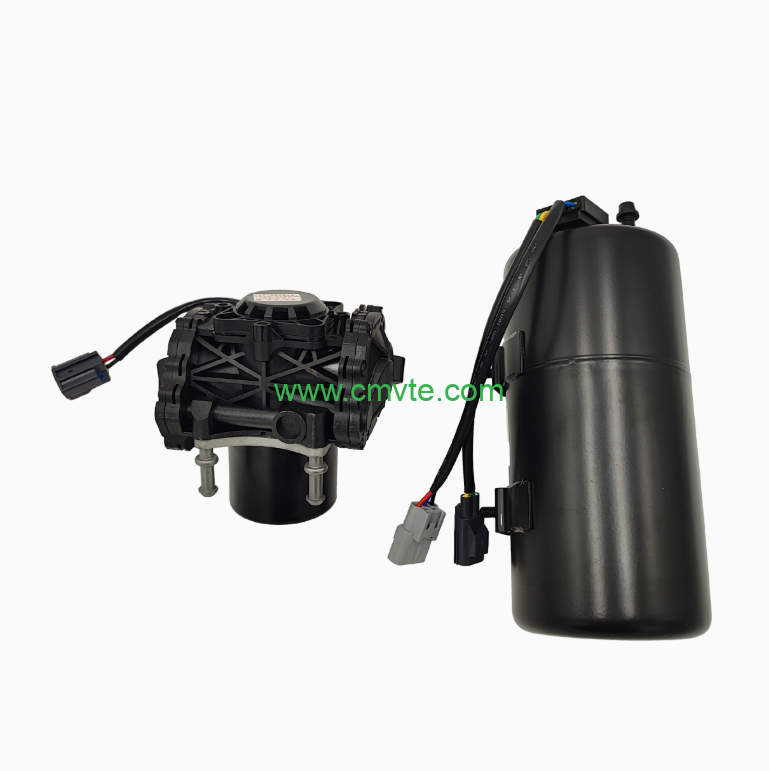
The most common and straightforward solution is a dedicated Electric Vacuum Pump (EVP).
-
How it Works: This standalone unit, often sourced from modern hybrids or aftermarket suppliers, generates vacuum on demand. It’s connected to the existing brake booster via a check valve and controlled by a pressure switch that activates it when vacuum drops below a set threshold.
-
Pros for the Express:
-
Direct Replacement: It allows you to retain the original brake booster, master cylinder, and pedal assembly, minimizing fabrication work.
-
Cost-Effective: Generally the least expensive option.
-
Simple Integration: Wiring the pump and a relay is a manageable task for most converters.
-
-
Cons:
-
Noise: The pump’s distinct “click-hum” can be audible during operation, breaking the EV silence.
-
Reliability Concerns: Some lower-quality pumps can wear out or fail. Redundancy (a second pump) is sometimes considered.
-
Parasitic Draw: It draws power from your 12V battery, though the load is typically small and intermittent.
-
Solution 2: Hydroboost (Hydraulic Brake Assist)
This robust system swaps vacuum for hydraulic pressure.
-
How it Works: It uses the pressure generated by your power steering pump. In an EV conversion, this means installing an electric power steering (EPS) pump (common on many modern cars) to provide the necessary hydraulic flow. The Hydroboost unit directly multiplies this pressure to assist braking.
-
Pros for the Express:
-
Immense Power: Provides incredibly strong and consistent braking force, ideal for a pickup that might carry loads.
-
Excellent Pedal Feel: Often praised for its firm, linear, and predictable pedal.
-
Integration Potential: If you’re adding electric power steering anyway, it’s a synergistic solution.
-
-
Cons:
-
Complexity: Requires sourcing and plumbing a hydraulic system (pump, reservoir, lines). More fabrication is involved.
-
Cost: Typically more expensive than a basic EVP setup.
-
Space: The Hydroboost unit and associated lines need room in the engine bay.
-
Solution 3: The Native EV Solution: Electronic Brake Booster
This represents the state-of-the-art, mimicking systems in Teslas and newer EVs.
-
How it Works: It eliminates the vacuum booster entirely. A servo motor, controlled by the pedal sensor, provides precise, programmable assist. It often integrates seamlessly with regenerative braking, allowing the ECU to blend friction and regen braking perfectly.
-
Pros for the Express:
-
Silent & Efficient: No pump noise and minimal parasitic drain.
-
Regen Integration: Enables the most aggressive and smooth regenerative braking, maximizing range.
-
Compact & Modern: A clean, integrated solution.
-
-
Cons:
-
High Cost & Complexity: Units from wrecked EVs (like Toyota Prius, Nissan Leaf) can be used but require significant CAN bus integration and custom calibration.
-
Expertise Required: Not for the faint of heart. It demands advanced electrical and software skills.
-
Making the Choice for Your Renault Express
Consider your budget, skills, and goals:
-
The Pragmatic Path (Budget/Simplicity): Choose a high-quality aftermarket Electric Vacuum Pump (like from Hella or Pierburg). Ensure it has a good reservoir and install it with a proper mounting bracket and noise-damping. Ideal for a straightforward, reliable conversion.
-
The Heavy-Duty Performer (Load-Carrying/Performance): If your Express will be a working vehicle, invest in a Hydroboost system. Source a unit from a junkyard SUV (like a GM Astro Van) and pair it with a modern electric power steering pump. This delivers unmatched braking confidence.
-
The Cutting-Edge Build (Range/Integration): If you’re an advanced builder focusing on maximum regen and OEM+ quality, source a brake booster from a Nissan Leaf or similar. Be prepared for a deep dive into vehicle electronics and potentially custom mounting solutions.
The Non-Negotiables:
Whichever path you choose:
-
Upgrade Your Fluid: Use high-temperature DOT 4 or DOT 5.1 fluid.
-
Inspect Everything: Replace old brake lines, hoses, and check calipers/seals while the system is apart.
-
Bench Bleed & Bleed Meticulously: Air is the enemy of good brakes.
-
Test Safely: Conduct initial tests in a controlled, empty environment.
Your Renault Express EV conversion is a journey of transformation. By carefully selecting and installing the right braking system, you ensure that the thrill of electric acceleration is perfectly matched by the confidence of a safe, powerful, and predictable stop. Power your go, but with equal care, power your stop.

