

As heavy-duty vehicle electrification accelerates, the demand for high torque low speed traction motors continues to grow. Unlike conventional industrial motors, traction motors for electric trucks, buses and rail vehicles must deliver strong starting torque, continuous power output and high efficiency under heavy load conditions.The most important thing is advances in lithium-ion batteries (higher energy density, faster charging, longer cycle life) now make electric heavy vehicles practical for long-haul and high-load applications. Battery costs have dropped by over 80% in the last decade.
What exactly does a High Torque Low Speed Traction Motor mean?
How Traction Motors Differ from Standard Electric Motors
1.Torque-Speed Characteristic
| Aspect | Traction Motor | Standard Industrial Motor |
|---|---|---|
| Startup torque | Very high (often 2–3x rated torque) | Moderate (typically 1.5–2x) |
| Constant power range | Wide (can operate at high speed with reduced torque) | Narrow (usually designed for fixed speed or small speed range) |
| Duty cycle | Highly variable (frequent starts, stops, accelerations, hills) | Steady load (continuous operation at near-constant speed) |
Traction motors are optimized for high starting torque and a wide constant power region – essential for accelerating a vehicle from standstill and maintaining power at high speed.
2.Efficiency Map
-
Traction motor: Efficiency is optimized across a wide range of speed and torque (the entire operating map), not just at one rated point. This is crucial for real-world driving cycles (e.g., WLTP, NEDC) where the motor rarely operates at full load.
-
Standard motor: Efficiency is usually specified at a single rated operating point (e.g., 100% load, rated speed). Off-design efficiency can drop significantly.
3.Power Density & Weight
-
Traction motor: High power-to-weight ratio (kW/kg). Vehicle space and weight are limited, so traction motors use advanced materials (e.g., rare-earth magnets, high-grade laminations) and compact winding designs (hairpin/rectangular wire).
-
Standard motor: Power density is secondary to cost and reliability. They are typically larger and heavier for the same power output.
Why Heavy-Duty Electric Vehicles Require High Torque at Low Speed
Heavy vehicles have very high mass (often >10 tons for trucks, >30 tons for fully loaded tractor-trailers).
According to Newton’s second law:
F=m⋅a
To achieve even a modest acceleration from standstill, a large force (torque at the wheels) is required.
Heavy vehicles frequently encounter ramps (e.g., loading docks, mountain roads, quarries, parking garages).
The torque needed to prevent rollback and climb a grade at low speed is proportional to vehicle weight and grade angle:
Twheel≈m⋅g⋅sin(θ)⋅r
*At zero or very low speed, an internal combustion engine (ICE) may stall or produce insufficient torque. An electric traction motor can deliver peak torque from 0 rpm, enabling smooth, controlled hill starts even with a full load.
Applications of High Torque Low Speed Motors
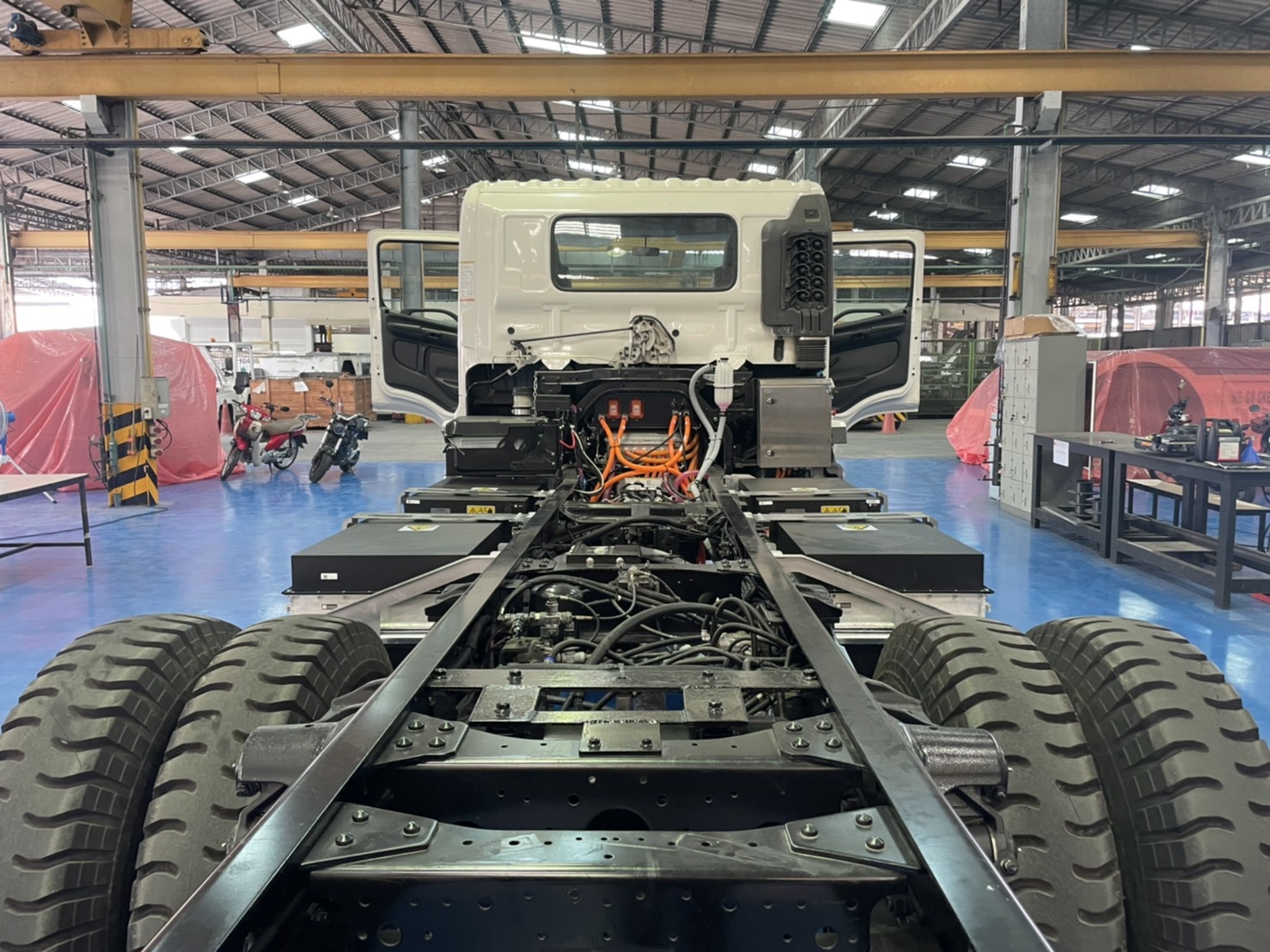
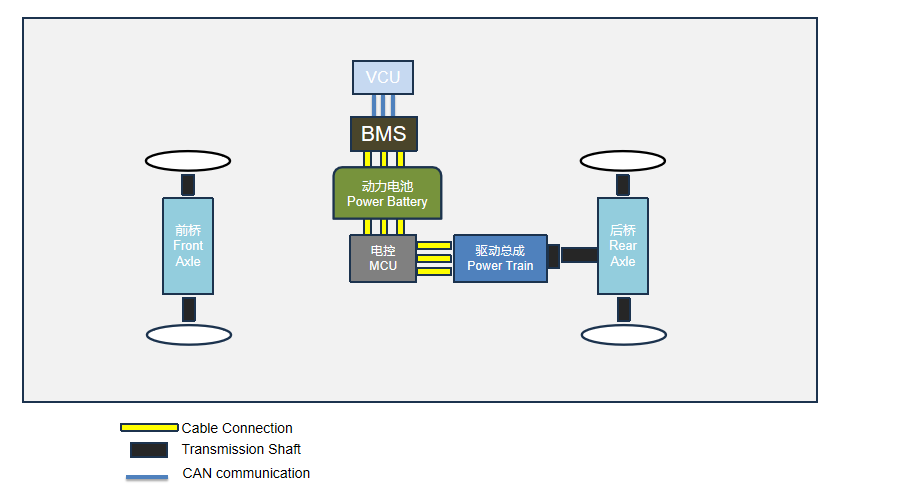
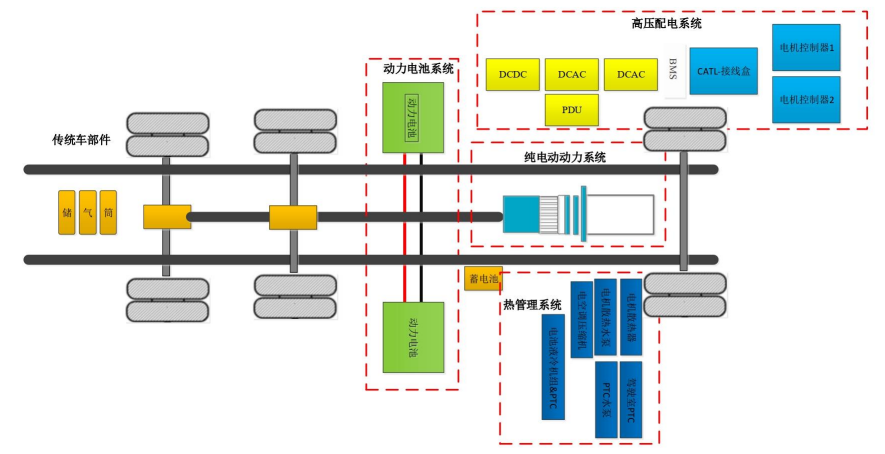
The diagram illustrates a typical pure electric vehicle (BEV) powertrain and high-voltage system. It highlights how high-torque, low-speed motors (traction motors) are integrated into the vehicle architecture. Below is a breakdown of the key components and their applications:
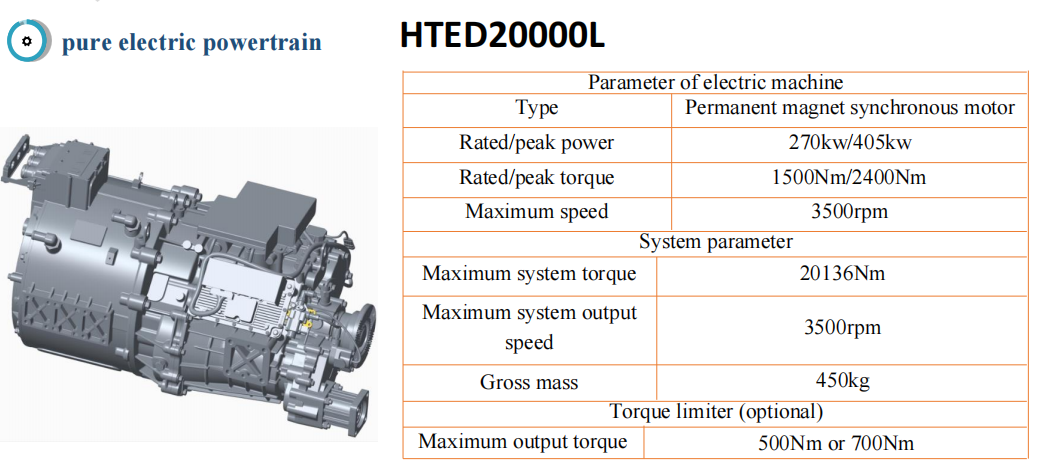
Information reference for the integrated system:
Key Factors When Selecting a Traction Motor
Electrical Characteristics
| Factor | Why It Matters |
|---|---|
| Voltage Level | Match the battery pack voltage (e.g., 400V, 800V, 144V for low‑speed vehicles). Higher voltage reduces current and copper losses but requires better insulation. |
| Current Capacity | Peak and continuous current ratings affect controller selection and busbar/cabling sizing. |
| Efficiency Map | Not just peak efficiency, but efficiency across the entire torque‑speed operating region. A wide high‑efficiency zone extends range and reduces cooling demands. |
| Power Factor (for AC motors) | Affects inverter size and grid/charging losses (less critical for battery‑fed systems but still relevant). |
To summarise: heavy‑duty vehicles demand high torque at low speed, continuous power under load, and uncompromised reliability – especially for operations like climbing steep grades, pulling heavy payloads, or working in harsh environments.
Our traction motors are engineered precisely for these challenges, delivering the performance your vehicles need to work harder and longer with lower total cost of ownership.
Let’s discuss your specific application. Share your vehicle parameters (weight, grade, duty cycle) and we will provide a tailored motor solution and quotation within 48 hours.


