

The Toyota Hilux has earned its reputation the hard way. It’s spent decades hauling heavy loads, crossing deserts, climbing muddy job sites, and proving itself as one of the world’s toughest pickup trucks.
So when owners begin thinking about electrification, one question naturally follows:
“Can I keep the truck I already trust—and simply replace what’s under the hood?”
The answer is yes.
Whether your goal is reducing fuel costs, modernizing an aging work truck, or building something completely unique, an electric conversion is becoming an increasingly popular option.
Over the years, we’ve found that almost every customer asks the same questions before starting a project. If you’re considering converting your own Hilux, chances are you’re wondering about many of the same things.
Let’s answer them.
1. Can You Really Convert a Toyota Hilux to Electric?
Absolutely.
The Hilux is actually one of the best candidates for an EV conversion thanks to its strong ladder-frame chassis, durable drivetrain, and worldwide parts availability.
Rather than replacing a perfectly good truck, many owners choose to upgrade it with a modern electric powertrain.
2. How Much Does a Toyota Hilux EV Conversion Cost?
The honest answer is: it depends.
The biggest factors include:
- Battery size
- Motor power
- Charging options
- Installation method
- Whether you build it yourself or hire a workshop
A simple fleet vehicle doesn’t need the same specification as an off-road expedition truck.
3. How Far Can an Electric Hilux Go?
Driving range depends mainly on battery capacity.
Typical examples include:
- 40kWh → around 160–200 km
- 64kWh → approximately 300 km
Driving style, terrain, payload, and weather also affect real-world range.
4. Can I Keep the Original Manual Gearbox?
Yes—and many owners do.
Keeping the gearbox preserves the familiar driving experience and often simplifies the conversion.
Others prefer direct drive for a simpler drivetrain.
Neither approach is universally better; it depends on your priorities.
5. Will the Original Gearbox Handle Electric Torque?
Yes.
Electric motors produce instant torque, but they deliver it smoothly.
The Hilux transmission was designed for demanding commercial work and is generally well suited to properly matched electric motors.
In many situations, tire grip becomes the limiting factor before gearbox strength.
6. Can I Still Use 4WD?
Yes.
If the transfer case remains in place, the factory four-wheel-drive system continues to operate normally.
That means you keep the traction and capability that made the Hilux famous.
7. Will an Electric Hilux Still Be Good Off-Road?
Absolutely.
Electric motors deliver maximum torque from zero RPM, making slow-speed crawling easier than many diesel vehicles.
Steep climbs, rocky terrain, sand, and mud can all benefit from smooth electric power delivery.
The key is using properly sealed components and protecting the battery system.
8. Can It Still Tow Heavy Loads?
Yes.
One of the biggest advantages of an electric motor is instant pulling power.
The exact towing capacity depends on motor selection, battery configuration, cooling, and local regulations, but electric torque is particularly well suited to towing.
9. What Motor Should I Choose?
There isn’t one perfect motor for every Hilux.
A light-duty farm vehicle has different requirements than a highway work truck or an off-road build.
Motor selection should consider:
- Vehicle weight
- Desired top speed
- Payload
- Climbing requirements
- Driving conditions
Choosing the right motor is about balancing power, efficiency, and reliability.
10. What Battery Size Do I Need?
Battery capacity should reflect how you actually use the vehicle.
Smaller batteries reduce cost and weight, while larger batteries increase range but also add expense.
Ask yourself one simple question:
“How far do I normally drive in one day?”
The answer usually determines the right battery.
11. Can I Fast Charge My Converted Hilux?
Yes.
Many modern conversion systems support optional CCS2 DC fast charging.
Standard AC charging is ideal for overnight charging at home or in a depot, while DC charging makes longer journeys much more practical.
12. How Long Does Charging Take?
Charging time depends on:
- Battery size
- Charger power
- Charging method
A typical 6.6kW onboard charger is ideal for overnight charging, while DC fast charging can significantly reduce charging time.
Most owners simply plug in after work and start each morning with a full battery.
13. How Long Does the Conversion Take?
If all parts are ready:
- Professional workshop: around 2–3 weeks
- Experienced DIY builder: around 4–6 weeks
Complex custom fabrication may require additional time.
Good planning usually saves more time than rushing the installation.
14. Can I Convert My Hilux Myself?
Yes—if you have the right experience.
Mechanical work is only part of the project.
You’ll also need to understand:
- High-voltage safety
- Wiring
- Motor controllers
- Battery management systems
- Vehicle integration
Many owners successfully complete DIY conversions, but professional support can make the process much smoother.
🎥 See a Real Hilux EV Conversion in Progress
Reading about EV conversions is one thing—seeing one come together is another.
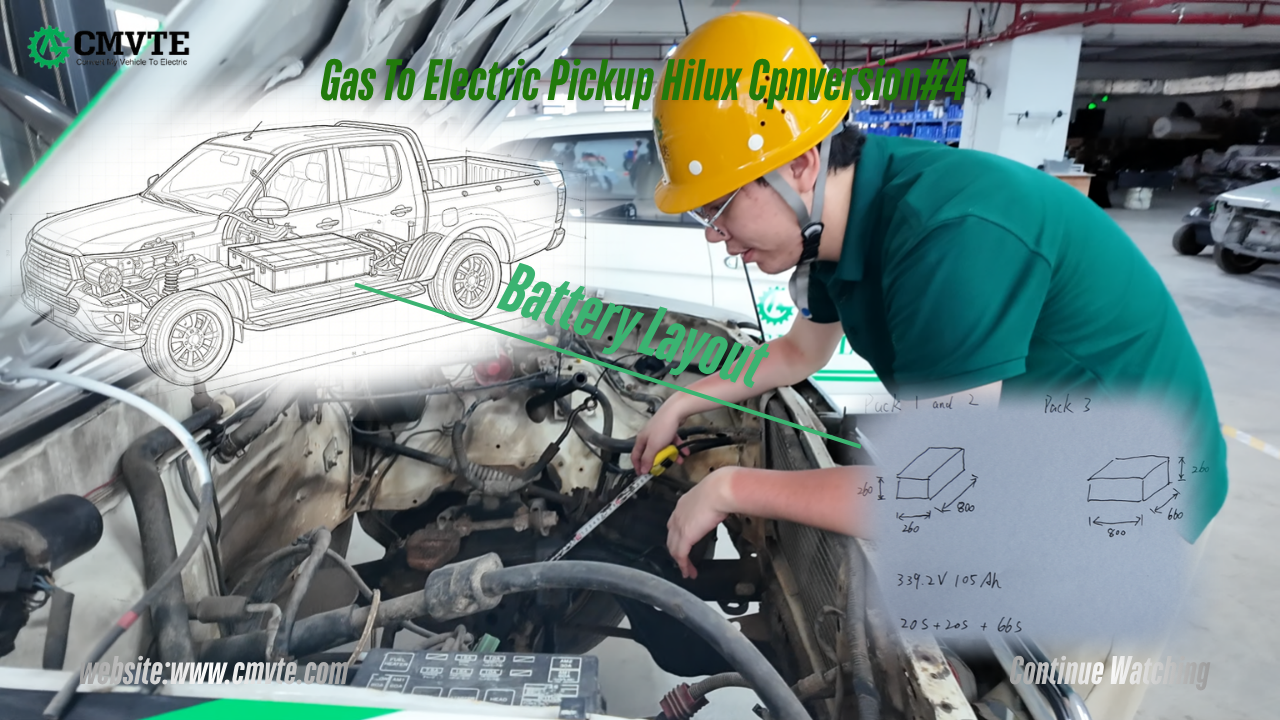
We’re documenting our own Toyota Hilux EV conversion step by step, from removing the diesel drivetrain to installing the electric powertrain, battery system, and testing.
▶ Watch the Hilux EV Conversion Diary on YouTube: https://www.youtube.com/watch?v=veaQney9N-w&t=105s
15. Is an Electric Hilux Safe?
Yes—when designed correctly.
Modern conversion systems include:
- High-voltage isolation
- Battery Management System (BMS)
- Emergency disconnects
- Waterproof electrical components
- Safety interlocks
Like any vehicle, safety depends on quality engineering and proper installation.
16. Does It Have Regenerative Braking?
Yes.
When you lift off the accelerator, the electric motor can recover energy and send it back to the battery.
Benefits include:
- Increased driving range
- Reduced brake wear
- Better efficiency in city driving
17. Will the Conversion Make the Truck Heavier?
Usually—but not dramatically.
Battery systems add weight, while removing the engine, fuel system, and exhaust removes a significant amount as well.
A properly designed conversion keeps axle loads and weight distribution within acceptable limits.
18. Does an Electric Hilux Need Less Maintenance?
Generally, yes.
Electric powertrains eliminate many traditional maintenance items, including:
- Engine oil changes
- Fuel filters
- Timing belts
- Exhaust systems
Regular inspections, cooling systems, suspension, brakes, and tires are still important.
19. Is It Legal to Convert a Hilux to Electric?
That depends on where you live.
Many countries allow electric vehicle conversions, but requirements vary.
You may need:
- Engineering approval
- Vehicle inspection
- Registration updates
- Compliance with local electrical and safety regulations
Always check local rules before beginning your project.
20. Is a Toyota Hilux EV Conversion Worth It?
If you’re simply looking for the cheapest electric vehicle available, buying a used EV may make more sense.
But if you already own a Hilux you trust, want to reduce operating costs, or need a customized electric work truck, converting your existing vehicle can be an excellent investment.
You keep the vehicle you know while giving it a completely new driving experience.
For many owners, that’s the biggest advantage of all.
Final Thoughts
Every Hilux has a story.
Some have spent years on farms. Others have crossed deserts, worked on construction sites, or carried businesses through thousands of kilometres of hard work.
An electric conversion doesn’t erase that history.
It simply starts the next chapter.
Whether you’re still comparing options or already planning your project, understanding these 20 questions is the best place to begin. And when you’re ready to take the next step, choosing the right motor, battery, and charging system will make all the difference.
Reach us by [email protected] to get Hilux conversion preliminary BOM and budget.


