

Introduction to Vehicle-to-Everything (V2X) Technologies
The external discharge function of electric vehicles generally has four modes: V2L, V2V, V2G and V2H. These technologies represent different ways that electric vehicles can interact with external loads, other vehicles, the power grid, and homes, transforming EVs from mere transportation devices into versatile energy resources.
As electric vehicles become more prevalent, their potential as mobile energy storage units is increasingly recognized. V2X technologies unlock this potential, enabling EVs to serve multiple purposes beyond transportation and contributing to a more resilient and sustainable energy ecosystem.
1. V2L (Vehicle to Load)
What is V2L?
V2L uses the on-board charger to invert the DC power from the vehicle's battery into 220V AC electricity, supplying power to various electrical appliances inside or outside the vehicle through a power converter. This function is the most common way for EVs to supply power externally.
When camping outdoors, the car can power lighting, cooking equipment, and sound systems—perfect for outdoor activities like hot pot or barbecue. The technology behind V2L involves sophisticated power conversion systems that efficiently transform battery power into usable AC electricity.

Technical Implementation
In "inverter" mode, the DC power from the battery passes through a set of switching circuits composed of IGBT (Insulated Gate Bipolar Transistor) and MOSFET components. By precisely controlling these switching elements, direct current is converted into high-frequency alternating current (220V/50Hz household electricity), which is then filtered to output sinusoidal alternating current that meets grid or load requirements.
Modern V2L systems feature high-efficiency conversion technology with excellent discharge efficiency and output power of several kilowatts, capable of meeting the power demands of various external devices such as electric kettles, electric cookers, induction cookers, and hair dryers.
Through coordinated control of VCU, OBC, and other controllers, the output power automatically adjusts according to the power consumption of external equipment, requiring no manual setting—it's truly plug-and-play. When high-power equipment is turned off, the V2L function automatically adjusts output power to meet the needs of other loads.
2. V2V (Vehicle to Vehicle)
What is V2V?
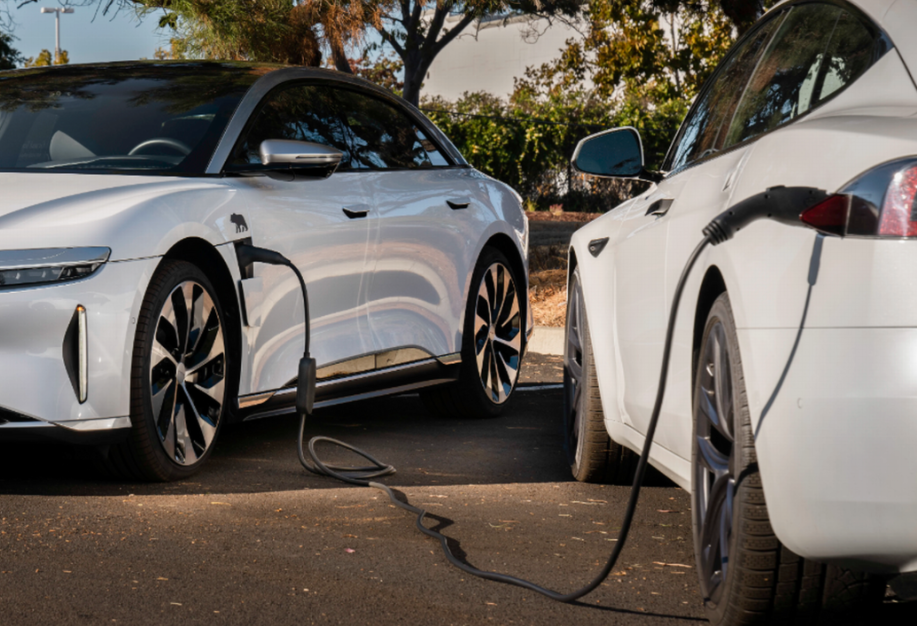
V2V refers to a mutual power supply system between two vehicles, typically employing a bidirectional on-board charger or bidirectional MCU and equipped with a bidirectional charging gun. This technology solves the problem of emergency power supply between electric vehicles.
When an electric vehicle runs out of power, it can connect to another electric vehicle through a bidirectional charging gun to obtain power directly from the other vehicle's battery, enabling mutual rescue between vehicles and ensuring that stranded vehicles can reach the nearest charging station.
Technical Requirements
V2V technology improves the travel reliability and emergency response capability of electric vehicles, especially during long-distance travel or in remote areas. However, V2V can only effectively exchange power between electric vehicles with compatible technical specifications.
The hardware requirements for V2V implementation include:
- A compatible DC charging interface for direct connection to another vehicle
- Special bidirectional charging cables or adapters to ensure safe power flow
- A control unit to manage the charging and discharging process
The control unit is essential to ensure that batteries of both vehicles are not overcharged or over-discharged during the V2V process, protecting battery health and maximizing safety.
3. V2G (Vehicle to Grid)
What is V2G?
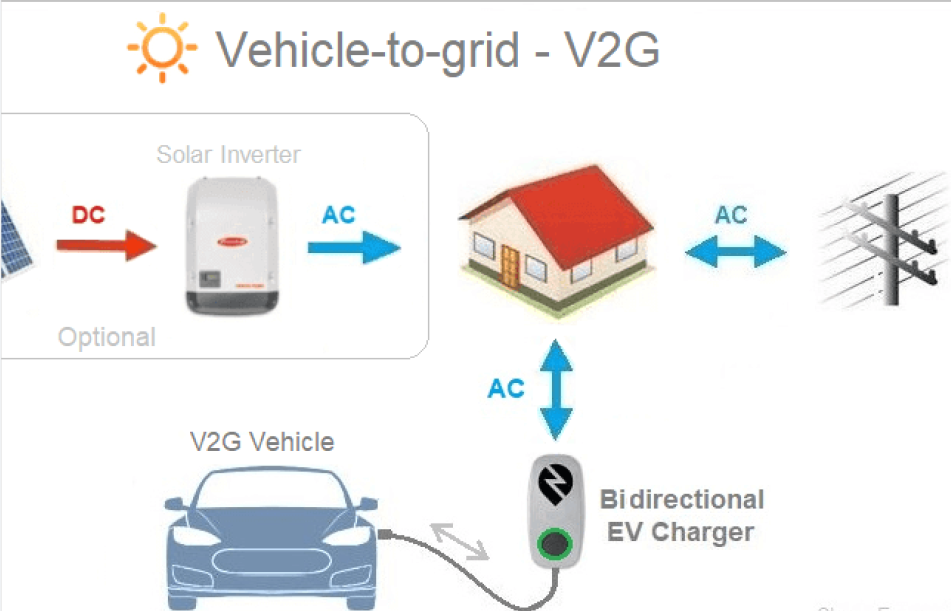
V2G refers to an interactive power supply mechanism between electric vehicles and the power grid, enabling EVs to supply power to the grid during peak consumption periods and absorb excess power for self-charging during off-peak periods.
V2G can help smooth the grid load curve, particularly in areas with a high proportion of renewable energy, serving as a flexible energy storage solution that enhances grid stability and efficiency.
Economic and Technical Aspects
V2G allows vehicles to charge during off-peak hours when electricity rates are low and feed power back to the grid during peak hours when rates are higher. In areas with smart grid implementations, vehicle owners can even earn revenue by providing grid services.
Bidirectional charging also offers cost savings by enabling EV owners to charge their batteries during low-rate periods and use the stored power instead of drawing from the grid during expensive peak times.
Implementation Requirements
V2G implementation requires:
- A bidirectional charger for AC-DC and DC-AC conversion
- Support for standards like ISO 15118 to ensure secure data exchange
- Smart grid interfaces including smart meters and control systems
- Battery Management System (BMS) protection for safety
- Grid compatibility certification meeting national/regional standards
V2G technology has been applied in pilot projects across many countries and regions, including initiatives in Europe and California. As smart grids become more prevalent, V2G will help grids manage power flow more flexibly during peak loads, promote clean energy use, and enhance grid stability. However, widespread V2G adoption still faces challenges related to policies, regulations, infrastructure, and economic viability.
4. V2H (Vehicle-to-Home)
What is V2H?
V2H represents an interactive power supply relationship between electric vehicles and homes, enabling EVs to provide electricity for household needs while also receiving power supplementation from the home when necessary.
V2H systems can serve as temporary generators during home power outages, charge during low-cost overnight periods, and either supply power to the home or feed back to the grid during high-rate daytime hours.
System Components
V2H requires several components:
- Bidirectional On-Board Charger: Enables conversion of battery energy to AC power for household use
- Inverter: Required if the vehicle doesn't directly support bidirectional AC output
- Home Electrical Adaptation: Homes need appropriate interfaces and safety switches
- Control Software/Hardware: Manages energy supply from vehicle to home
- Compatible Cables and Plugs: Ensure safe connection between vehicle and home equipment
V2H technology adoption depends on compatible electric vehicles, the availability of bidirectional charging infrastructure, and user understanding of the technology's benefits. V2H is gradually moving toward commercialization, with particularly strong adoption in Japan and Korea where several models already support V2H functionality.
In areas prone to natural disasters (such as typhoons and earthquakes), V2H becomes an invaluable solution for maintaining household power supply during grid outages and during post-disaster recovery scenarios.
5. Technology Comparison
Each V2X technology implementation depends on the vehicle's hardware support, compatible charging and conversion equipment, intelligent control logic, and necessary safety measures. The following table provides a comprehensive comparison of these technologies:
| Technology | Type | How it works | Cost | Development prospects |
|---|---|---|---|---|
| V2L | Vehicle to Load | Vehicle supplies power to external load | Lower, some models have been integrated | Rapid development has become the standard function of high-end electric vehicles |
| V2V | Vehicle to Vehicle | Energy exchange or data sharing between vehicles | Higher, requiring the vehicle to have bidirectional charging and communication equipment | Facilitates traffic safety and energy sharing |
| V2G | Vehicle to Grid | The vehicle feeds energy back to the grid to help regulate the grid load | Higher, requiring bidirectional charging and smart grid support | The smart grid is gradually promoted to promote the use of clean energy |
| V2H | Vehicle to Home | The vehicle provides electricity to the home as a backup power source | Medium, need to be equipped with bidirectional charging pile and home energy management system | Widely used in power outage and household energy management, especially in post-disaster recovery scenarios |
V2L has evolved into a common feature of pure electric vehicles, V2V emphasizes direct energy exchange between vehicles, V2G requires efficient interaction between vehicles and the power grid, and V2H focuses on vehicles serving as household backup power sources. Together, these technologies represent the future of electric vehicles as multi-functional energy resources.
Frequently Asked Questions
Several manufacturers now offer V2X capabilities in their electric vehicles. Hyundai/Kia were among the first with their V2L technology in models like the Ioniq 5 and EV6. Ford's F-150 Lightning offers both V2H and V2G capabilities. Nissan Leaf has offered V2H capabilities in certain markets, and Tesla has announced plans to implement bidirectional charging in future models. The availability of specific V2X features varies by market and model year.
When properly implemented, V2X usage has minimal impact on battery degradation. Modern battery management systems are designed to protect battery health during V2X operations by maintaining optimal temperature ranges and avoiding extreme states of charge. Most manufacturers implement safeguards that prevent excessive cycling and maintain battery warranty coverage. However, frequent deep discharging or operating in extreme temperatures could potentially accelerate degradation, so it's important to follow manufacturer guidelines.
The main barriers to widespread V2G adoption include: (1) regulatory challenges and standardization issues across different regions and utilities; (2) the need for significant upgrades to grid infrastructure to handle bidirectional power flows; (3) concerns about battery degradation and warranty coverage; (4) the cost of implementing bidirectional charging capabilities in both vehicles and charging equipment; and (5) developing viable business models that provide sufficient economic incentives for vehicle owners to participate in V2G programs.
This depends on the home's energy consumption and the vehicle's battery capacity. Most current electric vehicles with V2H capability can power essential circuits in a home for 1-3 days during an outage, depending on usage. A typical EV battery (60-100 kWh) can provide enough electricity to run essential appliances (refrigerator, lights, communication devices) for several days. However, powering energy-intensive systems like central air conditioning or electric heating would significantly reduce backup duration. Many V2H systems are designed to power selected critical circuits rather than the entire home.


