

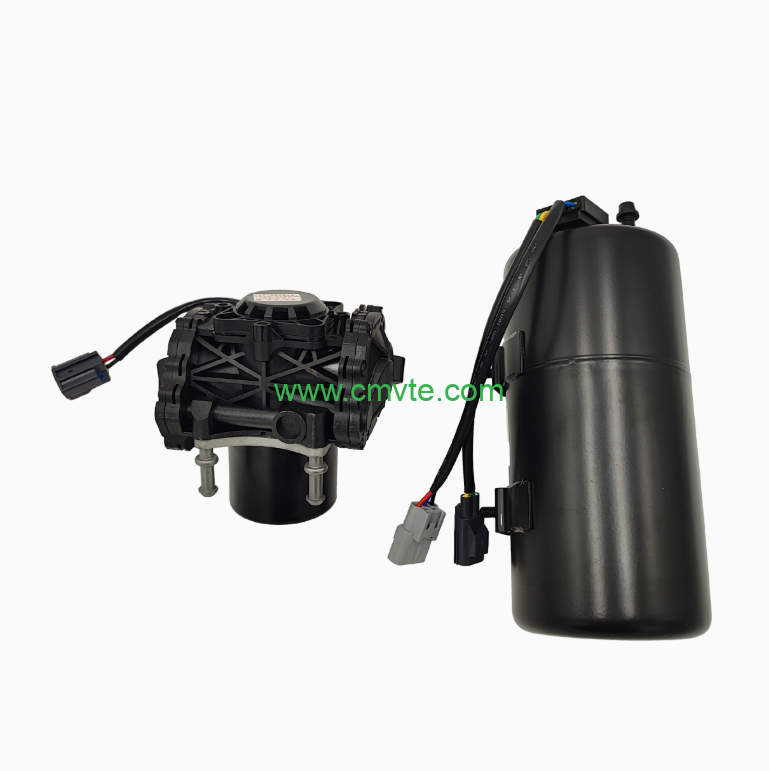
Electrifying an agricultural pickup truck is a masterclass in systems engineering. While the spotlight shines on the powertrain, the supporting systems—especially braking—determine the conversion’s ultimate safety and usability. The moment you remove the diesel engine, you lose the continuous vacuum source that powers the brake booster. Simply put: no vacuum, no power-assisted brakes. Selecting and integrating the right system to restore this function is a critical, non-negotiable step. For a farm truck that hauls feed, tows implements, and traverses muddy slopes, the solution must be robust, reliable, and perfectly matched to the new electric drivetrain’s capabilities.
Understanding the Vacuum Void
In a conventional vehicle, engine intake creates a constant vacuum, stored in a reservoir and used by a diaphragm-based booster. This booster multiplies the force from your foot, making stopping a heavy vehicle effortless. An electric motor provides no such vacuum, leaving you with a dangerously hard brake pedal and massively increased stopping distances. Your mission is to engineer a new, electrically driven source of braking assistance.
The Contenders: Two Paths to Safe Stopping
You have two primary philosophies to choose from, each with significant implications for performance, cost, and complexity.
1. The Electronic Vacuum Pump (EVP) System
This is the most direct replacement. It involves installing an electrically driven pump (often a piston or diaphragm type) and a vacuum reservoir tank to feed the original or a new vacuum brake booster.
-
Pros: Conceptually simple and often lower in initial cost. It can allow you to retain much of the existing brake hardware, making it appealing for first-time converters.
-
Cons: It adds a noisy, energy-consuming wear item. Its operation is binary—on or off—making it inefficient. Crucially, it operates completely independently of the electric motor’s regenerative braking system. This means the friction brakes and the motor’s energy-recapture system work separately, leading to “grabby” pedal feel and leaving valuable range-extending energy on the table.
2. The Electro-Hydraulic or “Brake-by-Wire” System (e.g., Bosch iBooster)
This is the modern, integrated solution. It eliminates the vacuum booster entirely. Instead, a pedal sensor sends an electronic signal to a compact servo unit, which uses an electric motor to pressurize the brake fluid precisely.
-
Pros: It enables perfect blending of regenerative and friction braking. The system can use the electric motor for 90% of deceleration, only applying the physical brake pads when absolutely necessary. This maximizes energy recovery, extends range, and reduces brake wear to a minimum. The pedal feel is consistently excellent and can be customized.
-
Cons: Higher initial cost and greater integration complexity. It requires communication with the vehicle’s main computer (VCU) over a CAN bus network.
Why the “Brake-by-Wire” System Wins for Agricultural Pickups
For a working farm vehicle, the electro-hydraulic system isn’t just a premium option; it’s the functionally superior choice. Here’s why:
-
Unmatched Reliability Under Load: An agricultural pickup is defined by its dirty, high-load, stop-start duties. Towing a loaded trailer down a gravel lane requires repeated, confident braking. An EVP system’s pump can overheat or struggle to maintain vacuum during repeated heavy stops. A system like the iBooster generates hydraulic pressure on-demand with unwavering consistency, regardless of how many times you need to stop.
-
Harnesses “Free” Braking Energy: A farm truck’s typical day involves constant slowing and stopping—at field gates, livestock areas, and workshops. A blended system recaptures a significant portion of this kinetic energy, directly countering the range penalty of hauling heavy loads. This operational efficiency is a game-changer.
-
Future-Proof Safety & Control: These intelligent systems form the foundation for advanced stability control and anti-lock braking (ABS) that is seamlessly integrated with the electric drivetrain. When braking on a wet, manure-slicked concrete yard, this precise, computer-controlled intervention is a critical safety asset.
The Critical Integration Checklist
Choosing the unit is only half the battle. Proper integration is key:
-
CAN Bus Communication: The brake controller must speak to the Vehicle Control Unit (VCU), which orchestrates the motor controller and battery management system (BMS). This dialogue is what allows for smooth regenerative blending.
-
Power & Redundancy: The system must be powered from a robust, switched source with an appropriate fuse. Consider the electrical draw during the most demanding braking scenarios.
-
Pedal Feel Calibration: One of the joys of a well-executed “brake-by-wire” system is the ability to tailor pedal firmness and response through software. Take the time to tune it to your preference.
Conclusion: Invest in the Foundation
View the braking system not as an accessory, but as a core pillar of your electrified drivetrain. While the Electronic Vacuum Pump offers a path of least initial resistance, the electro-hydraulic brake system delivers the safety, efficiency, and robustness a working agricultural vehicle demands. It transforms a potential compromise into a definitive upgrade, ensuring your electric pickup doesn’t just move like a modern machine but stops like one too—consistently, confidently, and intelligently, no matter what the farm throws at it.

