

In the rapidly evolving field of new energy vehicles, intelligent driving assistance systems have become a key competitive differentiator among major automakers. As we move toward an era of connected and autonomous vehicles, these systems are no longer just luxury additions but essential components that enhance safety, convenience, and the overall driving experience. Major brands have developed their own proprietary intelligent driver assistance systems, leveraging cutting-edge technologies such as artificial intelligence, advanced sensor arrays, computer vision, and machine learning to provide comprehensive support for drivers.
This comprehensive analysis compares the autonomous driving technologies of leading brands including BYD, Tesla, NIO, Ideal, Xiaopeng, and models equipped with Huawei's advanced intelligent driving system. We examine their unique characteristics, technological approaches, advantages, and limitations to provide a clear picture of the current state of autonomous driving technology in the new energy vehicle sector.
BYD: DiPilot Intelligent Driver Assistance System
BYD, as one of the world's leading electric vehicle manufacturers, has integrated its DiPilot intelligent driver assistance system across several models. This system incorporates adaptive cruise control, automatic emergency braking, lane departure warning, blind spot monitoring, and traffic sign recognition. These functions are primarily enabled through a combination of cameras, radar, and ultrasonic sensors that work in concert to ensure safety during various driving scenarios.
A significant strength of the DiPilot system lies in its practicality and user-friendly interface. It provides a range of辅助功能 that reduce driver burden in daily commuting situations. However, when compared to some more advanced systems on the market, DiPilot has room for improvement in terms of fully autonomous capabilities and seamless integration of its various functions. BYD continues to invest in research and development to enhance the system's intelligence level and expand its capabilities.

Tesla's Autopilot Autonomous Driving Assistance System
Tesla's Autopilot system represents one of the most recognized and advanced driver assistance systems in the industry. It includes features such as automatic parking, automatic lane changing, automatic navigation on highways, and the controversial "Full Self-Driving" capability. Tesla utilizes a sophisticated sensor suite comprising cameras, radar, and ultrasonic sensors for environmental perception, coupled with a powerful computing platform for real-time data processing and decision-making.
One of Autopilot's notable advantages is its ability to handle highway driving situations with minimal driver intervention. However, Tesla consistently emphasizes that drivers must remain alert and prepared to take control when using these features. The company's ambitious goal is to achieve Level 5 autonomy, though this objective remains subject to ongoing testing, regulatory approval, and technological refinement. Tesla's over-the-air update capability allows for continuous improvement of the Autopilot system, adding new features and enhancing existing ones based on real-world driving data collected from its global fleet.

NIO Pilot: Advanced Autonomous Driving Assistance System
NIO's Pilot system offers comprehensive autonomous driving capabilities including automatic following, lane keeping, automatic lane changing, as well as advanced parking and summon functions. The system employs high-precision sensors such as lidar, cameras, millimeter-wave radar, and ultrasonic sensors to achieve robust environmental perception. These are supported by a high-performance computing platform that processes data in real-time to enable safe navigation.
NIO's innovative end-to-end intelligent driving world model, known as NWM (NIO World Model), enables the system to simulate multiple potential scenarios within short timeframes to identify optimal decisions. This approach enhances the system's ability to handle complex driving situations. NIO has implemented its intelligent driving functions across multiple production models, demonstrating its commitment to making advanced autonomy accessible to consumers. The company's comprehensive布局 in the autonomous driving field includes substantial investments in research and development, strategic partnerships, and infrastructure development to support its autonomous driving ecosystem.

Ideal: Level 2 ADAS System
Ideal's Level 2 ADAS system incorporates essential features such as ACC adaptive cruise control, AEB automatic emergency braking, LKA lane keeping assist, and traffic jam assist. As a prominent newcomer in the electric vehicle market, Ideal has equipped its vehicles with the Mobileye EyeQ4 vision processing chip, complemented by Bosch ultrasonic radar, millimeter-wave radar, and iBooster 2.0 electronic braking system.
While Ideal's autonomous driving research and development进度 initially progressed slightly slower than competitors like NIO and Xpeng, the company has significantly accelerated its efforts since its 2020 IPO. Ideal's strategic vision includes achieving Level 4 autonomous driving capability through future OTA (Over-The-Air) updates, positioning itself competitively in the rapidly evolving autonomous vehicle landscape. The company focuses on delivering a balanced approach that prioritizes safety, reliability, and user experience while gradually introducing more advanced autonomous features.
Xiaopeng: XPILOT Autonomous Driving Assistance System
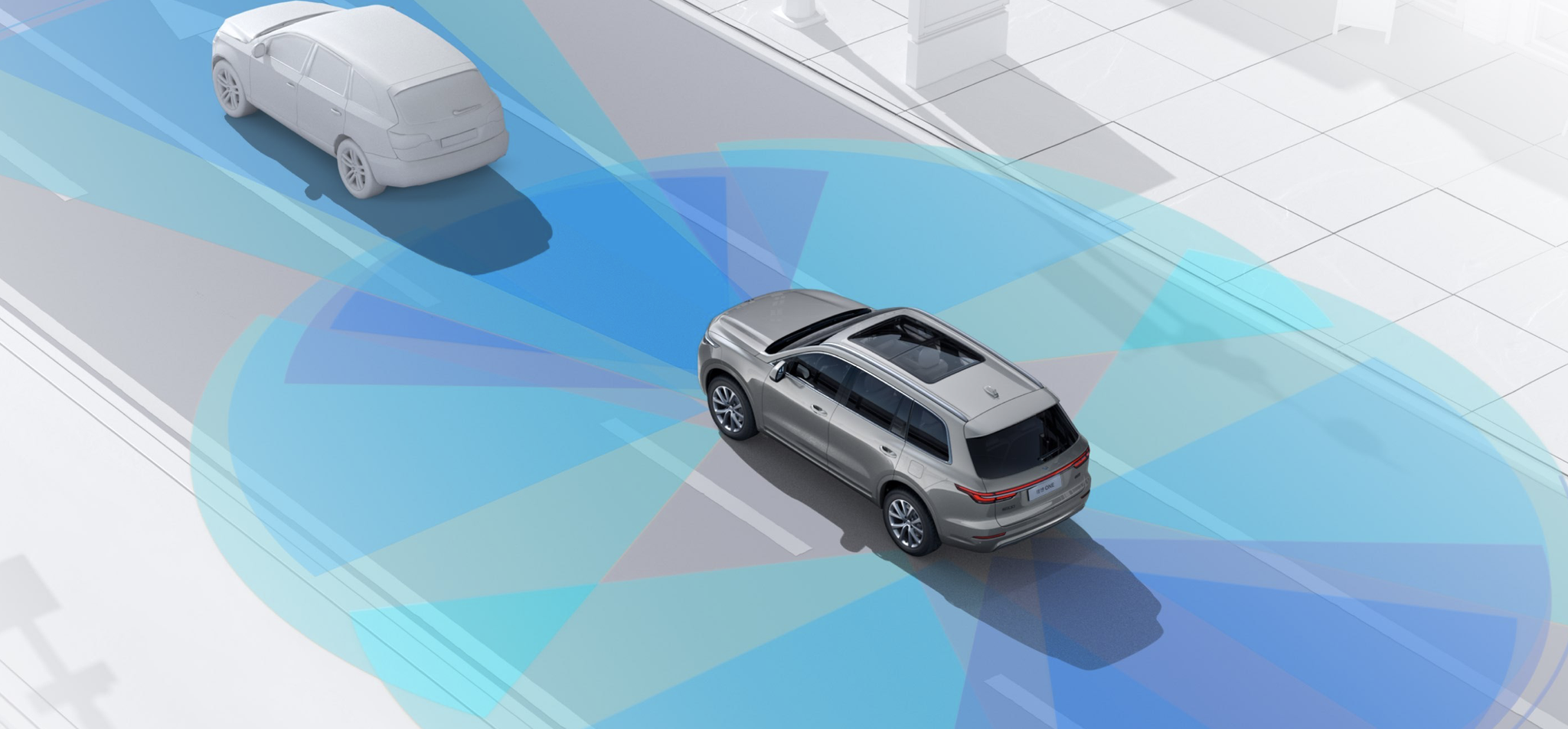
Xpeng's XPILOT system has established a leadership position in China's autonomous driving landscape, offering features such as automated parking, adaptive cruise control, lane centering, traffic sign recognition, and navigation-guided pilot. The Xpeng P5 made history as the world's first mass-produced lidar-equipped smart car, with its dual lidar configuration providing a 150° ultra-wide point cloud field of view specifically designed to address unique Chinese driving conditions.
The XPILOT 3.5 system integrates multiple sensors with high-precision positioning units to achieve comprehensive detection of pedestrians, static obstacles, and small objects across various complex scenarios. Xpeng's clear vertical evolution path—from XPILOT 2.0 to 3.5 and beyond—demonstrates a structured approach to progressively releasing more advanced autonomous driving functions. The company's commitment to technological innovation is evident in its continuous refinement of sensor fusion algorithms, decision-making capabilities, and user interface design to create a seamless autonomous driving experience.

Models Equipped with Huawei Advanced Intelligent Driving System
Select vehicle models featuring Huawei's Advanced Intelligent Driving System benefit from a comprehensive suite of capabilities including Intelligent Driving Navigation Assistance (NCA), Lane Cruise Assistance (LCC) and its enhanced version (LCC Plus), omnidirectional collision avoidance system (CAS), and intelligent parking assistance. Huawei's significant advantage lies in its holistic approach to the entire technology stack, encompassing development from chips to operating systems to application layers.
Huawei's advanced intelligent driving system, ADS, has evolved to version 3.0, incorporating integrated end-to-end capabilities that enable accurate identification and reaction to various common and uncommon obstacles. The system's intelligent voice assistant represents another highlight, enhancing driving safety and convenience through natural language control of in-car devices and functions. Huawei's substantial investments in research and development, coupled with its expertise in connectivity and artificial intelligence, position its autonomous driving system as a formidable competitor in the global market.

Comparative Analysis and Market Position
Each brand's new energy autonomous driving system offers distinct advantages tailored to different market segments and user preferences. BYD's DiPilot system emphasizes practicality and accessibility, Tesla's Autopilot pursues high-speed autonomous driving capability with aggressive innovation timelines, NIO Pilot focuses on comprehensive all-scenario intelligent driving applications, Ideal's ADAS system delivers strong value proposition, and Xpeng's XPILOT system leads in lidar integration and urban driving capabilities. Models equipped with Huawei's advanced intelligent driving system achieve all-round intelligence through full-stack technological布局.
Market feedback indicates that first-tier companies including Huawei, Xpeng, NIO, and Ideal have established leadership positions in intelligent driving capabilities due to their early starts, comprehensive布局, and continuous innovation. These companies have implemented intelligent driving applications across full scenarios, with sales growth closely correlated with their autonomous driving technology advancements. Second-tier companies such as Xiaomi Auto, SAIC Zhiji, and BYD Denza offer competent systems with high availability but still have room for improvement in terms of advanced features and seamless integration.
Future Outlook for Autonomous Driving Technology
The autonomous driving industry continues to evolve rapidly, with Level 4 and higher autonomous driving technologies gradually approaching commercial viability. Traditional automakers are increasingly leveraging intelligent driving technology to transform consumer perceptions of their vehicles and remain competitive in the evolving market landscape. However, the industry still faces multiple challenges including software and hardware maturity, connectivity infrastructure development, business model innovation, and regulatory framework establishment.
China's intelligent driving industry is positioned to maintain its leadership trajectory, contributing significantly to the global intelligent transportation ecosystem. As technologies continue to advance and consumer acceptance grows, autonomous driving systems will play an increasingly central role in shaping the future of mobility, offering enhanced safety, efficiency, and convenience for transportation worldwide.
Conclusion
The evolution of autonomous driving systems in new energy vehicles represents one of the most significant technological advancements in the automotive industry. From BYD's practical DiPilot to Tesla's ambitious Autopilot, from NIO's comprehensive Pilot system to Xpeng's lidar-equipped XPILOT, each brand offers unique approaches to solving the complex challenges of autonomous driving. As the technology continues to mature, we can expect increased collaboration between automakers, technology companies, and regulators to accelerate the safe deployment of autonomous vehicles on a global scale. The future of transportation is undoubtedly autonomous, and these systems represent the critical foundation upon which that future will be built.


