

Converting a Dacia Logan II into an electric vehicle is an exciting project that combines sustainability with automotive passion. However, selecting the right motor is a crucial decision that determines vehicle performance, range, and overall reliability. With countless options on the market, it's easy to feel overwhelmed. This guide will break down the core factors to consider when choosing an electric motor for your Dacia Logan II, ensuring you make an informed choice that aligns with your goals.
Before diving into technical specifications, first clarify how you plan to use the converted vehicle.
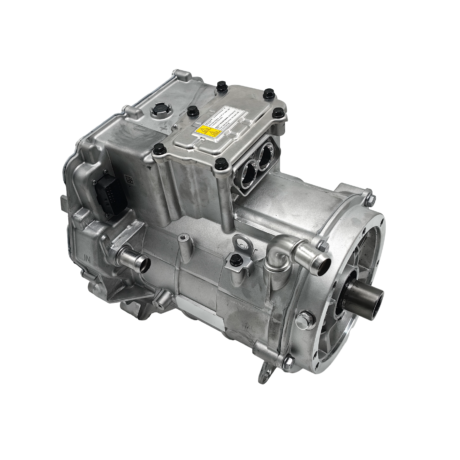
For mainly urban streets, a medium-power motor (30-60 kW) with high torque at low speeds is sufficient, providing responsive acceleration in stop-and-go traffic.
For frequent highway use, a higher power motor (70-100 kW or more) is needed to maintain steady high-speed cruising and safe overtaking.
If often carrying passengers or cargo, choose a motor with extra torque reserve to maintain performance when loaded.
Step 2: Choose Motor Type: AC vs. DC
The two main types of motors used for EV conversions are AC motors and DC motors, each with its own advantages and disadvantages.
AC Motors
The preferred choice for most modern EV conversions including Dacia Logan II
- Advantages: Higher efficiency, better durability, excellent high-speed performance
- Perfectly compatible with regenerative braking systems, extending range by recovering energy during deceleration
- ROI: Although upfront costs for motor and controller are typically higher, their long-term reliability and efficiency make them a more cost-effective investment
DC Motors
Simpler design, usually cheaper
- Advantages: Strong torque at low speeds, suitable for light-load applications or budget-priority projects
- Limitations: Lower efficiency at high speeds, require more frequent maintenance due to brushes, and have poorer compatibility with advanced features like regenerative braking
Conclusion
For the practical Dacia Logan II compact sedan, an AC motor is generally the more suitable choice.
Step 3: Determine Power and Torque Requirements
The original gasoline-powered Dacia Logan II typically has engine power between 75-115 horsepower. To maintain a similar driving experience, your motor should provide comparable power.
Power Conversion
1 horsepower is approximately equal to 0.746 kW. Therefore, 75-115 horsepower roughly corresponds to a motor power of 30-86 kW.
Torque Requirements
Torque is crucial for acceleration and hill climbing. Motors can deliver maximum torque instantly, so similar performance can be achieved without the same torque as the original engine. A target torque between 150-300 Nm ensures smooth acceleration and confident handling even with a full battery load.
Step 4: Match Voltage System
Motors operate at specific voltages, and choosing the correct voltage is crucial for efficiency and safety.
Recommended Range
For the Dacia Logan II, a system of 144V to 400V is recommended.
Common in smaller conversions, offers a good balance between cost and performance, suitable for city driving.
Provides higher efficiency and better high-speed performance, ideal for highway driving, but requires more complex battery packs and higher-quality controllers.
Trade-off Considerations: When selecting voltage, consider battery pack configuration—higher voltage systems can provide more power with fewer batteries in series, but also require more robust wiring and safety measures.
Step 5: Consider Size, Weight, and Compatibility
The Dacia Logan II engine compartment has limited space, making the physical dimensions of the motor critical.

Carefully measure available space in length, width, height, and mounting points.
Transmission-integrated motor: Many converters choose drive axle motors that can integrate with the original transmission to simplify installation.
Direct-drive motor: Can completely remove the transmission but may require custom brackets and driveshaft adjustments.
Motors are heavier than gasoline engines. Choosing a motor in the 50-80 kg range helps maintain vehicle suspension load and handling balance.
Step 6: Ensure Controller Compatibility
A motor requires a controller to regulate power output, and the controller must be compatible with both the motor and battery system.
Require an inverter/controller to convert DC power from the battery to AC power.
Use simpler PWM controllers.
Investment Recommendation
Invest in a high-quality controller from a reputable manufacturer, and look for features like regenerative braking support, overheating protection, and parameter programmability to fine-tune performance according to your driving style.
Step 7: Prioritize Cooling Requirements
Motors generate heat during operation, and proper cooling is essential to prevent overheating and extend lifespan.
Air-Cooled Motors
- Simpler construction, lower cost
- May be insufficient in hot climates or during prolonged high-speed driving
Liquid-Cooled Motors
- More efficient heat dissipation
- Better choice for highway driving or warmer regions
2025 Recommendation
Given the Dacia Logan II's positioning as a daily driver, a liquid-cooled motor is recommended to ensure reliability under various conditions.
Step 8: Comprehensive Budget Planning
Budget Considerations
Motor prices vary widely, from hundreds of euros for basic DC motors to over €5000 for high-performance AC motors.
Establish a budget early and prioritize features that meet your needs.
While cheap motors are tempting, investing in a reliable, efficient AC motor will save more in long-term maintenance and energy costs.
Don't forget to include additional costs for controllers, wiring harnesses, cooling systems, and battery packs, which can significantly increase the total conversion cost.
Conclusion: Towards a Successful Electric Conversion
Choosing the right motor for your Dacia Logan II EV conversion project requires balancing performance, efficiency, compatibility, and budget. By focusing on an AC motor with 30-86 kW power, 150-300 Nm torque, and a 144V-400V system, you'll create a vehicle that retains the Logan's practicality while enjoying all the benefits of electric driving.
Take time to research reputable brands, compare specifications, and consult with experienced conversion experts—their insights can help you avoid common pitfalls. With the right motor, your converted Dacia Logan II will not only be environmentally friendly but also a source of driving pleasure for years to come.
Ready to Start Your Dacia Logan II Electric Conversion?
Get personalized guidance on motor selection and complete EV conversion planning. Our experts can help you choose the right components and avoid common pitfalls.
Get a Free Conversion Consultation
