

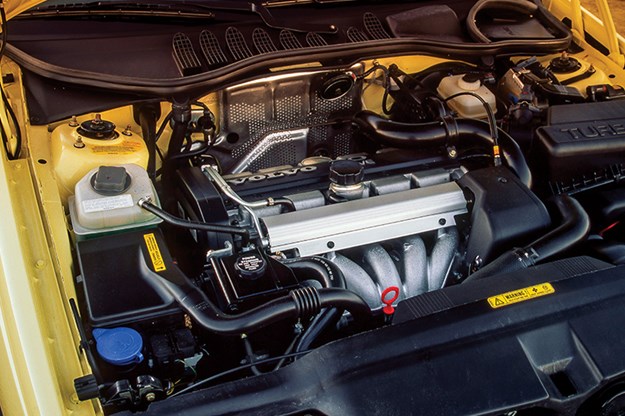

First, motor type selection: AC vs. DC – matching performance goals
The 850 R Wagon's performance positioning narrows motor choices to those that can match or exceed its original power. AC and DC each have strengths, but only one truly aligns with this wagon's front‑drive dynamics and performance demands.
⚡ AC motor
Gold standard for performance & FWD compatibility
AC motors – especially permanent magnet synchronous or Tesla‑style induction – are the best choice for the 850 R Wagon. They deliver the power, torque, and efficiency required to preserve this wagon's sporty character. For those chasing ultimate performance, this approach lets the volvo 850 t5 r genes live on in the electric era:
- Advantages: high power density, instant torque, seamless integration with the front‑drive system. Permanent magnet motors excel at balancing performance and range – critical for a wagon used for both commuting and long trips.
- Best for: enthusiasts who want to retain the 850 R's performance. A 100‑150 kW AC motor delivers 280‑400 Nm – exceeding the original turbo engine while maintaining linear power delivery. This setup lets the wagon hit 0‑100 km/h in 5.5‑6.5 seconds, living up to its "R" badge. If you're considering a volvo t5 r 850 electric upgrade, this plan perfectly inherits its sporting DNA.
- Key specs: operating voltage 300‑400V, paired with 40‑60 kWh NMC battery. Ensure motor length ≤35 cm – critical for transverse mounting in the 850 R engine bay. For those seeking a volvo 850 r conversion solution, AC motors are the clear choice.
🔋 DC motor
Budget option for daily use (FWD limitations apply)
DC motors are a possibility for budget‑conscious conversions, but they involve compromises relative to the 850 R's performance pedigree:
- Advantages: lower cost, simpler wiring. A 60‑80 kW brushless DC motor produces 200‑250 Nm – adequate for daily commuting but below the 850 R's stock performance level.
- Best for: 850 R Wagons repurposed as daily drivers. Paired with 48‑72V battery pack yields 120‑180 km range – suitable for city use but insufficient for spirited highway driving.
- Key limitations: DC motor casings are wide, making transverse installation in the 850 R engine bay difficult. May require radiator support or A/C line modifications – compromises that risk overheating or losing air conditioning.
Power & torque: matching the 850 R's performance heritage
The 850 R Wagon's original 250 hp / 350 Nm sets a high bar – too little power makes the EV conversion feel sluggish, while too much can damage the front‑drive drivetrain. For those hunting for a volvo 850 r wagon for sale and planning to electrify it, understanding this balance is critical.
Power: 100‑150 kW for true "R" performance
100 kW AC motor: the minimum to retain the 850 R driving feel. While slightly lower in peak power than stock, electric torque makes launches quicker. Suitable for those wanting EV efficiency without sacrificing sportiness.
120‑150 kW AC motor: the enthusiast sweet spot. A 150 kW motor with 400 Nm surpasses stock performance, making this wagon effortless on highways and back roads. A limited‑slip differential is essential – FWD cars easily spin wheels with added torque.
Avoid overpowering: do not exceed 180 kW. The 850 R's original front‑drive gearbox max torque capacity is 450 Nm – exceeding that risks premature gear damage. For more power, upgrade the gearbox first.
Torque: 280‑400 Nm – balancing power and drivetrain safety
280‑320 Nm: safe range for the stock FWD transmission. A 100‑120 kW AC motor in this torque range works with the original gearbox, no drivetrain mods needed.
350‑400 Nm: requires gearbox upgrade. Use a reinforced transmission or custom FWD gearbox to handle the extra torque. Worthwhile for those who want their 850 R to be quicker than stock.
Physical fit: navigating the 850 R's transverse bay and front‑drive layout
The 850 R Wagon's engine bay was designed for a transverse inline‑five – so motor length, width, and mounting points are critical. A longitudinally mounted motor won't work; it would block the front half‑shafts or radiator.
Tesla Model 3 rear motor and Hyper9 AC motors fit perfectly. If you own a 1996 volvo 850 r, these dimensions are your primary selection criteria.
Installation: use FWD‑specific adapter plates
– Transmission adapter: the 850 R's AW50 automatic uses a unique bellhousing pattern – you need a custom adapter plate to mate motor to transmission. This aligns the motor output shaft with the transmission input shaft, avoiding gear wear.
– Motor mounts: modify stock engine mounts with adapter brackets. The 850 R has two front mounts and one rear mount – adapt these to the motor's mounting lugs. Avoid welding new brackets directly to the chassis; use bolt‑on mounts.
Compatibility with front‑drive drivetrain and EV components
The 850 R's front‑drive layout adds unique compatibility challenges – ensure the motor works with the drivetrain, battery, and inverter to avoid rework. These requirements apply equally to volvo 850 r sedan owners.
🔄 Front‑drive drivetrain synchronization
- CV axles: retain stock CV axles for motors up to 120 kW. For 120‑150 kW, upgrade to reinforced axles to prevent breakage under high load.
- Differential: install a front limited‑slip differential (LSD) when using more than 300 Nm. FWD cars without LSD suffer torque steer under acceleration – an LSD distributes torque evenly to both front wheels, preserving the 850 R's stable handling.
🔋 Battery & inverter compatibility
- Voltage match: AC motors need 300‑400V – pair with a 40‑60 kWh NMC battery pack. Mount the battery in the 850 R's trunk, using custom brackets to split the pack into 2‑3 modules that fit around the spare wheel well.
- Inverter rating: choose an inverter rated for 1.2× the motor's peak power. Mount the inverter in the engine bay next to the motor – keep cabling within 1.5 meters to minimise loss.
- Cooling integration: the 850 R's stock radiator can be repurposed to cool the motor and inverter. Add an auxiliary cooling circuit to prevent overheating during spirited driving.
✅ Final selection checklist
- Choose motor type: 100‑150 kW AC for performance; 60‑80 kW DC for budget/daily use.
- Match torque: 280‑320 Nm for stock gearbox; 350‑400 Nm with upgraded gearbox and LSD.
- Verify physical dimensions: ensure motor length ≤35 cm, width ≤28 cm, weight ≤45 kg – non‑negotiable for transverse fit.
- Use dedicated adapters: 850‑specific transmission adapter plate and bolt‑on motor mounts; avoid chassis welding.
- System synchronization: match 300‑400V battery, 1.2× inverter, integrated cooling, and upgrade axles/LSD for high torque.
❓ FAQ – 850 R Wagon EV conversion
Can I keep the original AW50 automatic transmission?
Yes, for motors up to 120 kW and torque under 320 Nm. A custom adapter plate is required to bolt the motor to the bellhousing. For higher power, consider a reinforced gearbox (e.g., upgraded AW50 or a custom FWD gearbox).
Will the 850 R's front suspension handle the extra battery weight?
The 850's front suspension is robust, but adding 200‑250 kg of battery in the trunk actually improves weight distribution. Use upgraded springs/dampers if you lower the car or plan aggressive driving. The motor itself should stay under 45 kg to avoid overloading the front axle.
Is a limited‑slip differential mandatory?
For any motor above 120 kW or torque exceeding 350 Nm, an LSD is highly recommended. It prevents torque steer and ensures both front wheels put power down, especially in wet conditions. Without LSD, the 850 R will feel unpredictable under hard acceleration.
What battery capacity gives the best range for a daily‑driven 850 wagon?
A 40‑50 kWh NMC pack provides 200‑250 km of real‑world range – plenty for commuting and weekend trips. If you plan frequent long journeys, aim for 60 kWh (300+ km). Split the pack into modules to fit around the spare wheel well and under the trunk floor.
Are there off‑the‑shelf motor kits for the 850 R?
Few direct "bolt‑in" kits exist, but companies like EV West, CanEV, and local fabricators offer adapter plates and mounts for the 850's AW50 transmission. Hyper9 AC motors and Tesla drive units are popular choices with custom mounts.
What is the 0‑100 km/h time with a 150 kW AC motor?
With proper traction and an LSD, a 150 kW / 400 Nm setup can achieve 5.5‑6.0 seconds – noticeably quicker than the original 6.7‑7.0 seconds, while delivering instant electric torque.
By focusing on performance fit, FWD integration, and the 850's unique transverse layout, you'll select a motor system that transforms this legendary wagon into a sustainable, exhilarating EV – keeping the R spirit alive. Whether you're hunting for a volvo 850 r wagon for sale or converting a 1996 volvo 850 r, this guide lights the way. 🇸🇪

