

Hyper9 vs. Tesla Motor: The Ultimate Guide for Your EV Conversion Project
Choosing the right electric motor is the most critical decision for any EV conversion. This comprehensive guide compares the Hyper9 motor and the Tesla motor to help you make an informed choice based on cost, complexity, performance, and your specific project goals.
The world of electric vehicle (EV) conversion is a thrilling frontier for automotive enthusiasts. At its heart lies a fundamental question: which motor will power your transformation? For years, hobbyists and professionals have debated the merits of two very different but highly respected contenders: the **Hyper9** motor and a used **Tesla motor**. Both are powerful, reliable, and capable of giving your project car a new life. However, they represent fundamentally different philosophies in **EV motor swaps**.
The **Hyper9** motor is a purpose-built, user-friendly system designed specifically for the **DIY EV conversion** community. It's the go-to choice for those who want a straightforward, well-documented, and well-supported solution. In contrast, the **Tesla motor** is a technological marvel designed for a highly integrated, proprietary system. Sourced from salvage vehicles, it offers incredible performance but comes with significant challenges in integration and control. This article will break down every aspect of this pivotal choice, ensuring you have the expertise to select the perfect motor for your build.
Side-by-Side Technical Comparison
| Feature | Hyper9 Motor | Tesla Motor (e.g., Model S/3) |
|---|---|---|
| Motor Type | AC Induction Motor (ACIM) | Permanent Magnet Synchronous Motor (PMSM) |
| Rated Power | ~88 kW (120 hp) Peak | ~220-400 kW (300-530 hp) Peak |
| Rated Torque | ~170 Nm (125 lb-ft) | ~400-600+ Nm (300-450+ lb-ft) |
| Integrated Components | Paired with its own controller (SEVCON G4) | Integrated with its inverter (Inverter Control Unit, ICU) |
| Cooling System | Air-cooled (Hyper9 LV) or Liquid-cooled (Hyper9 HV) | Liquid-cooled (requires dedicated pump and radiator) |
| System Control | Standard CAN bus protocol, well-documented | Proprietary CAN bus protocol, reverse-engineered |
| Approx. Cost (Motor & Controller) | $6,000 - $8,000 (New) | $2,000 - $5,000 (Used/Salvage), plus expensive open-source controllers |
| Target Use Case | Light to medium-duty vehicles, classic cars, daily drivers | High-performance builds, drag racing, sports cars |
The Hyper9: The DIYer's Best Friend
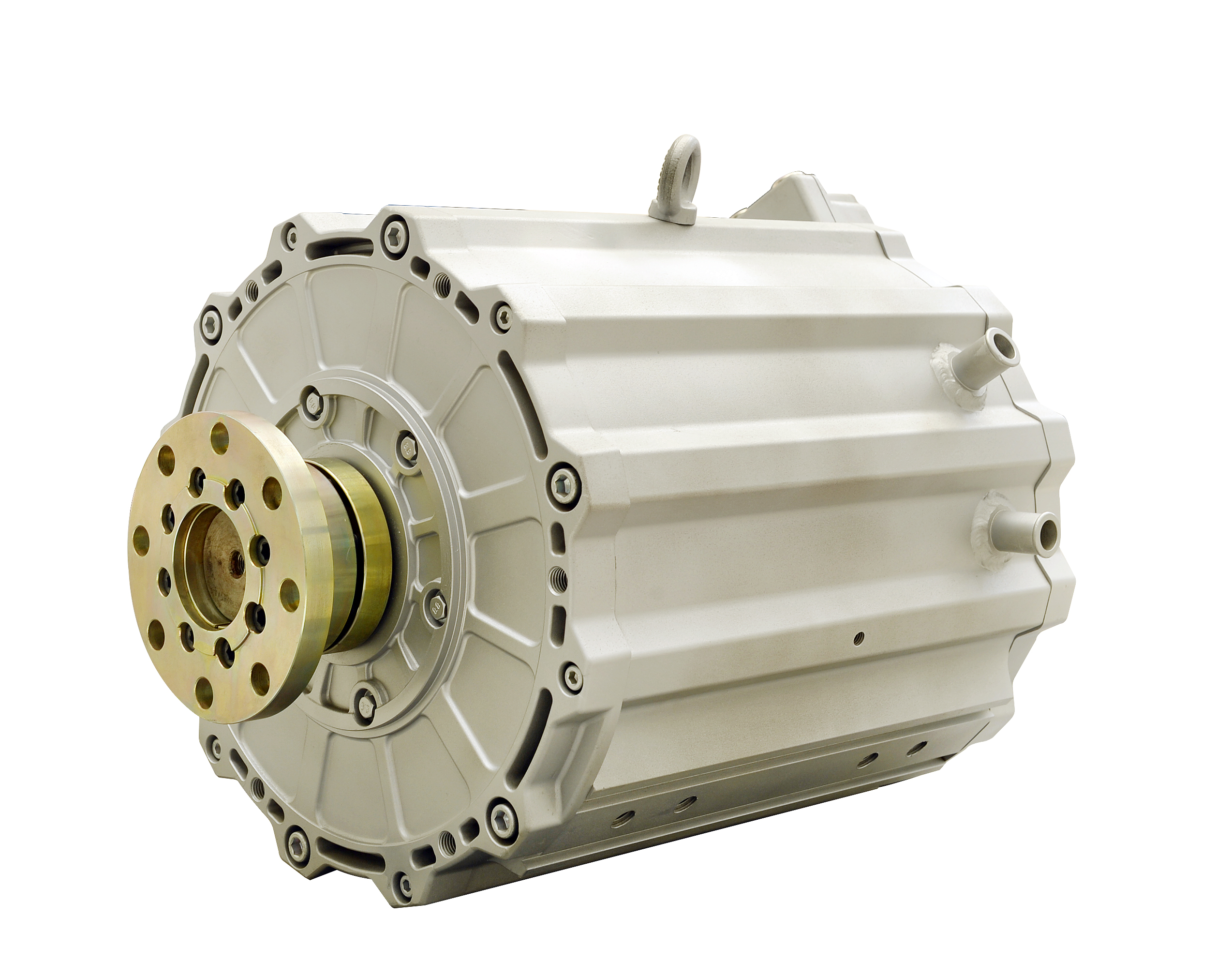
The **Hyper9** system, manufactured by NetGain Motors, is an all-in-one electric motor solution built from the ground up for the EV conversion market. Its primary strength lies in its simplicity and user-friendliness. The motor is a highly efficient AC Induction Motor, which is robust and requires minimal maintenance. More importantly, it is sold as a complete kit with a matched SEVCON G4 controller. This integration eliminates the most complex part of an EV conversion—motor control. The system operates on a straightforward, open-source CAN bus protocol, meaning you can easily interface it with a range of aftermarket components like a Battery Management System (BMS) and vehicle sensors.
- Pros:
- ✅ **Ease of Integration:** True "plug-and-play" experience for an EV motor system.
- ✅ **Comprehensive Support:** Excellent documentation, a strong community, and dedicated customer support from the manufacturer.
- ✅ **Predictable Performance:** The Hyper9 has a flat torque curve, which is ideal for a smooth, consistent driving experience.
- ✅ **Reliability:** Purpose-built for this application, ensuring long-term reliability for your conversion.
The Tesla Motor: High-Performance, High Complexity
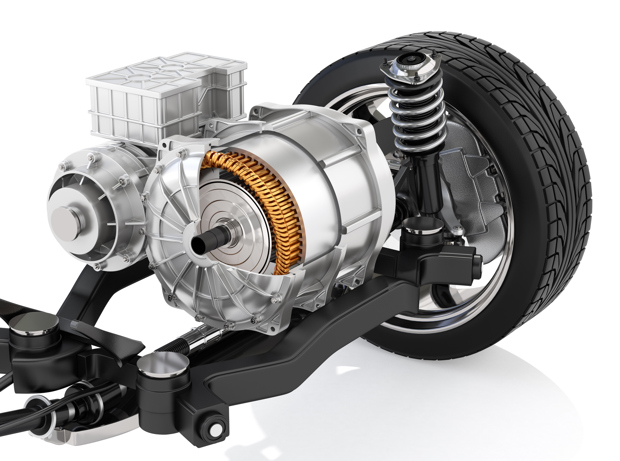
When someone mentions a **Tesla motor** in the context of a conversion, they're typically talking about a salvaged Model S/3 drive unit. These units are revered for their phenomenal performance metrics: incredible horsepower and instant, mind-bending torque. The Tesla motor is a Permanent Magnet Synchronous Motor (PMSM), which is highly efficient. However, its greatest strength is also its greatest challenge. The motor, inverter, and control software are all deeply integrated into a single, proprietary system. The CAN bus protocol is encrypted and requires specialized, third-party controllers (such as the OpenInverter or Revelate) and reverse-engineered software to operate. This dramatically increases the complexity of the project.
- Cons:
- ❌ **Extreme Complexity:** Requires advanced knowledge of high-voltage electronics and software.
- ❌ **High Hidden Costs:** While the salvage motor itself might be cheap, the custom controllers, cooling systems, and wiring harnesses add significant expense.
- ❌ **Integration Issues:** Interfacing with a vehicle's existing systems (e.g., speedometer, OBC) is a custom, case-by-case challenge.
- ❌ **Limited Support:** Support often comes from a small, dedicated open-source community, not a manufacturer.
Real-World Use Cases: Which Motor is Right for My Project?
The decision ultimately comes down to your budget, skill level, and project goals. Here’s a breakdown of common scenarios:
1. The Classic Car Revival (e.g., VW Beetle, Old Ford Mustang)
For these projects, simplicity and a smooth driving experience are key. The **Hyper9** is the clear winner here. Its manageable power output is perfect for lightweight classic vehicles, and the straightforward installation process allows you to focus on the mechanical and aesthetic aspects of the restoration, not on complex software riddles. The **Hyper9's** air-cooled option (LV) is also a significant advantage, as it eliminates the need for a dedicated liquid-cooling system, simplifying the build even further.
2. The High-Performance Build (e.g., Porsche 911, Mazda Miata)
If your goal is to create a lightning-fast, high-power machine that will dominate the drag strip, the **Tesla motor** is your only real choice. Its insane power-to-weight ratio and instant torque are unmatched. While the technical hurdles are immense, for a dedicated enthusiast with the right skillset and budget, the performance payoff is worth the effort. This is not a project for the faint of heart, but the results are legendary. The **Tesla motor** transforms a sports car into a true electric supercar.
3. The Everyday Commuter (e.g., Honda Civic, Nissan Leaf)
For a reliable, efficient daily driver, the **Hyper9** is an excellent choice. It provides more than enough power for highway cruising and city driving, and its efficiency ensures a respectable range. The proven reliability of the **Hyper9** system means you can count on your converted EV for years of trouble-free commuting. The predictable nature of its operation makes it a great alternative to gasoline power for the environmentally conscious driver.
4. The Truck or Van Conversion (e.g., Ford F-150, VW T3 Transporter)
For heavier vehicles that require substantial torque, both motors have a place. A single **Hyper9** might suffice for a light-duty truck, but for a true workhorse, multiple **Hyper9** units or a single, more powerful **Tesla motor** would be a better option. The sheer torque output of the **Tesla motor** makes it a compelling choice for heavy-duty applications where pulling power is paramount. However, the complexity of a **Tesla motor** swap on a larger vehicle means this is a task best left to professionals or extremely experienced DIYers.
Frequently Asked Questions (FAQ)
Q: Is a Hyper9 motor a good motor for a beginner?
A: Absolutely. The **Hyper9** is widely considered one of the best choices for a first-time **EV conversion**. The kit-based nature of the motor and controller, combined with extensive documentation and community support, makes the project significantly more manageable and less prone to costly mistakes compared to a custom setup.
Q: Can I use a Tesla motor without its original inverter?
A: No. The **Tesla motor** is a three-phase AC motor that requires an inverter to convert the DC power from the battery pack into the AC power needed to run the motor. The original Tesla inverter is physically integrated with the motor. To use a salvaged **Tesla motor**, you need a third-party, open-source controller that is specifically designed to bypass the complex proprietary software of the original inverter. This adds significant cost and complexity.
Q: How much range can I get with a Hyper9 motor?
A: The range of your EV conversion is almost entirely dependent on your battery pack size and the weight of your vehicle, not the motor itself. A typical **Hyper9** conversion with a 40 kWh battery pack in a lightweight car (like a Mini Cooper) could achieve a range of 150-200 miles (240-320 km). A heavier vehicle would have less range with the same battery pack.
Q: Is a Tesla motor swap street-legal?
A: Legal regulations for **EV conversions** vary dramatically by state and country. In many places, a conversion is perfectly legal as long as it passes a technical inspection. However, because of the high power and complex nature of the **Tesla motor**, it may be subject to additional safety and engineering review. It's crucial to consult your local Department of Motor Vehicles or equivalent authority before beginning your project.
Q: Can I use a Tesla battery pack with a Hyper9 motor?
A: Yes, it is technically possible. However, integrating a Tesla battery pack is a very difficult task due to its sophisticated Battery Management System (BMS) and proprietary communication protocols. It is a challenge that requires significant expertise and is not recommended for beginners. Many builders opt for more flexible, open-source battery packs with a dedicated BMS.
Q: What is a Hyper9 kit and what does it include?
A: A typical **Hyper9** kit includes the motor itself, the matched SEVCON G4 motor controller, a throttle potentiometer (the "gas pedal"), and a wiring harness. This package provides the essential "plug-and-play" components needed to get the motor spinning, making it an ideal choice for a streamlined and well-supported conversion process.

