


As tensions persist in the Middle East, the smoke of conflict has spread to the outskirts of Jerusalem. According to reports from *The Times of Israel* and on-site video footage, on March 1, 2026, a missile strike caused an explosion that impacted a BYD Atto 3 (Yuan PLUS) in motion. Images from the scene tell a harrowing story: windows were shattered, body panels were horrifically deformed by the shockwave, and the exterior was severely damaged. However, amidst this extreme explosion, this Chinese electric vehicle demonstrated astonishing “safety resilience.” The main body structure did not collapse at all; the frame, constructed from high-strength steel, remained intact like a solid cage, fully protecting the cabin space—the A, B, and C pillars stood firm without yielding. All four doors could be opened normally after the incident, with no jamming—preserving a golden channel for escape. The airbags deployed perfectly on impact, offering comprehensive protection. What astonished industry experts most was this: as an electric vehicle, its high-voltage battery pack—after suffering such a blast—did not catch fire, explode, or experience thermal runaway. In an extreme environment, it held the core safety line for electric vehicles. Miraculously, all five occupants inside the vehicle survived this unexpected disaster. What enabled this Chinese EV to defend the line of life amidst the flames of war?
Hardcore Analysis——Extreme Safety Is No Accident
This top-score performance in an extreme “safety exam” was not a matter of luck, but the inevitable result of dual empowerment from the vehicle’s safety architecture and the hardcore technology of its three-electric system.
Regarding body structure, the BYD Atto 3 utilizes a significant proportion of high-strength materials, including 12% hot-formed steel with a tensile strength of 1500Mpa, and 72.5% high-strength steel and above. The application of such materials, combined with a scientifically designed cage-type body structure for force distribution, ensures that the cockpit does not collapse during extreme impacts, preserving precious “living space” for the occupants.
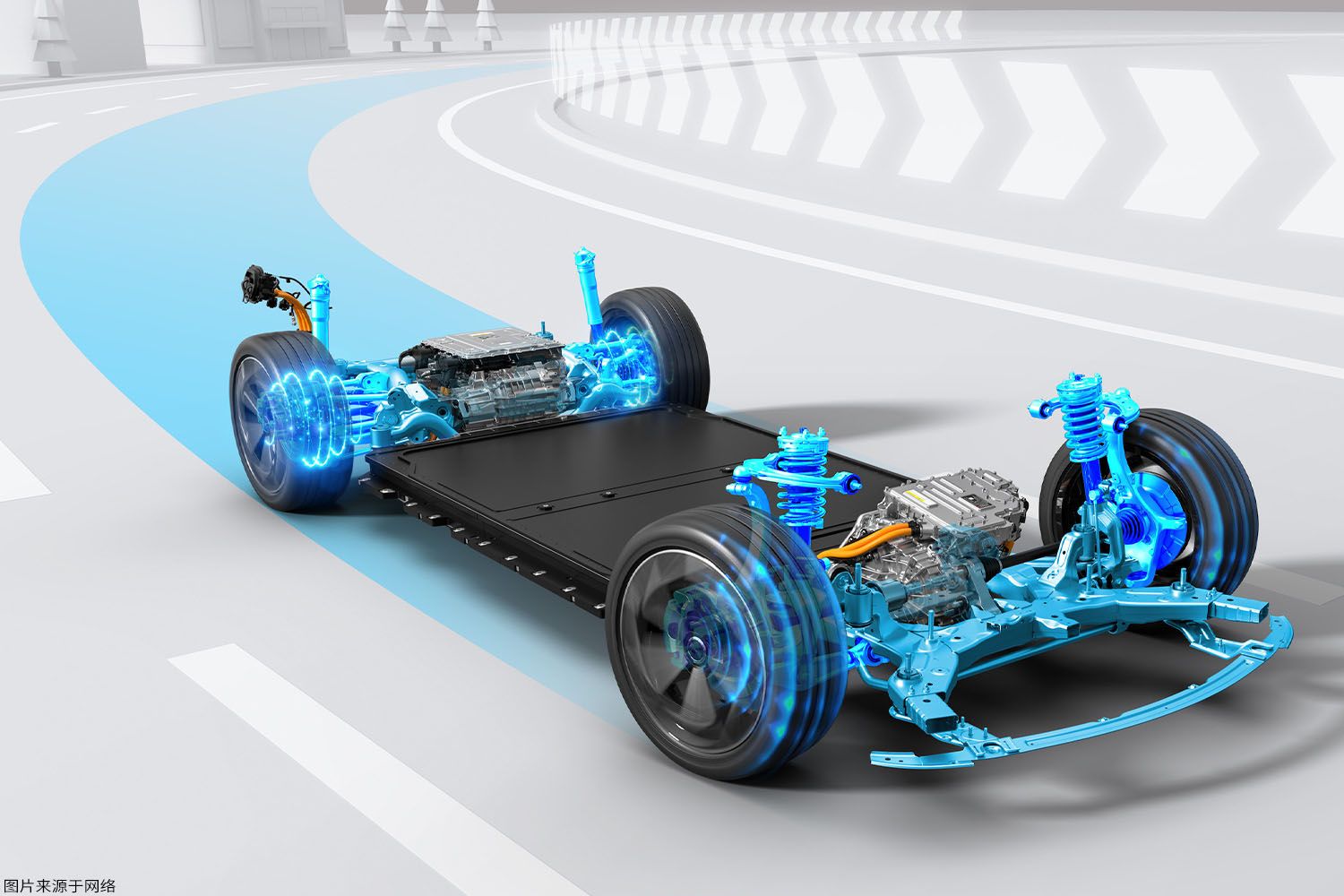
Regarding three-electric protection, for the most sensitive component of an EV—the battery pack—engineers built significant protective redundancy into the chassis design. This ensures that the impact force is absorbed by the body, leaving the battery pack itself undeformed and uncompressed. The reason it didn’t catch fire after the explosion lies in the inherently high thermal stability of its Blade Battery, coupled with an intelligent Battery Management System (BMS) that executed a millisecond-level high-voltage cutoff strategy the moment a severe collision was detected, completely eliminating the risk of thermal runaway.
This incident has shattered the “pseudo-luxury” defined by leather seats and panoramic sunroofs, proving that true luxury is the safety margin that can protect you in a critical moment. From passive body protection to active three-electric control, defense at every level and full-domain protection transformed this vehicle into a mobile safe fortress amidst the flames of war.
Deep Dive into the Three Electrics——How Do Battery, Motor, and Electronic Control Form the “Iron Triangle of Safety”?
In the era of fuel vehicles, safety was mainly about body rigidity. In the EV era, the core of safety has evolved into the absolute control of energy. This is precisely the value of the “Three-Electric System”—each module bears its dedicated safety mission, collaboratively building a comprehensive safety protection system. This is also the core original intention behind our deep cultivation of three-electric system R&D and solution delivery.
Traction Battery: The Energy Heart, Holding the Line on Thermal Safety
The battery is the EV’s energy source and the top priority for safety control. A safe battery isn’t just about not exploding; it’s about achieving ultimate thermal stability. Our battery solution adopts **highly stable cell materials (like the stable olivine structure of LFP) + multi-layer thermal insulation + full-lifecycle monitoring design**: cells utilize high thermal stability materials paired with flame-retardant insulation separators and aerogel thermal layers to prevent thermal propagation between cells; the battery pack features a high-strength sealed casing with superior impact and crush resistance; paired with an intelligent BMS that monitors cell voltage, temperature, and internal resistance 24/7. Upon detecting any anomaly (such as internal short circuit risk caused by collision), it executes **millisecond-level protective actions including high-voltage cutoff, active cooling, and pressure relief**, fundamentally preventing risks of thermal runaway, fire, or explosion—holding the safety line even under severe impact.
Drive Motor: The Power Core, Balancing Performance and Safety
As the EV’s power output unit, while the motor itself doesn’t directly participate in collision safety, the safety design of its high-voltage circuits is critical. We employ **high-strength sealed explosion-proof design + insulation protection + overheat protection triple safeguards**: the motor housing uses high-strength alloy materials to withstand external impact; internal windings utilize high-temperature resistant insulation materials to eliminate leakage and short circuit risks; built-in temperature sensors monitor motor operating temperature in real-time, automatically limiting power and initiating cooling when abnormalities occur. Meanwhile, the Motor Control Unit (MCU) integrates complex insulation monitoring functions—if vehicle deformation damages high-voltage cables, the system instantly detects insulation faults and triggers alarm/shutdown, preventing safety incidents caused by overheating or short circuits, achieving a balance between performance and safety.
Vehicle Electronic Control: The Smart Brain, Millisecond “Doomsday Arbiter”
The electronic control system (VCU/BMS/MCU) is the vehicle’s “smart hub,” coordinating three-electric operation and safety prevention and control. In extreme scenarios like a missile explosion, **response speed determines life or death**. Our electronic control solution incorporates multi-sensor fusion technology, collecting real-time data on vehicle collision, vibration, battery status, and motor conditions, completing analysis and judgment within milliseconds—the Vehicle Control Unit (VCU), working with the BMS, assesses accident severity within microseconds to milliseconds and swiftly issues commands for active discharge and high-voltage shutdown. It features core functions including **collision-triggered automatic power cutoff, high-voltage circuit protection, and fault classification warning**. When encountering extreme impact, it instantly cuts off the vehicle’s high-voltage power supply, preventing electric shock and short circuit risks, while coordinating with passive safety systems like airbags and door unlocking, achieving seamless integration of active and passive protection for more precise and efficient safety control. Without such a smart “brain,” even the best battery could become dangerous due to subsequent short circuits.
Made in China Stands Tall, Hardcore Three-Electric Technology Protects Every Journey
A stray missile inadvertently conducted the most extreme “crash test” for the global automotive industry. This sudden baptism by fire is not just a safety demonstration by one Chinese EV, but a microcosm of “Made in China” showcasing its strength to the world. From the meticulous craftsmanship of vehicle structure to the technological breakthroughs in three-electric systems, China’s new energy vehicles have long shed their low-end labels, ranking among the world’s forefront in safety performance, core technology, and quality control. The parameters written in presentations are cold, but the safety engraved in the genes is warm.
As an enterprise focused on three-electric system R&D and providing one-stop three-electric solutions, we always adhere to the safety bottom line, empowering vehicle manufacturing with hardcore technology and protecting every journey with professional solutions. Whether in vehicle structure design or the R&D of core components like batteries, motors, and electronic controls, China is now running at the forefront of the safety and high-performance track. We believe that in the future, “Made in China” will continue to lead the global new energy track, winning worldwide recognition and trust with superior quality and ultimate safety!

