

In the three core systems of electric vehicles, the drive motor directly determines vehicle power, efficiency, and driving experience. Permanent Magnet Synchronous Motors (PMSM) have become the dominant technology for new energy passenger vehicles due to their overall advantages. This article analyzes technical principles, industry challenges, future trends, and engineering selection calculations based on vehicle performance targets.
1. In-Depth Comparison of Mainstream Motor Technologies
EV drive motors fall into three categories with distinct application scenarios:
- Asynchronous Motors: Low cost, simple process, good heat resistance; large size and weight lead to lower power density and range, mainly used in commercial vehicles.
- Switched Reluctance Motors: Simple structure, strong environmental adaptability; complex control, high noise and vibration, limiting passenger vehicle use.
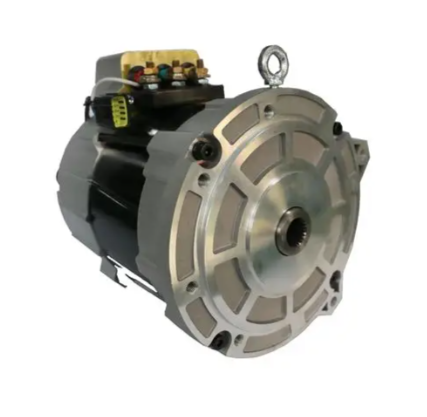
- Permanent Magnet Synchronous Motors (PMSM): High power/torque density, high efficiency, small size, light weight, wide speed range. Challenges include complex high-speed control and risk of permanent magnet demagnetization at high temperatures. Balanced performance, size, and cost make it the mainstream choice for passenger vehicles.
2. Technical Bottlenecks of PMSM
Despite dominance, PMSM performance improvement faces three core bottlenecks:
- Power Density Improvement: Higher torque causes severe heating; higher speed increases core loss, requiring high-grade silicon steel or complex rotors and raising costs.
- Material Constraints: Widely used NdFeB magnets have poor thermal stability and significant performance loss under high temperatures, affecting reliability under heavy loads.
- Manufacturing & Cost: Mass production demands high consistency and yield. Limited industrial experience leads to high defect rates, failing OEM quality and cost targets for 100,000-unit annual output.
3. Opportunities and Dilemmas of In-Wheel Motors
In-wheel motors integrate drive, transmission, and braking inside the wheel, freeing chassis space for distributed drive.
- Technical Pain Points: Increased unsprung mass degrades ride comfort and handling; high integration difficulty for cooling, sealing, and brake energy recovery.
- Market Challenges: High system complexity and cost, lack of mass-produced validation. Most OEMs and motor makers adopt a wait-and-see approach; development driven by a few specialized firms with uncertain outlook.
4. Market Trends & Future Technologies
Market Trends: Growth and Consolidation
The drive motor market is projected to grow 18%–20% CAGR through 2030, amid industry restructuring:
- Margin Pressure: Raw material (copper, rare earth) hikes, OEM price cuts (20%–30%), and price wars reduce average gross margin to ~10%.
- Third-Party Suppliers Rise: Economies of scale favor independent suppliers as market matures.
- IGBT Localization: IGBT accounts for 35%–40% of controller cost; domestic replacement is key for long-term cost reduction.
Three Future Technology Directions
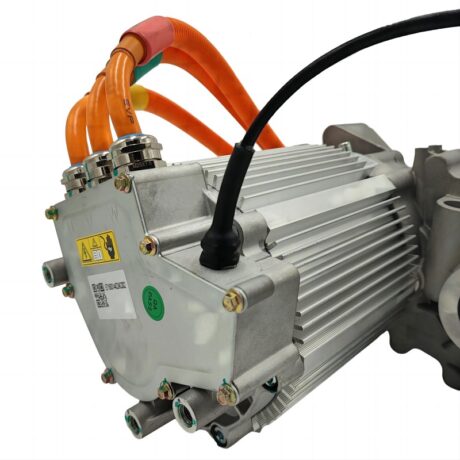
- Lightweight & Integration: “All-in-one” e-axle (motor + controller + reducer) reduces weight, size, and cost.
- High-Efficiency Permanent Magnets: Low/heavy rare-earth-free magnets and hybrid excitation motors improve performance while controlling cost.
- Digital Intelligence: Deep motor–controller coordination optimizes torque, thermal management, and energy recovery.
Key Process Evolution
- Materials: Thinner silicon steel (0.15 mm vs. 0.35 mm) reduces core loss.
- Winding: Square winding replaces round for higher slot fill.
- Cooling: Oil cooling becomes mainstream for high-end motors.
- Power Devices: Silicon carbide (SiC) improves efficiency and heat resistance.
5. Practical Drive Motor Selection Calculation
Motor selection uses reverse calculation from vehicle performance targets.
Vehicle Parameters & Targets
- Kerb mass: 2400 kg; Cd: 0.45; Frontal area: 2.85 ㎡; Tire radius: 0.313 m; Gear ratio: 8.048; Efficiency: 0.9
- Top speed: 120 km/h; 0–50 km/h ≤7 s; 0–100 km/h ≤18 s; Gradeability ≥20%; Cruise at 100 km/h for 30 min
Calculated Core Requirements
- Peak power: ≥89 kW
- Rated power: ≥29.6 kW
- Peak torque: ≥220 Nm
- Rated torque: ≈70 Nm
- Max speed: ≈9000 rpm
- Rated speed: ≈4092 rpm
Motor Matching & Verification
A PMSM with 90 kW peak / 276 Nm peak / 10000 rpm max meets all targets:
- Top speed: Satisfies 120 km/h
- Gradeability: 26% (exceeds 20% target)
- Acceleration: 0–50 km/h in 5.4 s; 0–100 km/h in 15.78 s (both better than targets)
Conclusion
Competition in EV drive motors has shifted from pure performance to cost, technology, and supply chain integration. PMSM will remain mainstream. Success requires breaking material and process bottlenecks, deepening system integration, and precise, cost-effective motor selection. Scientific calculation and validation bridge advanced technology and market success.

