

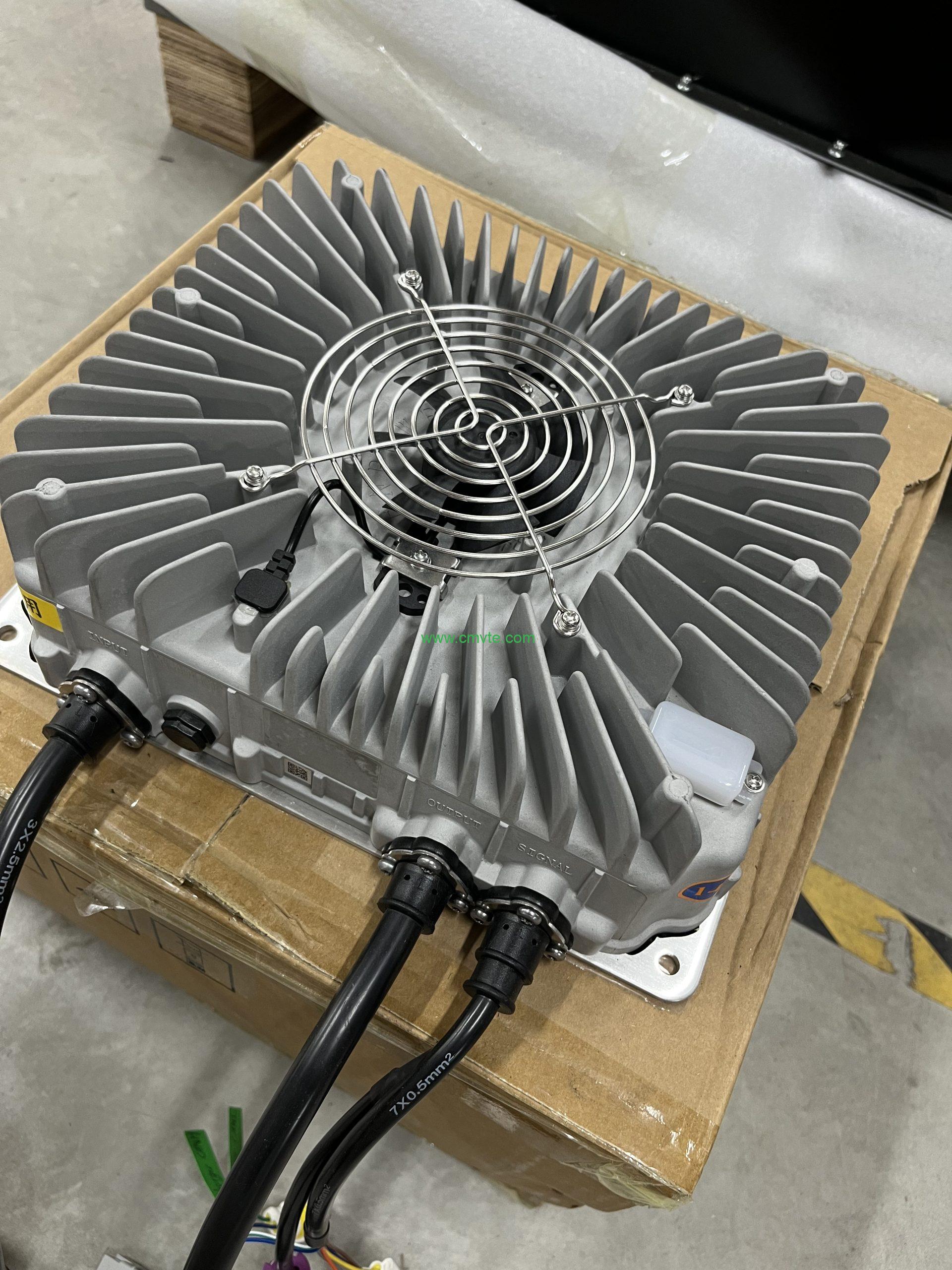
In an EV conversion, the OBC is a critical power electronics module installed inside the vehicle. Its primary job is to convert Alternating Current (AC) from a standard wall outlet or public charging station into the Direct Current (DC) required to safely charge the high-voltage battery pack. Without it, you cannot refuel your newly electric Model T from the grid.
Beyond basic conversion, modern OBCs are sophisticated systems. As highlighted in a Ford Global Technologies patent, advanced OBCs can be integrated with other vehicle systems, such as DC-DC converters, to share components and increase efficiency. This smart design philosophy—maximizing function while minimizing space and weight—is crucial for a Model T, where space is at a premium.
Key Considerations for Your Model T Conversion
Choosing the right OBC isn’t about buying the most powerful one; it’s about finding the perfect match for your vehicle’s new anatomy and your driving needs.
-
Charging Levels & Speed: OBCs are defined by their power rating (measured in kilowatts, kW), which dictates charging speed.
-
Level 1 (1-1.8 kW): Uses a standard 120V household outlet. It’s slow but convenient for overnight charging. This might be sufficient for a light Model T used for short, local tours.
-
Level 2 (3-22 kW): Requires a 240V outlet. It offers a practical balance of speed and accessibility and is the most common choice for conversions, potentially filling a Model T’s battery in a few hours.
-
-
Size, Weight, and Thermal Management: The Model T’s chassis wasn’t designed for bulky electronics. Selecting a compact, lightweight OBC is essential. Furthermore, the conversion process involves replacing the internal combustion engine and related components with an electric motor and battery pack. The OBC generates heat during operation, so its placement must allow for adequate cooling to ensure longevity and safety.
-
Battery Compatibility: Your OBC must communicate flawlessly with your chosen Battery Management System (BMS). They must agree on charging voltages and protocols to prevent damage. This requires careful planning during the design phase of your conversion.
Finding the Right OBC: A Practical Guide
For a Model T, you’ll be sourcing a universal OBC from the EV conversion market, not a vintage Ford part. To simplify the decision, here is a comparison of common OBC profiles suited for such projects:
| Feature/Type | Low-Power OBC (3.3-6.6 kW) | High-Power OBC (7.2-11 kW+) | Bidirectional OBC |
|---|---|---|---|
| Best For | Weekend cruises, shorter ranges | Larger battery packs, daily use | Tech enthusiasts, home power backup |
| Charging Speed | Slower (Level 2) | Faster (Level 2) | Varies (typically Level 2) |
| Space/Weight | Smaller, lighter | Larger, heavier, needs more cooling | Most complex, largest footprint |
| Key Benefit | Cost-effective, easy to fit | Flexibility, faster recharge | Enables vehicle-to-grid (V2G) power |
| Model T Fit | Excellent for a period-correct, minimalist build | Good if range is a top priority | Challenging due to space and system complexity |
The Road Ahead: Customization is Key
The beauty of an EV conversion lies in customization. You are not just restoring a car; you are re-engineering it. While a modern Ford EV might feature an OBC designed to share components with a wireless charging system, your Model T build is a blank canvas. You decide the balance between range, power, charging speed, and preservation of the classic aesthetic.
Embrace the challenge. The process of installing the charging system involves connecting all components and thorough testing to ensure everything functions properly. By understanding the pivotal role of the OBC, you move from simply following instructions to mastering the art of electric vehicle integration. Your Model T will no longer just be a relic of the past; it will be a fully functional, emission-free testament to both historical preservation and cutting-edge technology.
Ready to start your own electrifying project? What specific aspect of the EV conversion process interests you most? Share your thoughts, and we can dive deeper into motors, battery selection, or classic car preservation techniques.

