- Home
- Products
- Specific Vehicle Conversion Kits
- Conversion Kits
- Motors
- Controllers
- Drivetrain Components
- Batteries
- Chargers
- Residential Energy Storage System
- Industrial&Commerrial Energy Storage System
- Charging Stations
- DC-DC Converters
- Air Conditioning Kits
- EPS/EHPS
- Braking Systems
- Liquid Cooling Systems
- Instrumentation
- Accessories
- Electric Conversion Solution
- FAQ
- About Us
- Blog
- Video
- Contact Us
retrofit diesel bus to electric

The Road to Zero Emissions Starts Here: Unlock the Hidden Value of Your Diesel Bus Fleet
Every day, thousands of diesel buses rumble through our cities, burning fuel, spewing particulates, and racking up ever-growing maintenance bills. But what if these same buses could become silent, clean, and profitable assets for the next 10–15 years? That’s the power of diesel-to-electric conversion.
For fleet operators, conversion cuts fuel and maintenance costs by up to 70% – no more oil changes, exhaust systems, or expensive engine overhauls. For conversion shops, this is a new high-growth business: retrofitting proven platforms with modern EV drivetrains, batteries, and telematics. And for government agencies, conversions deliver immediate emissions reductions without the embodied carbon of building new buses – extending vehicle life while creating local green jobs and supporting circular economy goals.
With battery prices dropping and retrofit kits becoming standardized, converting existing buses is now faster, safer, and more affordable than ever. You keep the chassis, body, and interior – all already certified – and replace only the powertrain. The result? A near-silent, zero-tailpipe-emission bus at roughly one-third the cost of a new electric bus.
Whether you manage a transit fleet, run a specialty vehicle shop, or oversee a city’s climate action plan, diesel-to-electric conversion isn’t just a technical possibility – it’s a smart, immediate, and highly scalable solution. The diesel engine may be retiring, but the bus itself is just getting started.
Parts Included to retrofit diesel bus to electric
🔌 Electric Motor System
⚡ Power Electronics
🔋 Battery System
🧩 Vehicle Support Systems

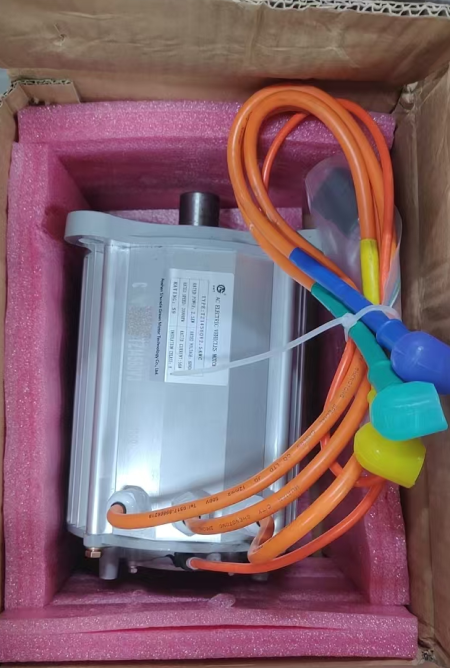
Motor for the electrification conversion of Diesel bus
For diesel bus electrification, the permanent magnet synchronous motor (PMSM) with direct‑drive architecture offers the highest powertrain efficiency, reliability, and ease of integration. Unlike asynchronous motors or geared solutions, a direct‑drive PMSM eliminates the transmission, clutch, and driveline complexity – delivering full torque from standstill, silent operation, and up to 97% peak efficiency. With regenerative braking capability exceeding 85%, it significantly reduces brake wear and extends vehicle range. This solution is now field‑proven across thousands of retrofitted buses in Europe, China, and North America. The following technical specifications are tailored for three common city bus lengths – 8m, 10m, and 12m – providing a clear reference for conversion shops, fleet owners, and government procurement programs.
Technical Parameter Requirements for 8m, 10m, and 12m Buses (PMSM Direct‑Drive)
| Parameter | 8m Bus (Light‑duty / Minibus) | 10m Bus (Mid‑size City Bus) | 12m Bus (Standard City Bus) |
|---|---|---|---|
| GVW (approx.) | 8,000 – 10,000 kg | 12,000 – 14,000 kg | 16,000 – 18,500 kg |
| Peak power | 100 – 130 kW | 150 – 200 kW | 180 – 250 kW |
| Continuous power | 60 – 80 kW | 90 – 120 kW | 110 – 150 kW |
| Peak torque | 1,200 – 1,800 Nm | 2,000 – 2,800 Nm | 2,500 – 3,500 Nm |
| Base speed | 1,800 – 2,200 rpm | 1,500 – 1,800 rpm | 1,200 – 1,500 rpm |
| Max. motor speed | 5,000 – 6,000 rpm | 4,500 – 5,500 rpm | 4,000 – 5,000 rpm |
| Nominal DC voltage | 400 – 540 V | 540 – 650 V | 600 – 750 V |
| Peak efficiency | ≥ 95% | ≥ 96% | ≥ 96% |
| Cooling method | Liquid (water‑glycol) | Liquid (water‑glycol) | Liquid (water‑glycol) |
| Protection class | IP67 (motor), IP6K9K (connectors) | IP67 / IP6K9K | IP67 / IP6K9K |
| Regen. braking capacity | ≥ 80% | ≥ 85% | ≥ 85% |
| Typical axle reduction ratio (if using e‑axle or single‑speed) | 5.0 – 6.5 : 1 | 4.5 – 5.5 : 1 | 4.0 – 5.0 : 1 |

Motor controller for the electrification conversion of diesel bus
The motor controller (MCU) is the brain of your electric powertrain. For a direct‑drive PMSM, the controller must deliver precise torque control, fast regenerative response, and seamless integration with the vehicle’s new VCU. Our solution uses a field‑oriented control (FOC) algorithm with high‑speed IGBT/SiC modules, achieving >98% efficiency across most of the driving cycle.
Key technical features:
-
Voltage range: 400–750 V DC (compatible with 8m, 10m, and 12m bus battery packs)
-
Peak current: 400–600 A (depending on motor power)
-
CAN communication: J1939 or CANopen – easy integration with dashboard, BMS, and VCU
-
Safety: Torque security monitoring, active short circuit (ASC) for emergency stop, and temperature derating
-
Regeneration: Fully adjustable regenerative torque curve, up to 85% braking energy recovery
The controller mounts directly on the chassis near the motor, using liquid cooling from the same loop. With plug‑and‑play tuning software, a certified conversion shop can calibrate the drivability in under two hours. For fleet owners, this means smooth acceleration, reliable brake blending, and lower total cost of ownership – without sacrificing safety or performance.
DC-DC converter for the electrification conversion of Diesel bus
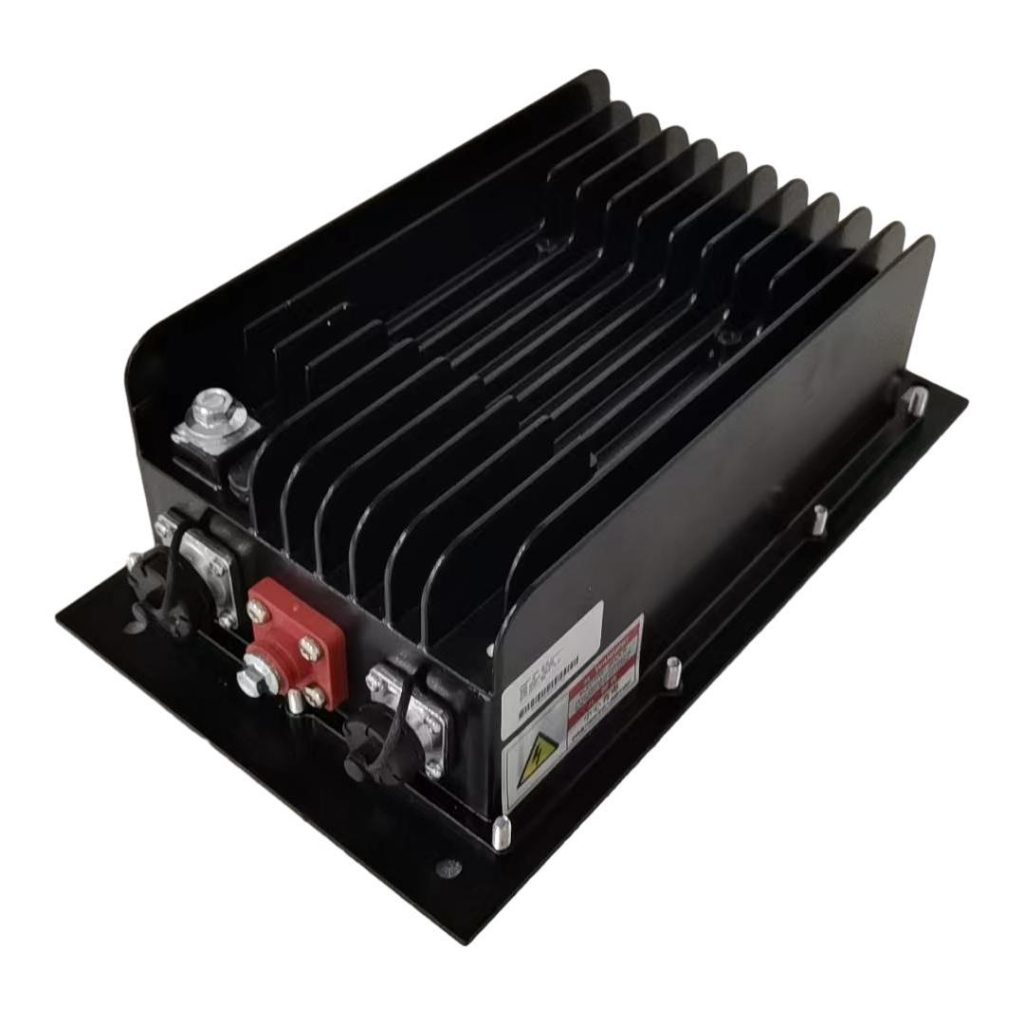
In a diesel‑to‑electric conversion, the original 24V auxiliary system (lights, wipers, air compressor, power steering pump, and pneumatic door controls) must be powered from the high‑voltage traction battery. The DC‑DC converter steps down the 400–750 V DC bus to a stable 24 V DC, replacing the alternator that was once driven by the diesel engine.
Key specifications for bus conversion:
-
Input voltage: 400–750 V DC (compatible with 8m–12m battery packs)
-
Output voltage: 27.5 V ±0.5 V (adjustable for 24V lead‑acid or lithium auxiliary batteries)
-
Output power: 1.5–3 kW (sufficient for all standard bus auxiliaries; higher 4 kW option available for extra cooling fans or telematics)
-
Peak efficiency: ≥ 94%
-
Cooling: Natural convection or optional liquid‑cooled housing for high‑temperature environments
-
Protection: Reverse polarity, over‑voltage, short circuit, and thermal shutdow

10 Inch LCD Touch-screen for diesel bus
The 10‑inch smart digital display replaces the original diesel dashboard, giving drivers and fleet managers real‑time visibility into the electric powertrain. Designed for harsh transit environments, it features an anti‑glare, sunlight‑readable IPS screen (1000 nits) and operates from ‑30 °C to +70 °C.
Key information displayed:
-
Speedometer & odometer (digital and analog style)
-
Battery state of charge (SoC) – percentage and remaining range estimation
-
Motor power/torque output – real‑time bar graph
-
Regenerative braking indicator – energy flow direction
-
High‑voltage system status – insulation resistance, contactor state
-
Warning & fault messages – with clear diagnostic codes
The display connects to the VCU via CAN bus (J1939) and supports customizable pages for pre‑trip inspection, energy economy scoring, and maintenance reminders. A capacitive touch interface allows drivers to reset trip logs, adjust regen intensity (if enabled), or view historical fault logs. For conversion shops, the unit bolts into a standard DIN slot and configures via USB in minutes. It turns a legacy bus into a modern, data‑connected electric vehicle – improving driver confidence and fleet operational insight.
6.6KW On board charger for Diesel bus
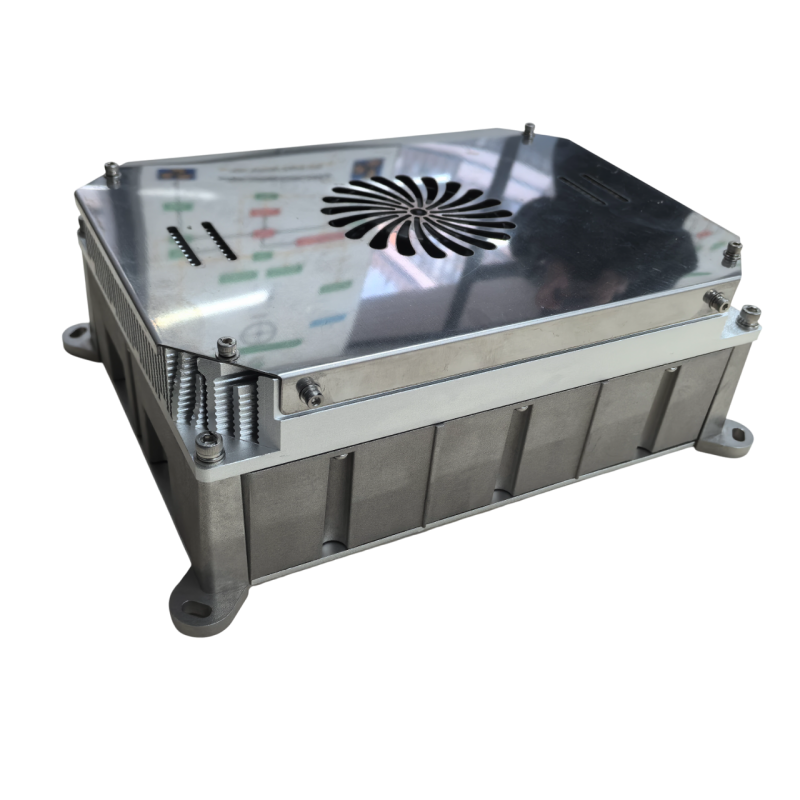
The 6.6 kW OBC converts single‑phase AC grid power (or three‑phase, depending on model) to regulated DC for charging the traction battery. Designed for overnight depot charging, it fully replenishes a 100–150 kWh bus battery in 15–20 hours – ideal for buses returning to the yard after a daily shift.
Key specs: Input 176–265 VAC, 50/60 Hz; output 200–750 VDC, 6.6 kW max; efficiency ≥93%. Features include active power factor correction (PFC >0.99), CAN communication with BMS, and IP67 sealing for under‑chassis mounting. Charging follows a CC‑CV profile with temperature compensation. For conversion shops, the OBC mounts near the battery pack and connects directly to the AC inlet (original fuel filler location repurposed). It delivers safe, reliable charging without requiring expensive DC fast chargers.

Lithium Battery pack soluction for Diesel bus
The battery pack is the energy backbone of any diesel‑to‑electric conversion. For direct‑drive PMSM systems, we recommend lithium iron phosphate (LFP) chemistry – intrinsically safe, long cycle life (>4,000 cycles), and thermally stable.
Typical configuration for 8m–12m buses:
-
Nominal voltage: 540–650 V (for 10m/12m) or 400–540 V (for 8m)
-
Total capacity: 80–180 kWh, depending on daily route length
-
Energy density: 130–150 Wh/kg (pack level)
Integration into the original chassis:
The diesel fuel tank and exhaust system are removed. Battery modules are mounted in multiple locations – roof (low‑profile frame), rear engine compartment, and/or underfloor side compartments – to maintain original ground clearance and weight distribution. A typical 120 kWh pack weighs ~850 kg.
Safety & thermal management:
-
Liquid cooling/heating plates maintain cell temperature between 15–35 °C
-
IP67 enclosure with integrated fuse, contactors, and manual service disconnect
-
BMS communicates with VCU and charger via CAN (J1939), monitoring cell voltage, temperature, and state of charge
For fleet owners, LFP packs offer 8‑10 years of reliable service with zero maintenance. For conversion shops, modular pack designs allow flexible layout without chassis modification. The result is a safe, long‑range electric bus at a fraction of the cost of a new EV bus.

Electric air brake compressor for Diesel bus
In a diesel bus, the air compressor is belt‑driven or gear‑driven by the engine. After conversion, an electric air compressor takes over – supplying compressed air for brakes, air suspension, door operation, and pneumatic wipers.
Key specifications:
-
Power: 3–5 kW (12m bus)
-
Flow rate: 300–600 L/min @ 8–10 bar
-
Voltage: 24 VDC (powered via DC‑DC converter) or direct 540 VDC with integrated inverter
The unit includes an integrated pressure switch, air dryer, and thermal protection. It runs only when the air tank pressure drops below the setpoint – unlike the diesel engine’s continuously turning compressor, saving energy. Mounting is straightforward in the original compressor location or near the frame rail. For conversion shops, this bolt‑on component ensures safe, reliable brake air supply while cutting parasitic energy loss by up to 70%.
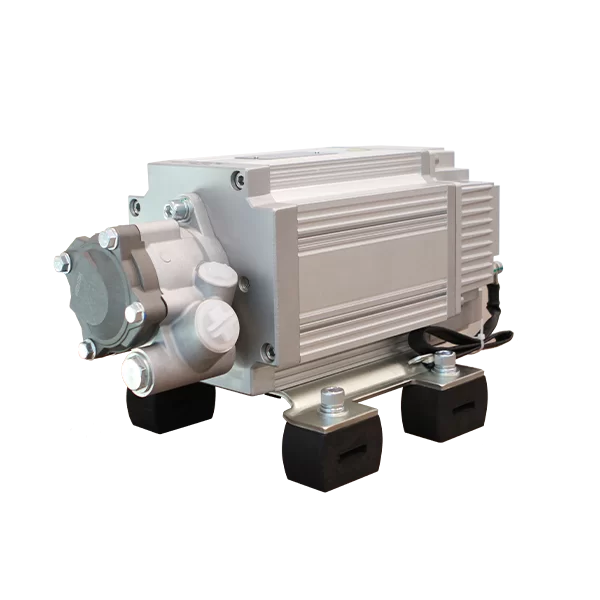
Why Upgrade to an Electric Hydraulic Power Steering (EHPS) Kit for Diesel bus
If you’re converting a diesel bus to electric, replacing the original hydraulic power steering system with an Electric Hydraulic Power Steering (EHPS) kit is essential. Here’s why:
- Compatibility with Electric Vehicles: Traditional hydraulic systems rely on engine-driven pumps, which are incompatible with EV conversions. EHPS uses an electric pump powered by the vehicle’s battery, ensuring seamless integration.
- Improved Efficiency: EHPS reduces energy consumption by up to 10–15%, lowering overall power demands on your EV’s battery system.
- Enhanced Driving Experience:
- Adaptive Steering Feel: EHPS adjusts steering effort based on speed (light at low speeds, firm at high speeds).
- Smaller Turning Radius: Ideal for tight maneuvers.
- Reliability & Low Maintenance:
- No risk of hydraulic fluid leaks or seal degradation.
- Fewer moving parts mean longer lifespan and reduced repair costs.
- Easy Installation: Our EHPS kits include pre-assembled components (pump, control module, and high-pressure lines)
If you have any questions about the components for your diesel bus electric conversion, please feel free to contact us!
Successful Conversion Cases


Pls contact with our saleperson for the detailed Green Motor Tech ‘s EV conversion manual on a similar car like Golf MK4,generally includes below steps:
Disassemble related parts from the original vehicle
- Remove engine
- Remove the bottom plate of the rear trunk
- Install the electric drive systemkits
- Connect the motor to the gearbox
- Install motor and gearbox
- Bin equipment installation
- Install Batteries
- Install wiring harness
- Lithium battery maintenance manual
- Initial charging
- Routine charging
- Battery storage
- Battery movement precautions
- Battery circuit wiring
- Battery power on
- Power off and disconnect the battery
- Safe use
Questions About Diesel bus conversion
Yes, we provide all electronic parts for conversion. We also provide wire diagram system, each part user manual, so you will have no obstacles for installation and connection of the system.
Yes, we provide motor spline coupler and adapter plate to install motor to original transmisison. But the original transmission’s clutch need to get removed. If you want to keep clutch, you need modify the spline coupler to clutch a bit. Because we do not have car in hand, so we bought a old transmission without clutch to make the coupler and adapter kit.
We provide two years for battery, and one year warranty for other parts. We only use top grade quality products. If any parts failure from manufacturing issues, we provide repair parts for replacement.
If we have stocks ready to go, the lead time is one weeek after order confirmed. if we have no stocks, lead time might be 4 weeks after order confirmed.
After you have discussed with sales manager all details of the order, he or she will make proforma invoice with all details and bank accounts for payment, normally payment is through bank to bank T/T. Other payment ways are also flexible to accept after discussion.
We only use top brand of cells in China, like EVE, like Gotion etc, most of the case we use EVE brand pure new and A grade cells to make pack. And in our battery pack we surely use real automobile grade BMS, not simple protection board.
We care about reputation more than our customers!
We are real manufacturer, not sales trade office/company, we started our motor production from 1995 in China. In conversion we now have more than 10 year experiencee. In the whole drive systems, we do not produce all parts, but motor we make, controller we provide CAN BUS and technical requests to our partner, same as lithium battery pack and wire hanress of the system, the design and CAN BUS are from us. other accessories like gas peda, meter etc we get from reliable partners.
Except motor and drive train solution, we also owns our own low speed electric vehicle assembly factory, its website/brand is www.gmtlsv.com
In short, we are EV expert with decades experience in China!
Yes, our key electronic components are with CE certificate for Europe markets, so at the moment, we ship to Europe like France, UK, Germany, Italy, Sweden, Belgium, Turkey etc.
We also have ISO9001 quality manage certificate.
For our EV products, we also have WMI (World Manufacturer Identifier) certificate, each vehilce has its VIN number.
To some particular countries, they have requests in import or tax reduces policy such as for Africa countries and Middle East, COC or SABER might needed for import. For some countries, certificate of origin: FORM A, FORM E etc are requested. We all have experience to make for customers.
Yes, of course, our engineers who can speak English directly, video talk/email/Whatsapp they can communicate and serve customers without obstacles.
No matter before-sales or after sales, we all request in time response 24 hours and 7 days as long as we see the requests.
For necessary project, we can also send engineers to customers’ company for guide or training.
We also welcome customers to send engineers to us for onsite learning and training!
Yes, no problem, we support that. We hope customers can do longterm business so customization of his logo is OK
Please consult with our sales manager:
whatsapp/wechat: + 86 1812358 8272
We are more than welcome for your inquiries.