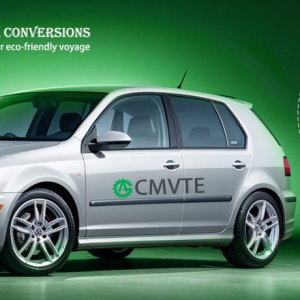
Industry data shows that the global electric vehicle conversion market will exceed $1.5 billion by 2025, with DIY conversions growing at over 30% annually. This guide covers the latest technologies, complete processes, cost structures, and safety advice for successful vehicle electrification.
Table of Contents
ToggleThree Drivers for 2025 EV Conversion Growth
- Solid-state batteries with 500Wh/kg density
- AI controllers improving efficiency by 25%
- Modular kits for 150+ vehicle models
- Battery costs down to $100/kWh
- Subsidies up to $5,000 in 40+ regions
- Insurance premiums down 35% from 2023
- 50% increase in public charging density
- Standardized V2G grid integration
2025 Standard Conversion Roadmap
Preferred models: 2000-2015 Toyota Corolla, Ford F-150, BMW 3 Series (90%+ success rate). Power matching: 5-7kW per 1000 lbs vehicle weight. Structural reinforcement for battery installation.
Document original wiring layout, environmentally dispose of fluids, identify reusable subsystems, and create custom motor-driveshaft connectors.
| Component | Basic Solution | 2025 Advanced |
|---|---|---|
| Battery | LiFePO4, 4000 cycles | Semi-solid, 6000+ cycles |
| Motor | PMSM, 92% efficiency | Reluctance, 96% efficiency |
| Charger | 7.4kW unidirectional | 22kW bidirectional |
2025 Safety Requirements: Insulation Monitoring System (IMD), IP67 high-voltage interlock, multi-level circuit protection.
Safety testing (insulation resistance ≥1000Ω/V), performance validation (real-world range +15% margin), and SAE J3400 certification compliance.
2025 Cost Breakdown (75kWh System)
| Component | DIY Conversion | Professional Service | Key Insight |
|---|---|---|---|
| Battery System | $9,800-$12,000 | $13,000-$16,000 | 22% cost decrease YoY |
| Powertrain | $3,000-$4,500 | $4,500-$6,200 | Includes custom connectors |
| Charging System | $1,100-$1,800 | $1,500-$2,300 | V2X functionality |
| Professional Labor | 180-350 hours | $6,000-$10,000 | $100-$150/hour rate |
Budget Planning: Reserve 20% for contingencies. Focus on custom brackets ($400-$1,000), brake upgrades ($800-$1,500), and thermal management ($600-$1,200).
Sustainability Benefits
78% lifecycle carbon reduction compared to new EV production.
92% original vehicle material utilization retained.
98% material reuse through closed-loop systems.
Ready to Convert Your Vehicle?
2025 is the optimal window for electric vehicle conversion with the best technology and economics.
Get Your Custom Conversion PlanFrequently Asked Questions
Take Action Now
If you're considering converting your vehicle to electric, 2025 is the optimal window. Visit our knowledge base for the latest conversion cases and technical resources.