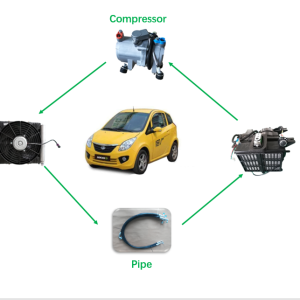
In the rapidly evolving automotive industry, driver and passenger comfort has become a paramount consideration in vehicle design. Among the various comfort factors—including power performance, safety features, and seat ergonomics—climate control within the enclosed cabin space plays a crucial role. Automotive air conditioning systems have thus become an essential component, evolving alongside vehicle technology to meet increasing consumer demands for comfort, efficiency, and environmental sustainability.
Expert Insight: Modern automotive AC systems do more than just cool the air—they maintain optimal humidity levels, filter pollutants, and in electric vehicles, manage energy consumption to preserve battery life. These advancements make understanding different AC types essential for both consumers and automotive professionals.
Classification by Drive Mechanism
Automotive AC systems can be categorized based on their power source and operational characteristics:
- Independent Systems: These utilize a dedicated engine to power the refrigeration compressor. Commonly found in large and medium-sized buses, they offer substantial cooling capacity (typically 30,000-50,000 BTU/h) and stable operation. However, their higher cost ($2,000-$5,000), larger size, and additional weight (150-300 lbs) make them impractical for smaller vehicles.
- Non-independent Systems: The most common type in passenger vehicles, these systems derive power from the main engine via belt-driven compressors. While more compact and affordable ($500-$1,500), their cooling performance fluctuates with engine speed, potentially reducing efficiency at idle or low speeds by 15-30%.
Classification by Functional Capabilities
Modern vehicles offer varying levels of climate control sophistication:
| Type | Features | Typical Applications |
|---|---|---|
| Single Function | Separate controls for heating, cooling, and ventilation | Commercial trucks, basic buses |
| Integrated Cooling/Heating | Shared blower and ductwork with coordinated controls | Most passenger vehicles |
| Dual/Tri-Zone Climate | Independent temperature control for different cabin areas | Premium sedans and SUVs |
Control System Evolution
The interface and automation level of AC systems has progressed significantly:
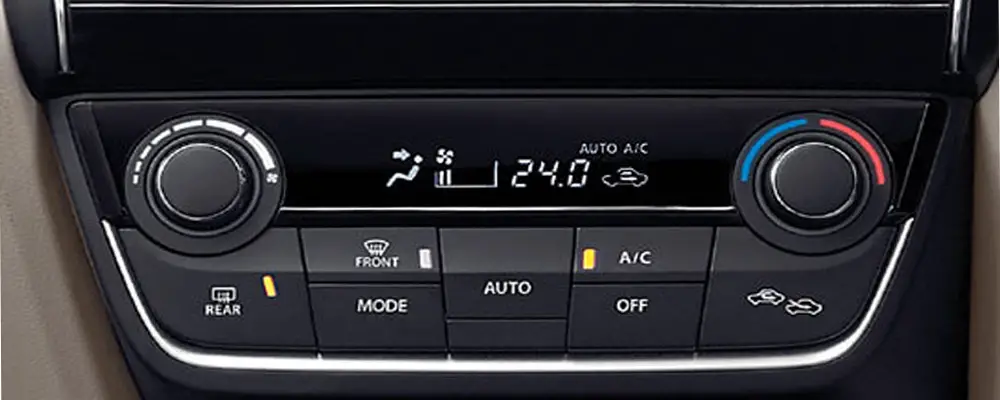
- Manual Controls: Basic knobs and switches for temperature, fan speed, and air distribution (still found in 15% of new vehicles).
- Electro-pneumatic: Uses vacuum actuators for semi-automatic temperature regulation (common in 1990s vehicles).
- Automatic Climate Control: Incorporates multiple sensors and electronic actuators for hands-free operation (standard in 60% of modern vehicles).
- Smart Climate Systems: Utilize AI and machine learning to predict passenger preferences, integrating with navigation data to precondition the cabin.
Specialized Systems for Electric Vehicles
The transition to electric mobility has driven significant innovations in automotive AC technology:
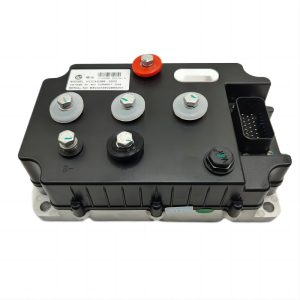
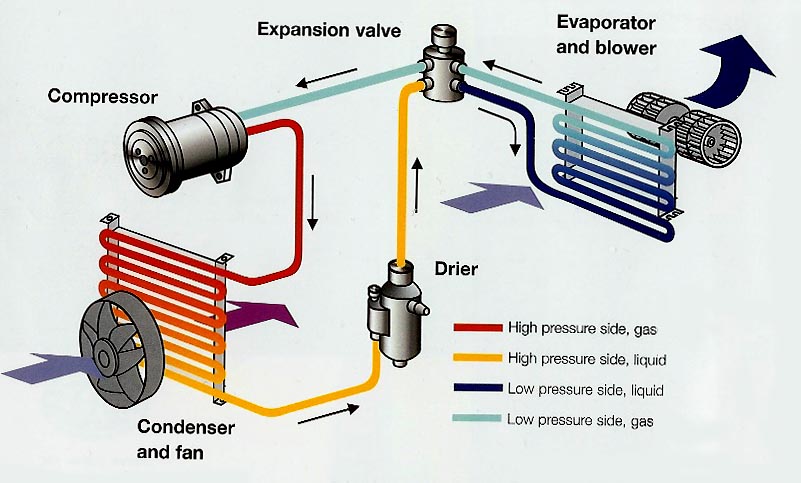
Electric vehicles employ fundamentally different AC architectures due to their unique powertrain characteristics. Unlike traditional vehicles that can utilize waste engine heat for cabin warming, EVs require efficient heat pump systems that can provide both cooling and heating while minimizing impact on driving range.
Technical Deep Dive: Modern EV AC systems typically use electric scroll compressors that operate at variable speeds (800-9,000 RPM) to precisely match cooling demands. These compressors achieve 20-30% higher efficiency than conventional piston compressors while reducing noise by 5-8 decibels—critical factors for EV range and passenger comfort.
Advanced EV thermal management systems integrate the AC with battery temperature regulation, using sophisticated algorithms to balance cabin comfort with battery performance. Some premium models like the Tesla Model S can precondition the cabin while charging, reducing range penalty by up to 15% in extreme weather conditions.
Future Trends in Automotive Climate Control
The automotive AC industry is evolving toward:
- CO2 (R744) refrigerant systems with 75% lower global warming potential
- Solar-assisted ventilation reducing AC load by 10-15%
- Personalized microclimate zones using seat-based ventilation
- Biometric sensors that adjust temperature based on passenger physiology
When selecting a vehicle, understanding these AC system differences can significantly impact long-term satisfaction. Consider your climate, typical passenger load, and for EVs, the system's energy efficiency rating. Premium systems may add $1,000-$3,000 to vehicle cost but often provide better comfort and resale value.