

Understanding the 2010 Ford Fusion's Electric Power Steering (EPS) System
In the evolution of automotive steering systems, Electric Power Steering (EPS) represents a significant technological advancement following mechanical steering and hydraulic power steering. For the 2010 Ford Fusion, a classic midsize sedan, its EPS system not only stood as a typical representation of industry technology at that time but also served as one of the core components enhancing driving safety, comfort, and fuel efficiency. This article comprehensively analyzes the EPS system used in the 2010 Ford Fusion from various perspectives: system composition, working principle, adaptation characteristics, core advantages, maintenance points, and technological development.

I. Basic Composition and Working Logic of the 2010 Ford Fusion EPS System
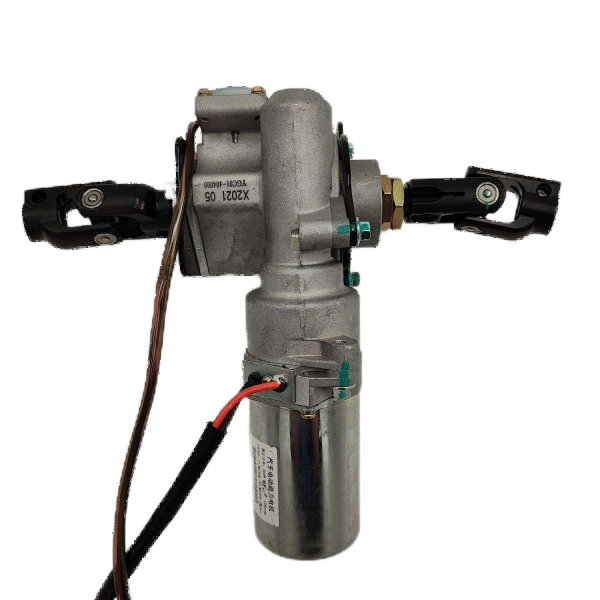
The EPS system in the 2010 Ford Fusion is not a single component but a closed-loop control system consisting of four core modules: sensors, Electronic Control Unit (ECU), motor, and reduction mechanism. These components work together to achieve a "on-demand power assistance" steering experience.
1. Core Components and Their Functions
- Torque Sensor: Mounted on the steering column, it serves as the system's "sensory nerve." It can real-time detect the force (torque) and angle applied by the driver when turning the steering wheel, converting mechanical signals into electrical signals transmitted to the ECU. For example, when making a low-speed U-turn, as the driver increases steering effort, the sensor captures this torque change and feeds it back to the control unit;
- Electronic Control Unit (ECU): Acts as the "brain" of the EPS system. It receives signals from the torque sensor while also gathering real-time data from the vehicle's speed sensor and engine speed sensor (such as requiring maximum assistance at 5km/h and minimal assistance at 120km/h), calculating the "optimal assistance value" through pre-programmed control algorithms;
- Power Assist Motor: The 2010 Fusion uses a permanent magnet synchronous motor (with some early models featuring DC motors), mounted on either the steering column or rack. The motor outputs corresponding assist torque according to ECU commands, directly aiding steering wheel movement;
- Reduction Mechanism: Since the motor produces high torque at high speeds, a gear or belt reduction mechanism is needed to reduce speed and amplify torque, ensuring the assistance matches the driver's操作节奏 and preventing steering from being "too light" or "too heavy."
2. Working Principle: Complete Process from Operation to Assistance
When the driver turns the steering wheel of a 2010 Fusion, the system initiates the following process:
- The torque sensor detects steering torque and angle, generating electrical signals;
- After receiving these signals, the ECU calculates the required assist torque based on parameters such as vehicle speed (with assistance coefficient maximized at low speeds and minimized at high speeds) and engine operating conditions;
- The ECU sends commands to the assist motor, which outputs the corresponding torque;
- The reduction mechanism converts the motor torque into mechanical force suitable for the steering system, assisting rack or steering column movement;
- After steering is completed and the driver releases the wheel, the torque sensor signal returns to zero, prompting the ECU to instruct the motor to stop assistance, returning the system to standby.
The entire process takes only 0.1-0.3 seconds, significantly faster than the response time of traditional hydraulic assistance. Additionally, the assistance level dynamically adjusts with vehicle speed, balancing low-speed maneuverability and high-speed stability.
II. Adaptation Characteristics and Technical Parameters of the 2010 Ford Fusion EPS System
The 2010 Ford Fusion was available in configurations including S, SE, SEL, and Sport versions. While the EPS systems in different versions share the same core principles, they feature slight differences in motor power and control algorithms to adapt to the weight and driving requirements of different powertrains (such as the 2.5L naturally aspirated engine and 3.0L V6 engine).
1. Adaptable Models and Core Parameters
According to Ford's official service manual (WSM 2010 Fusion), the 2010 models' EPS systems mainly fall into two types:
- For models with 2.5L L4 engine (S/SE/SEL versions): The assist motor model is BL3Z-3C529-A, with a rated voltage of 12V, rated power of 1.8kW, and maximum output torque of 45N·m. It features a steering column-mounted structure, with emphasis on optimizing low-speed steering maneuverability for urban commuting;
- For models with 3.0L V6 engine (SEL/Sport versions): The assist motor model is BL3Z-3C529-B, with increased rated power of 2.2kW and maximum output torque of 55N·m. It uses a rack-mounted design (assistance directly acts on the steering rack) to accommodate the heavier front weight of these vehicles (V6 models are approximately 150kg heavier than L4 models), ensuring steering stability during high-speed overtaking and climbing.
Both models use the BL3Z-14D664-A ECU, which can be parameter-matched and fault-reset using Ford's IDS diagnostic system. Both also support the "steering angle learning" function — after tire replacement or wheel alignment, the ECU's steering angle reference must be calibrated via a diagnostic tool to prevent "steering wheel drift" or "uneven assistance."
2. Core Differences from Traditional Hydraulic Assistance
The 2010 Fusion was among Ford's early midsize vehicles to fully popularize EPS. Compared to same-class models still using hydraulic assistance (such as some 2010 Toyota Camry versions), its EPS system offers three key advantages:
- Lower Energy Consumption: Hydraulic systems require the engine to continuously drive a hydraulic pump via a belt, consuming approximately 3-5% of engine power even when not steering. In contrast, EPS only activates the motor during steering. The 2010 Fusion's EPS reduced fuel consumption by 0.3-0.5L per 100km, meeting the U.S. CAFE fuel economy standards at that time;
- Simpler Maintenance: Hydraulic systems require regular power steering fluid replacement and hose leak checks, while EPS has no hydraulic fluid or hoses, reducing failure points like "leaks" or "fluid degradation." The 2010 Fusion's EPS system was designed to match the vehicle's overall lifespan (approximately 200,000km);
- Better Environmental Adaptability: In low-temperature environments (e.g., -30℃), hydraulic fluid thickens, causing heavy steering. EPS motors, however, adjust operating parameters in real-time via temperature sensors, maintaining stable assistance even in extreme temperatures — particularly important for users in northern regions.
III. Common Faults and Maintenance Points of the 2010 Ford Fusion EPS System
Despite the high reliability of EPS systems, the 2010 Fusion has been in service for over a decade, and some vehicles may develop faults due to component aging. Understanding common issues and maintenance methods can effectively extend system life.
1. Typical Faults and Diagnostic Methods
According to Ford dealership service data, common faults in the 2010 Fusion's EPS system fall into three categories:
- Fault 1: Heavy steering wheel with "EPS warning light" illuminated on instrument panel Usually caused by assist motor aging (brush wear) or torque sensor failure. Use an OBD scanner to read fault codes (e.g., P0605 "ECU Internal Fault," C1401 "Torque Sensor Signal Abnormality"). If codes indicate a sensor issue, replace the sensor module on the steering column (model BL3Z-3C509-A); if indicating a motor issue, replace the entire motor assembly;
- Fault 2: Abnormal noises during steering (e.g., "buzzing" or "gear meshing sounds") Often due to worn reduction gears or insufficient lubrication. Remove the steering column cover to inspect gear tooth wear. For minor wear, apply specialized grease (Ford recommends XL-120 grease); for severe wear, replace the entire reduction mechanism;
- Fault 3: Steering wheel drift and uneven assistance Typically caused by misaligned wheel parameters or lost ECU steering angle reference. First perform wheel alignment (the 2010 Fusion's front wheel toe-in standard is +12′±6′), then execute "steering angle learning" via Ford's IDS diagnostic system to calibrate ECU parameters.
Daily Maintenance Recommendations
To extend EPS system life, 2010 Fusion owners should note three points:
- Avoid prolonged "full lock" steering: When turning to extreme positions (e.g., during U-turns), immediately return the wheel 1-2 degrees to prevent motor overheating from continuous full-load operation;
- Regularly inspect wiring connections: Every 20,000km, check EPS wiring connectors under the steering column (such as connector C227) to ensure they're secure and free from oxidation. Conductive grease can be applied to prevent poor contact;
- Avoid excessive water exposure: The 2010 Fusion's EPS motor has an IP6K4 rating (splash-resistant). If water reaches above half-wheel depth, promptly check for motor water ingress to prevent internal short circuits.
IV. Technological Development: Evolution of Ford's EPS System from 2010 to Today
While the 2010 Fusion's EPS system has served for over a decade, it established the foundation for Ford's midsize vehicle steering technology. Today, Ford's EPS systems have evolved to their third generation, with three major upgrades over the 2010 technical framework:
- Assist motors upgraded to "brushless motors": Compared to the 2010's brushed motors, brushless motors offer 3x longer lifespan and 50% less noise, such as those in the 2023 Ford Mondeo;
- Added "active steering intervention": Integrating with ADAS driver assistance systems, modern Ford EPS can provide "lane-keeping assistance" (e.g., the system automatically adjusts the steering wheel slightly when the vehicle drifts from its lane), whereas the 2010 model only offered basic assistance;
- More intelligent control algorithms: AI algorithms learn driver steering habits (some drivers apply more force, others less), dynamically adjusting assistance coefficients for a "personalized steering experience" — a feature absent in the 2010 system.
Despite technological advancements, the 2010 Fusion's EPS system still offers high repair value — current market prices for original components (like motors and sensors) are approximately 1/3 of new vehicle parts, with mature repair techniques accessible to most workshops. This contributes to the model's continued popularity in the used car market.
Conclusion
For the 2010 Ford Fusion, the electric power steering system is more than just a "driving assistance" component — it's a core link balancing driving safety, efficiency, and comfort. Understanding its composition, principles, and maintenance points helps owners address daily vehicle issues while illuminating the evolutionary path of automotive steering technology from "mechanical" to "electric." If you own a 2010 Fusion, this knowledge will help maintain this classic model's "handling feel." For automotive technology enthusiasts, the 2010 Fusion's EPS system represents a typical example from the "electric steering popularization era" worthy of in-depth study.

