In the era of rapid electric vehicle, we often marvel at the acceleration of 100 kilometers, intelligent cockpit and ultra-long endurance.
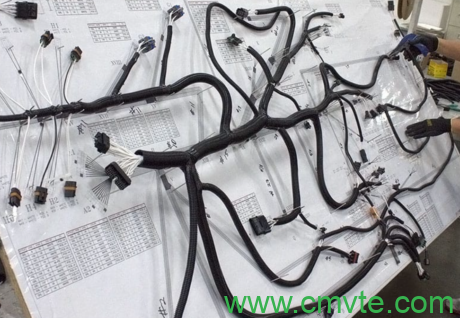
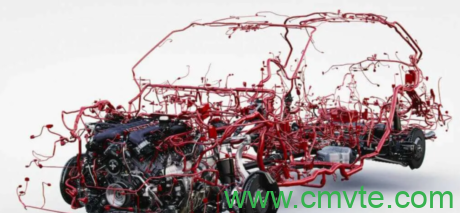
However, under this future picture drawn by code and current, there is a far more sophisticated and fragile “neural network”-automotive wiring harness.
Like the blood vessels and nerves of a vehicle, it silently carries the transmission of all electrical signals and energy, and its reliability directly determines the quality of life of this intelligent machine.
In the electric vehicle wiring harness industry, we often hear “80% of harness quality problems come from Crimping.”
Many people will feel exaggerated when they hear this statement for the first time. After all, there are many processes in wiring harness manufacturing, such as:
- Peel
- Plug
- Winding
- Assembly
- Electrical testing
Why is crimping the most likely to go wrong?
Crimping is the most critical and vulnerable connection point in the entire harness system.
Crimping is the heart of electrical connection
In the wiring harness system, the transmission path of the current is:
Wire → crimp terminal → connector → ECU or component
In other words:
The connection of the conductor to the terminal is entirely dependent on crimping.
If the crimping quality is not good, it may result in:
- The contact resistance increases
- Fever
- Electrical instability
- Intermittent failure
These problems are often manifested in vehicles as follows:
- Occasional failure
- Unreproducible electronic problem
- Complex diagnostic problems
Therefore, when many vehicle manufacturers trace the problem, they finally find that the root cause is abnormal crimping quality.
Crimping is “irreversible process”
Many processes of the harness can be reworked, for example:
- Insertion error can be re-inserted
- Tape wrapping can be redone
But crimping is different, once crimping is completed, it is basically irreversible.
If the crimp is not good, you can usually only:
- Cut it off
- Re-crimp
This means that any hidden crimp problems, if not discovered during production, will flow directly into the entire vehicle.
Crimping quality is extremely dependent on detail
Crimping appears to be a simple act of pressing the terminal against the wire.
But in fact, the quality of crimping is affected by many factors, such as:
1 Crimp Height
The crimp height is the most critical process parameter.
If the crimp height is too high, the conductor will not be compacted and the contact resistance will increase.
If the crimping height is too small, the copper wire will be broken and the strength of the wire will be reduced.
A tolerance of only ± 0.02 mm is normally allowed. This requires very high process stability.
2 Die wear
Crimping dies will gradually wear out after a long period of use.
Problems caused by wear and tear include:
- Crimp height changes
- Crimp shape change
- Insufficient conductor compression
If the mold management is not strict, it is easy to produce batch problems.
3 Conductor stripping quality
If the peeling quality is not good, for example:
- The copper wire was cut
- Incorrect stripping length
Possible after crimping:
- Insufficient drawing force
- Uneven compression of conductor
These problems are often difficult to find in appearance.
Crimping defects are often “hidden defects”
The biggest risk of crimping is that many defects are invisible to the naked eye.
For exampl:
- Incomplete compaction of conductor
- The copper wire is broken
- Insufficient crimp density
These problems can only be found by the following methods:
- Pull-out test
- Crimping section analysis
- Resistance test
If there is no such verification means in the production process, the problem is easy to miss.
Crimping process is highly dependent on equipment status
Although the crimping equipment is highly automated, there are still many risks.
For exampl:
Drift of equipment parameters
After a long period of production, the equipment may appear:
- Crimp height offset
- Crimping pressure changes
If there is no regular verification, there will be quality fluctuations.
Feeding problem
If the terminal feeding is abnormal, for example:
- Terminal position offset
- Unstable feeding
The shape of the crimp changes.
Crimping defects tend to be “batch”
Another characteristic of crimping problems is that once they occur, it is easy to form batch problems.
The reason is simple, the crimping process is usually:
- High tempo
- Continuous production
If the mold or equipment is abnormal, hundreds or even thousands of products may have been produced in a short time. This is why the whole car factory attaches great importance to the crimping process.
A lot of crimping problems come from management, not technology.
From the audit experience, many crimping problems are not technical problems, but management problems.
Common scenarios include:
- Die life is not managed
- Insufficient frequency of drawing test
- Crimped sections are not regularly inspected
- Inadequate operator training
If these basic management is not in place, even if the equipment is more advanced, it is difficult to ensure stable quality.
How to Control the Crimping Quality of Excellent Wiring Harness Factory
Sophisticated wiring harness plants typically employ multiple layers of control.
For exampl:
1 Crimp parameter management, including:
- Crimp height standard
- Regular testing
2 Pullout force test
Used to verify mechanical strength.
3 Crimping section analysis
This is the most reliable means of verification. Through the section, we can see that:
- Conductor compression
- Crimp density
- Terminal deformation
4 Equipment monitoring system
Some advanced factories will also use:
Crimping Force Monitoring System (CFA).
Once the crimping is abnormal, the equipment will automatically alarm.
Crimping may seem like a small step in harness manufacturing, but it actually determines the reliability of the entire harness system. This is why there is a summary of experience in the industry:
80% of harness problems are crimped.
For wiring harness factories, the real quality competitiveness often lies not in equipment, but in:
- Do you understand the principle of crimping
- Is stable process control established
- Is process quality continuously verified
Only in this way can we ensure that every crimp point is reliable.
What the word “crimp” carries is far from a simple physical action. It is a contradiction between precision and fragility, and it is the “throat” that decides the life and death of the electrical system. The astonishing proportion of “80%” is not so much a technological magic spell as a mirror, reflecting the core challenge of modern manufacturing industry: how to achieve 100% reliable control of countless “irreversible” micro-moments.
This enlightens us that whether in the automotive industry or in the broader field of precision manufacturing, the real quality highland often lies not in the possession of the most dazzling automation equipment, but in the profound awe and scientific management of the basic process principles. It is embodied in the persistence of ± 0.02mm tolerance, the strict counting of die life, and the systematic verification of vigilance for every “invisible” defect.