

As the global automotive industry undergoes a once-in-a-century transformation, electric vehicles are rapidly replacing traditional fuel vehicles at an astonishing pace. This shift represents not merely a change in power source, but a comprehensive revolution encompassing efficiency, sustainability, and performance. This article analyzes the comprehensive advantages of electrification through the latest data and technical analysis.

Core Competitive Advantages of Electric Vehicles
Beyond the well-known environmental benefits, electric vehicles demonstrate significant advantages across multiple dimensions. From lower operating costs to superior performance, technological advancements are making the case for electric transportation increasingly compelling.
Lower Operating Costs
Electricity costs are significantly lower than fuel expenses, and EVs have fewer moving parts, reducing maintenance requirements and costs.
Environmental Benefits
Zero tailpipe emissions and the potential for near-zero carbon footprint when charged with renewable energy sources.
Superior Performance
Instant torque delivery from zero RPM provides smooth, powerful acceleration and a refined driving experience.

Comprehensive Comparison: Fuel Vehicles vs Electric Vehicles
| Comparison Dimension | Traditional Fuel Vehicle | Electric Vehicle |
|---|---|---|
| Efficiency Performance | Only 20-30% of fuel energy is converted to kinetic energy, with the remainder lost as heat. Complex mechanical systems result in significant friction energy losses. | 85-90% of electrical energy is converted to kinetic energy. Fewer moving parts reduce energy loss. Regenerative braking systems recover energy during deceleration. |
| Environmental Impact | Direct emissions of CO₂ and other pollutants. Fuel production causes additional environmental damage. Significantly contributes to urban air pollution. | Zero tailpipe emissions. Near-zero carbon footprint when charged with renewable energy. Also reduces urban noise pollution. |
| Performance Experience | Gradual power output with torque curve variations. Engine noise and vibrations present. Gear shifting required for optimal performance. | Instant torque output from zero RPM. Smooth and quiet operation. Single-speed transmission simplifies driving. |
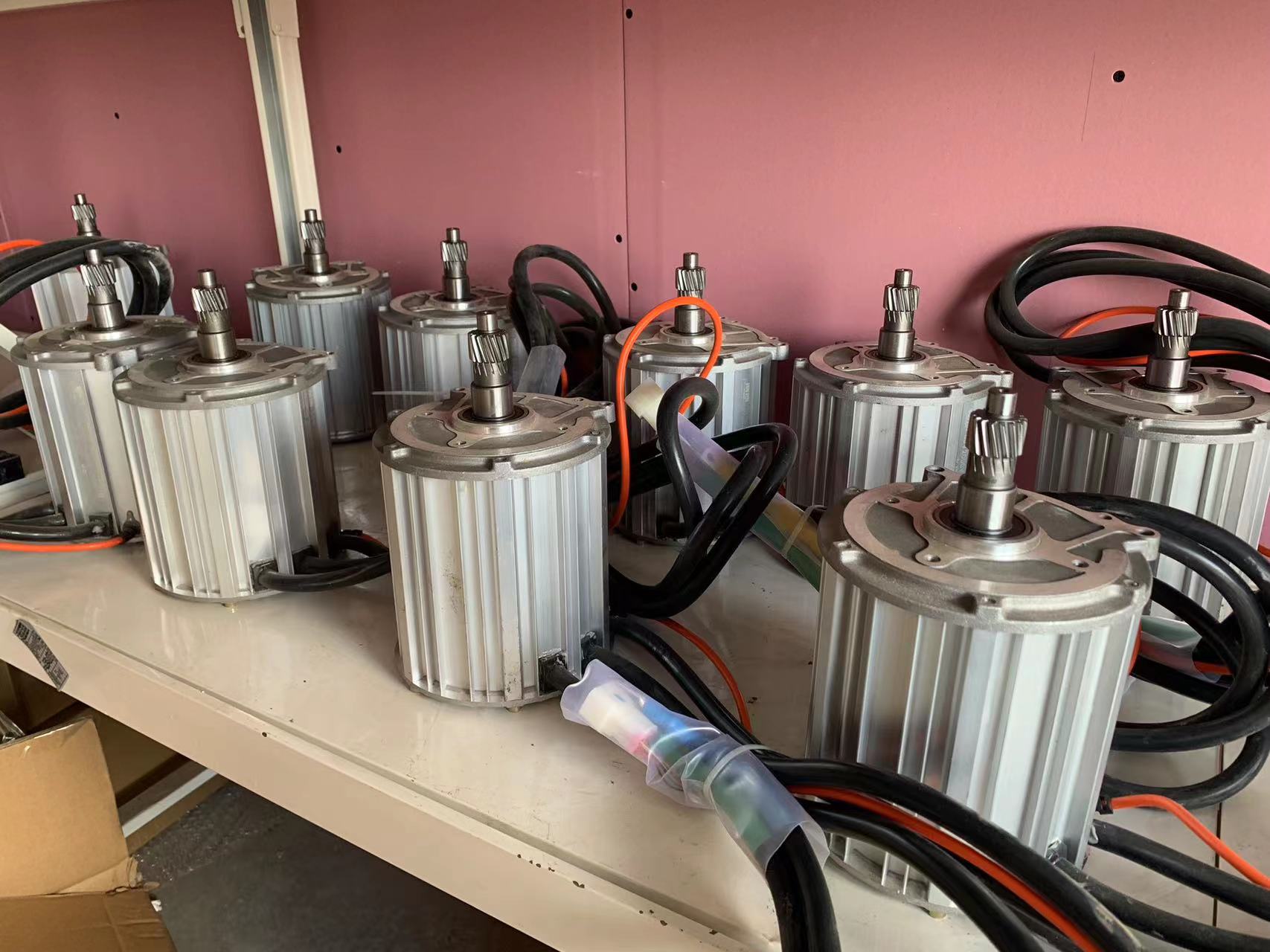
Key Motor Technologies for Vehicle Electrification
When converting fuel vehicles to electric, selecting the appropriate motor type is crucial. Modern electric vehicles employ various advanced motor technologies, each with unique characteristics suited to different application scenarios:
1. Brushless DC Motors (BLDC)
With their excellent balance of performance and reliability, BLDC motors have become the preferred choice for many electric conversion projects. By replacing carbon brushes with electronic commutation, they achieve:

2. Permanent Magnet Synchronous Motors (PMSM)
For high-performance applications, PMSM motors provide exceptional characteristics, making them the choice of many premium electric vehicle manufacturers:
These motors are particularly suitable for:
- High-performance electric sports cars
- Commercial electric vehicles
- Applications with strict space and weight limitations

3. Induction Motors and Future Technologies
Though less common in conversions, induction motors and emerging technologies like switched reluctance motors offer unique advantages:

Deep Value of Electrification Transition
The shift to electric vehicles represents more than just a response to environmental needs—it's an excellent opportunity to experience superior vehicle performance while reducing operating costs. As battery technology continues to advance and charging infrastructure expands rapidly, the case for choosing electric transportation becomes increasingly compelling for vehicle owners worldwide.

Lower Per-Kilometer Operating Costs
Electricity costs are significantly lower than fuel expenses, resulting in substantial savings over the vehicle's lifetime.
Simplified Maintenance Requirements
Fewer moving parts mean reduced failure rates and lower maintenance costs compared to internal combustion engines.
Future-Proof Investment
As countries phase out fuel vehicles, electric vehicles maintain higher resale values and longer usability.
Enhanced Driving Experience
Instant torque and smooth acceleration redefine driving pleasure, with quiet operation and responsive performance.
According to 2025 data, the total cost of ownership for electric vehicles is already lower than that of fuel vehicles in most market segments, and this gap is expected to widen further.

Additional Visual Comparisons


Ready to Make the Switch to Electric?
Discover how electric vehicles can save you money while providing a superior driving experience.
Find Your Perfect EV TodayFrequently Asked Questions
Savings vary based on driving habits, local electricity rates, and fuel costs, but most EV owners save 50-70% on "fuel" costs compared to gasoline vehicles. Maintenance costs are typically 30-40% lower due to fewer moving parts, no oil changes, and reduced brake wear (thanks to regenerative braking). Over 5 years, total savings often exceed $5,000-$8,000 for average drivers.
Yes, even when accounting for electricity generation and manufacturing, EVs have a smaller carbon footprint than gasoline vehicles. While manufacturing EVs (especially batteries) has environmental impacts, these are offset within 6-18 months of driving. Over their lifetime, EVs produce 50-70% fewer emissions. When charged with renewable energy, their carbon footprint is nearly zero. Additionally, they eliminate tailpipe emissions that contribute to urban air pollution.
Most new electric vehicles offer 200-300 miles (320-480 km) of range per charge, with premium models exceeding 400 miles (640 km). Real-world range varies based on driving conditions, temperature, and driving style. For context, the average American drives about 30 miles per day, making even lower-range EVs suitable for daily needs. Rapid charging infrastructure continues to expand, with many new EVs capable of adding 200+ miles of range in under 30 minutes at fast-charging stations.
Modern EV batteries are designed to last the life of the vehicle, with most manufacturers offering 8-10 year/100,000-150,000 mile warranties that guarantee 70-80% of original capacity. Real-world data shows most EV batteries retain 80-90% capacity after 100,000 miles. While battery replacement costs can be significant ($5,000-$15,000), they're decreasing rapidly as technology improves. For context, major engine or transmission repairs in gasoline vehicles can cost $4,000-$8,000, and EVs avoid many such repairs entirely.


