The Silent Risk in Every DIY EV Build
When you convert a car to electric, the high-voltage system is the most dangerous part you will ever touch. At 300V to 800V DC, a single mistake causes arc flash, fire, or fatal shock. Yet most DIY builders ignore the one safety system that separates a professional build from a deadly hazard: the High Voltage Interlock Loop (HVIL).
HVIL is mandatory under ISO 6469 and ISO 26262. Without it, every connector you plug is a gamble.
How HVIL Works (In 30 Seconds)
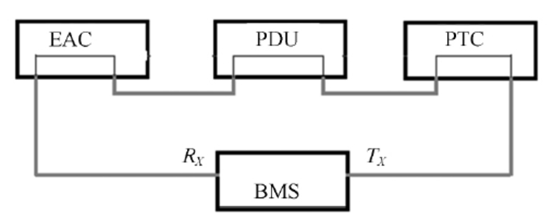
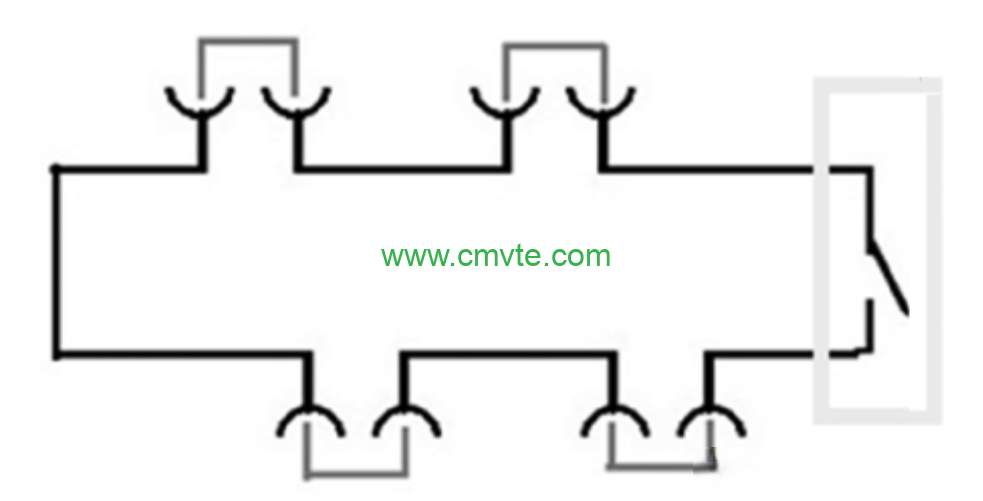
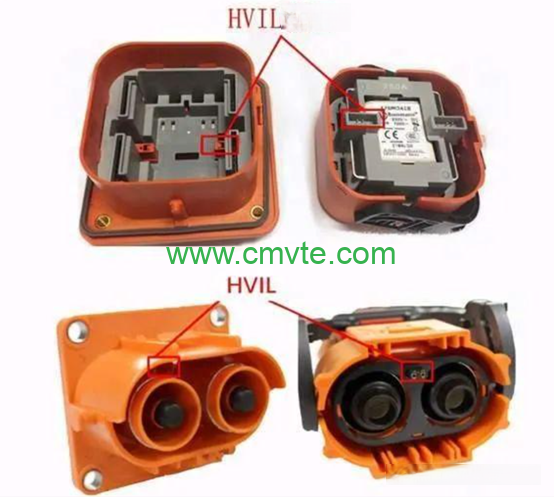
The HVIL is a low-voltage watchdog that runs through every HV component — battery pack, motor controller, PDU, OBC, and DC-DC converter. It sends a PWM signal (12V at roughly 20mA) through the loop. If every connector is seated, the signal returns and the BMS allows power. If any connection breaks, the BMS kills the contactors instantly.
5 Shocking HV Safety Mistakes Your Interlock System Prevents
1. Partially Seated Connectors
A connector that looks "close enough" but is not fully locked will vibrate loose, arc under load, and start a fire. HVIL's short-pin design ensures the signal loop completes only when the connector is fully seated. No proper connection means zero power — no exceptions.
2. Open Covers During Power-Up
After maintenance, one unlatched cover is all it takes to expose live 400V terminals. With HVIL, the BMS refuses to close contactors until every interlock switch confirms a closed circuit.
3. Damaged HV Cables from Vibration
Farm vehicles and UTVs shake constantly. Vibration chafes HV cables against chassis edges, creating fire risks. HVIL's continuous PWM monitoring catches resistance drift and waveform distortion long before your multimeter can detect a problem.
4. Hot-Plugging Under Load
Disconnecting a live HV connector creates a plasma arc that welds contacts and causes severe burns. HVIL's short-pin sequencing breaks the signal loop first, triggering contactor opening before the HV pins separate. By the time you disconnect, the circuit is already dead.
5. Undetected Ground Faults During Driving
A short between the HV bus and chassis can energize the entire vehicle body — especially dangerous in wet farm conditions. HVIL works with isolation monitoring to detect ground faults and shut down instantly, protecting you from a shock that can stop your heart.
Why Most "Budget" Kits Skip HVIL
Many EV components sold online were adapted from low-speed vehicles that never required automotive interlock. A US Parts Retailer Kit bundles parts from different suppliers — none designed for a unified HVIL loop. The result is a patchwork with critical safety gaps.

Why CMVTE Is Different
CMVTE designs and manufactures every core EV conversion component — motor controllers, BMS, PDU, OBC, DC-DC converters, and EPS — from our factory in Shunde, Foshan. Every component ships with PWM-based HVIL as a standard feature, not an expensive upgrade.
- Plug-and-play interlock: All CMVTE components share the same HVIL architecture. Connect them and the loop works automatically with zero custom wiring.
- Advanced PWM detection: CMVTE uses PWM waveform monitoring, not primitive DC continuity checks. It distinguishes open circuits, short circuits, and poor contact — giving real diagnostics, not false alarms.
- Engineer-backed support: Dr. Kevin Wang and our technical team provide direct consultation. You get a complete safety-engineered system, not just parts in a box.
- Factory-direct pricing: Genuine integrated HVIL at 30-50% less than equivalent US parts retailer pricing. No middlemen, no markup on safety.

Trusted in 130+ Countries
CMVTE has supplied EV conversion solutions to over 1,000 customers across 130 countries — from DIY enthusiasts restoring classic cars in Europe to farm operators electrifying UTVs in South America. Every kit ships with components designed together, tested together, and backed by a team that understands EV safety at the engineering level.
Safety Is Non-Negotiable
An HVIL system is the difference between a professional-grade EV conversion that is safe to drive and a dangerous experiment. Every EV conversion deserves components with integrated High Voltage Interlock. CMVTE makes that standard — not an upsell.