

As the core driving force of modern industry, motors are widely used across all sectors. Their operational reliability directly impacts production continuity and economic efficiency. With tightening national energy efficiency policies and the spread of intelligent maintenance technologies, motor maintenance has shifted from reactive repair to proactive prevention.

Timely motor maintenance extends equipment life, improves efficiency, and dramatically reduces unexpected downtime losses through preventive strategies. Industry demand has shifted from single fault repair to regular inspections, risk alerts, and detailed operational reports – driving a maintenance model upgrade.
2. Common motor failure modes & 2025 data
Analysis of recent motor failures shows most are not random but predictable and preventable. Cross‑industry data indicates mechanical faults account for ~56% of total AC/DC motor failures, with over 51% involving bearing issues – lubrication deficiency, over‑greasing, electrical discharge machining (EDM) from shaft voltage, and misalignment. Overheating remains the most lethal trigger. Once temperature rises abnormally without intervention, motor burnout rate escalates sharply, with single downtime losses reaching millions.
In high‑automation regions, motor fault rates rose ~6% in a short period – not due to quality decline, but increased factory loads with outdated maintenance methods. Traditional experience‑based diagnosis has a misjudgment rate near 30%, causing secondary failure rates to rise further.
3. Key motor maintenance steps explained
3.1 Initial inspection & operational record comparison
Begin with visual inspection for damage, deformation, loose connections. Then perform insulation resistance measurement using a megohmmeter (≥500V DC). Calculate absorption ratio or polarisation index to assess moisture or ageing. Compare with historical data at the same reference temperature (e.g., 75°C) – a drop >30% is a serious alert.
3.2 On‑line monitoring & intelligent diagnostics
Modern maintenance now uses AI and big data‑driven predictive diagnostics. Sensors for temperature, vibration, and current feed into AI algorithms that identify potential faults early. For example, multi‑scale fuzzy entropy quantifies permanent magnet degradation in PMSMs. AI can detect insulation deterioration ~48 hours before failure, significantly reducing risk. Standards like IEC 60034‑1 and ISO 10816/20816 provide vibration evaluation baselines – particularly ISO 20816's machine‑type specific limits improve early fault capture.
3.3 Scientific maintenance planning
Based on condition monitoring data and load profiles, implement a condition‑based maintenance (CBM) strategy. Shorten monitoring intervals for high‑load equipment; extend for stable redundant units. Maintain detailed logs for every intervention – parameters, replaced parts, responsible personnel – creating a traceable maintenance archive.
3.4 Categorized repair execution
- Bearing faults: Use dedicated tools, replace with same precision grade (e.g., P5). Follow lubrication cycles strictly. For VFD‑driven motors, add shaft current mitigation measures.
- Winding repair & insulation reinforcement: For local turn‑to‑turn shorts, use nano‑coating or custom insulation paper (class F or higher) to handle modern overload conditions.
- Rotor bar breakage: Use harmonic analysis or high‑resolution vibration analysers to pinpoint the fault before any disassembly.
3.5 Energy efficiency compliance testing
After repair, test three‑phase induction motors against GB 18613. Measure input‑output efficiency at 100% rated load per GB/T 1032. Ensure efficiency class is not lower than original design or meets national minimum准入 requirements. For motor system efficiency, IEC 60034‑2‑1 applies.
3.6 Acceptance criteria & quality control
After repair, perform acceptance testing: vibration per ISO 10816‑3 – for general industrial motors, vibration velocity ≤4.5 mm/s. Also check bearing temperature rise (≤45K for quality motors), no‑load noise (≤75 dB(A)), voltage/current fluctuation within standard tolerance. Compare with factory or historical data.
4. Motor maintenance & update guide – key data summary
| Maintenance area | Core practices & quantitative recommendations | Latest standards / basis |
|---|---|---|
| Bearing management & monitoring | Monitor temperature rise and vibration spectrum; maintain proper lubrication intervals; prevent shaft voltage damage | Over 51% of motor failures involve bearings |
| Insulation condition assessment | Use 2500V megohmmeter (HV motors); measure insulation resistance and absorption ratio | DL/T596‑2021; insulation resistance criteria |
| Preventive intelligent diagnostics | Deploy AI motor health system for early warning of winding/rotor/bearing degradation | AI predictive diagnostic solutions deployed in multiple regions |
| Energy efficiency compliance test | Post‑repair efficiency test to ensure not below GB 18613 limit | GB 18613 & IEC 60034‑2‑1 |
| Vibration evaluation | Fine‑tuned vibration limits per motor type according to ISO 20816 | ISO 20816 (more detailed than ISO 10816) |
5. Maintenance precautions & safety standards
- Safety first: Disconnect main power, perform lockout/tagout (LOTO), discharge capacitive elements.
- Precision instruments: Use FLIR thermal imagers (±0.3°C), Bruel & Kjaer vibration analysers (1600‑line FFT), Keysight/Hioki power analysers.
- Digital data management: Cloud/local database with electronic files for each motor – nameplate, repair history, efficiency reports, vibration spectra.
- Team upskilling: Combine traditional experience with PLC remote diagnostics, multi‑skill shift models to handle complex failure modes.
6. Market outlook & compliance notes
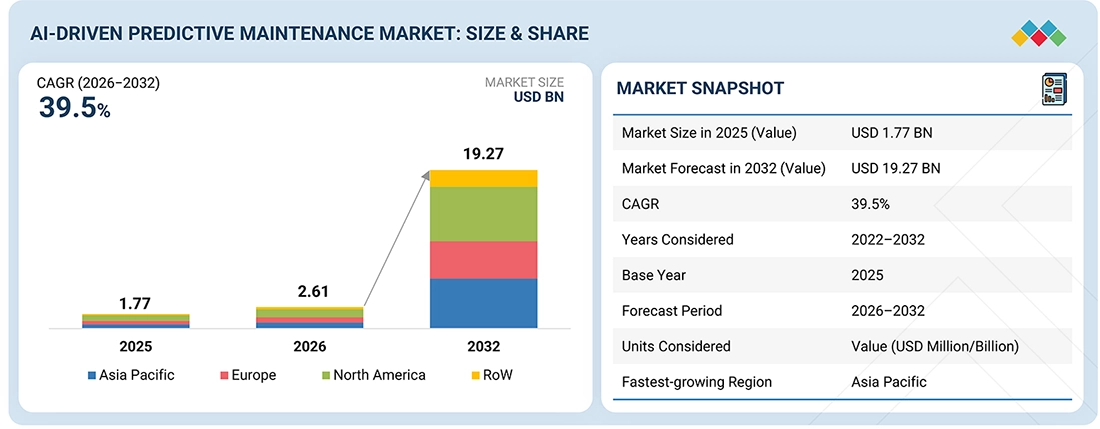
The global high‑voltage motor repair market continues to grow. Prioritising energy‑efficient motors with filed efficiency certification is key to lowering life‑cycle costs. In 2025, China's NDRC solicited comments on the latest energy label catalogue – future efficiency requirements will tighten further.
7. Conclusion: from reactive repair to active lifecycle management
Motor maintenance is evolving from experience‑based "fix it when it breaks" to a full lifecycle management system driven by AI diagnostics, precision testing, and standard compliance. Systematic fault detection (bearing, insulation, rotor), use of scientific tools, and strict quality acceptance not only improve efficiency and reduce misjudgment rates but also provide a solid foundation for energy saving and carbon reduction goals.
Talk to our motor reliability specialists – for predictive diagnostics, compliance testing, and team training.
Frequently Asked Questions
How often should insulation resistance be measured?
For critical motors (≥100 kW), measure every 3‑6 months. For general industrial motors, at least annually. Always measure before and after any repair, and after long idle periods.
What vibration velocity is acceptable for a 1500 rpm motor?
ISO 10816‑3 classifies motors >15 kW as Group 1. For a rigid mounted motor with height <315 mm, vibration velocity ≤2.8 mm/s (Class A) is excellent; ≤4.5 mm/s (Class B) is acceptable for continuous operation.
What are the signs of shaft voltage damage in bearings?
Look for "fluting" – washboard‑like ridges on bearing raceways. High‑frequency vibration and electrical discharge marks. Use an oscilloscope to measure shaft voltage; install conductive brushes or insulated bearings as countermeasures.
What is the difference between ISO 10816 and ISO 20816?
ISO 20816 supersedes ISO 10816 and provides more detailed vibration limits by machine type (e.g., motors, pumps, turbines) and mounting conditions. It also introduces better measurement band definitions and evaluation criteria for non‑stationary operation.
Is AI‑based motor diagnostics reliable for small plants?
Yes. Low‑cost wireless vibration/temperature sensors with cloud AI analytics are now affordable. They provide early warnings without requiring on‑site experts. Return on investment typically within 12‑18 months by preventing one major failure.

