

As electric vehicles accelerate their global adoption, DC charging piles – the core infrastructure for fast charging – directly impact user experience and industry growth. To ensure product quality, operational safety, and cross‑brand compatibility, a robust, accurate, and standardised test system is essential.
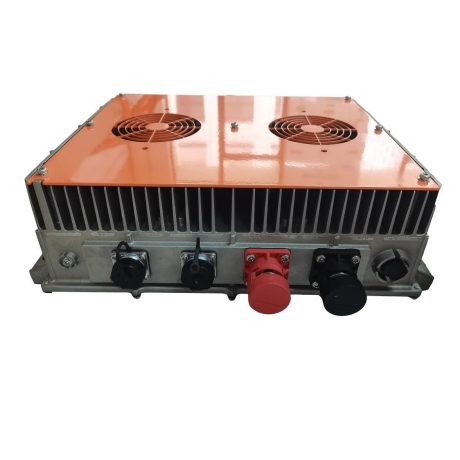
DC charging piles, often called "fast chargers", supply DC power directly to EV batteries. In 2025, global EV DC charger production reached ~750,000 units, with average market price ~$7,000. The global EV DC charger market was valued at ~$5.324 billion in 2025 and is projected to grow at 19.7% CAGR to ~$20.396 billion by 2032. DC charging stations market is expected to grow from ~$5.062 billion (2025) to ~$20.617 billion (2032) at 21.0% CAGR. Meanwhile, the ChaoJi standard (CHAdeMO 3.0) supports up to 900 kW (1500V/600A) and has achieved significant mechanical/communication compatibility with GB/T, CCS, and other standards.
Key technical complexities:
- High power output: tens to hundreds of kW for passenger and commercial EVs.
- Direct‑to‑battery charging: bypasses the on‑board charger.
- Safety & interoperability: insulation monitoring, overcurrent protection, thermal management, and multi‑protocol compatibility (CCS, CHAdeMO, GB/T).
2. Why DC charging pile testing matters
Testing verifies design rationality, ensures production consistency, and supports field maintenance. A high‑quality DC charging test system covers electrical safety, communication protocol conformance, metering accuracy, and interoperability.
3. DC charging pile test system architecture
3.1 Hardware core components
- Power simulation & load: Programmable DC sources, bi‑directional supplies, electronic loads (e.g., 3.84 MW scalable HIL systems).
- Battery simulator & vehicle emulation: Simulates voltage‑current characteristics at various SoC and BMS handshake.
- Sensors & measurement instruments: High‑precision voltage/current sensors, power analysers, insulation testers (≥1MΩ or 1000V DC).
- Communication protocol monitoring: Supports CCS (ISO 15118, DIN 70121), CHAdeMO, GB/T 27930 for multi‑standard conformance.
3.2 Software platform
- Data acquisition & control: Automated test scheduling, multi‑channel sync, report generation.
- Protocol conformance software: OCPP, ISO 15118, DIN SPEC 70121 stacks with fault injection.
- AI diagnostics & health assessment: Big data analysis for output stability, temperature control, predictive maintenance.
4. Key test technologies for DC charging piles
4.1 High‑precision electrical measurement
Voltage accuracy better than ±0.5%, current detection accuracy, power factor, total harmonic distortion (THD). Based on IEC 61851 and GB/T 18487. Stricter EU metrology requirements for DC energy measurement are emerging, with labs developing calibration methods for MW‑level DC chargers.
4.2 Multi‑protocol communication & simulation
Test systems must emulate different vehicle communication behaviours. Built‑in BMS simulation per GB/T 27930 with CAN FD, automatic interoperability test execution, and fault‑injection (over‑voltage, under‑voltage, over‑current). ChaoJi support is also required.
4.3 Data processing & automated analysis
Real‑time data acquisition, waveform capture, message export/auto‑parsing. Dual‑channel independent testing for dual‑gun chargers improves coverage and efficiency.
4.4 Portable field test equipment
Integrated portable solutions (e.g., FEV500) act as a "virtual EV" to verify operation, protocols, and safety without an actual vehicle. They also calibrate built‑in energy meters.
5. Application scenarios
Detect power topology flaws, thermal issues, protocol gaps before production.
Automated safety, functional, and interoperability tests for every unit (global production ~750k units in 2025).
Quickly diagnose insulation, metering, or communication degradation – reducing downtime.
Issue CB certificates per IEC 61851‑23:2023 and verify compliance with GB/T 27930‑2023.
6. Future development & technology evolution
- Intelligence & automation: AI‑based fault diagnosis using non‑parametric balanced diffusion models to handle imbalanced fault samples.
- Test standardisation: ISO 15118‑21:2025 (abstract test suite for DC charging conformance); ISO/PAS 15118‑23:2026 (supplementary DC‑specific conformance).
- High‑power & multi‑gun testing: Dual‑channel independent architecture for load sharing tests.
- Megawatt‑level test capability: Up to 1500V/1500A for heavy‑duty vehicles (NACS, CCS).
Conclusion
DC charging pile test systems are a core technology ensuring product quality, standardisation, and interoperability. By mastering market trends, standards evolution, and key testing methods – and continuously improving accuracy, efficiency, and automation – we provide a solid technical foundation for EV rollout and reliable charging infrastructure. With ChaoJi, megawatt charging, and iterative standards (ISO 15118, IEC 61851, GB/T 27930), test systems will become smarter, more efficient, and more comprehensive – supporting the global electric mobility ecosystem.
Talk to our EV charging infrastructure specialists – for R&D, production, field testing, and certification.
Frequently Asked Questions
What is the difference between a battery simulator and an electronic load?
A battery simulator mimics the voltage‑current behaviour of a real EV battery, including dynamic response and BMS communication. An electronic load simply absorbs power; it does not simulate battery behaviour. For full functional and interoperability testing, a battery simulator is required.
Which communication protocols must a test system support today?
For global coverage: CCS (ISO 15118‑20, DIN 70121), CHAdeMO 2.0/3.0, GB/T 27930, and ChaoJi (with backward compatibility). Additionally, OCPP (1.6/2.0.1) for backend communication. Test systems should also handle CAN FD and PLC.
How accurate must DC energy metering be for legal calibration?
According to EU Measuring Instruments Directive (MID) and similar regulations, DC energy meters for billing need accuracy class 1 or better (typically ±1% from 5% to 120% of rated current). Some local regulations require class 0.5. Calibration must be traceable to national standards.
Can a test system validate both single‑gun and dual‑gun chargers?
Yes. Advanced systems use dual independent channels with smart coordination to simulate two EVs simultaneously, testing load sharing, dynamic balancing, and independent protocol streams.
What new test requirements will ChaoJi (900 kW) introduce?
ChaoJi requires higher voltage (1500V) and current (600A) handling, new connector mechanical validation, and extended communication profiles for power negotiation and safety. Test systems must be capable of MW‑level power simulation and support the new protocol layers defined in CHAdeMO 3.0.

