The Disadvantages of EVs: What Buyers Should Know

The popularity of electric vehicles is growing, but it is vital for buyers to have a complete understanding before purchasing one. EVs have their advantages, such as being better for the environment and performing better, but other factors must also be taken into consideration such as daily usage, long distance travel, and the cost for long-term ownership. There are potential issues such as range, battery degradation, the distribution of charging stations, and the high upfront costs of the vehicle. Transparency is important for us at CMVTE, and being a company that specializes in EV technology and conversion systems, we focus on Operational Transparency by setting realistic expectations for customers to make educated choices when modifying their vehicles to efficiently and reliably electric powered systems.

Higher Upfront Purchase Price

One of the main costs of vehicles is the battery, and because EVs have batteries that are expensive to manufacture, along with having other high pricing components such as electronics and the specialized methods of production, they are more expensive than gasoline vehicles. This can make ownership of EVs less accessible to some buyers, and is more of an issue in markets that have little government incentives. CMVTE does cut costs with conversion kits, but EVs that are factory built still come with strong upfront costs to the consumer.

Limited Driving Range Concerns

One of the biggest roadblocks to owning an electric vehicle (EV) is the fear of running out of charge while driving, which is known as range anxiety. Factors that contribute to an advertised lower range include driving over mountains, added weight, and even the climate (both hot and cold weather lower a battery’s range). EV owners who must drive long distances on a routine basis are especially impacted by added range anxiety.

Battery Degradation and Replacement Costs

EV batteries perform long term and will eventually wear out. Factors that will lower a battery’s range, including charge cycles, higher outside temperatures, and heavy usage are inevitable over time. Most EV batteries will last around 8 to 15 years, but when it is time to replace one, it can be quite expensive. CMVTE guarantees the quality of their batteries, and goes a step further to offer added cooling systems to mitigate the battery’s range degradation. There is no way to completely stop a system from long term wear, and the batteries are no exception. The expense that will be incurred from range degradation and performance wear is the biggest disadvantage most EV owners face.

Slow Charging Times vs. Fast Refueling

In contrast to gasoline refueling, EV charging takes longer and requires strategic planning to account for the length of charging stops. Home charging takes several hours, and even the fastest public chargers take longer than a gasoline refuel. This is especially tricky on long trips, and is especially challenging in areas with limited charging stops. Charging times for converted vehicles with CMVTE onboard chargers, DC fast charging systems, and high-efficiency batteries improve, but the rate at which a battery can safely charge is finite. Drivers used to long trips with only short stops (to refuel and get back on the road) will likely find changes to their travel pace quite inconvenient. Predicted and planned charging stops will need to become as integral to travel planning as other aspects to help with the transition to EVs.

Charging Infrastructure Challenges

Inconsistent charging networks add to the difficulty of planning charging stops. Rural and remote areas are especially likely to have unserviced regions. Cities can have unserviceable chargers, vehicles blocking charging stations, and long waits. This can lead to unpredictable travel plans and low confidence in maintaining EV ownership. Robust charging options (home stations and commercial-grade chargers) can only partially mitigate this issue, as infrastructure is outside a manufacturer’s control. These factors create the need for considering charging network gaps when planning travel, as well as the need for pre-installed onboard chargers in converted vehicles.

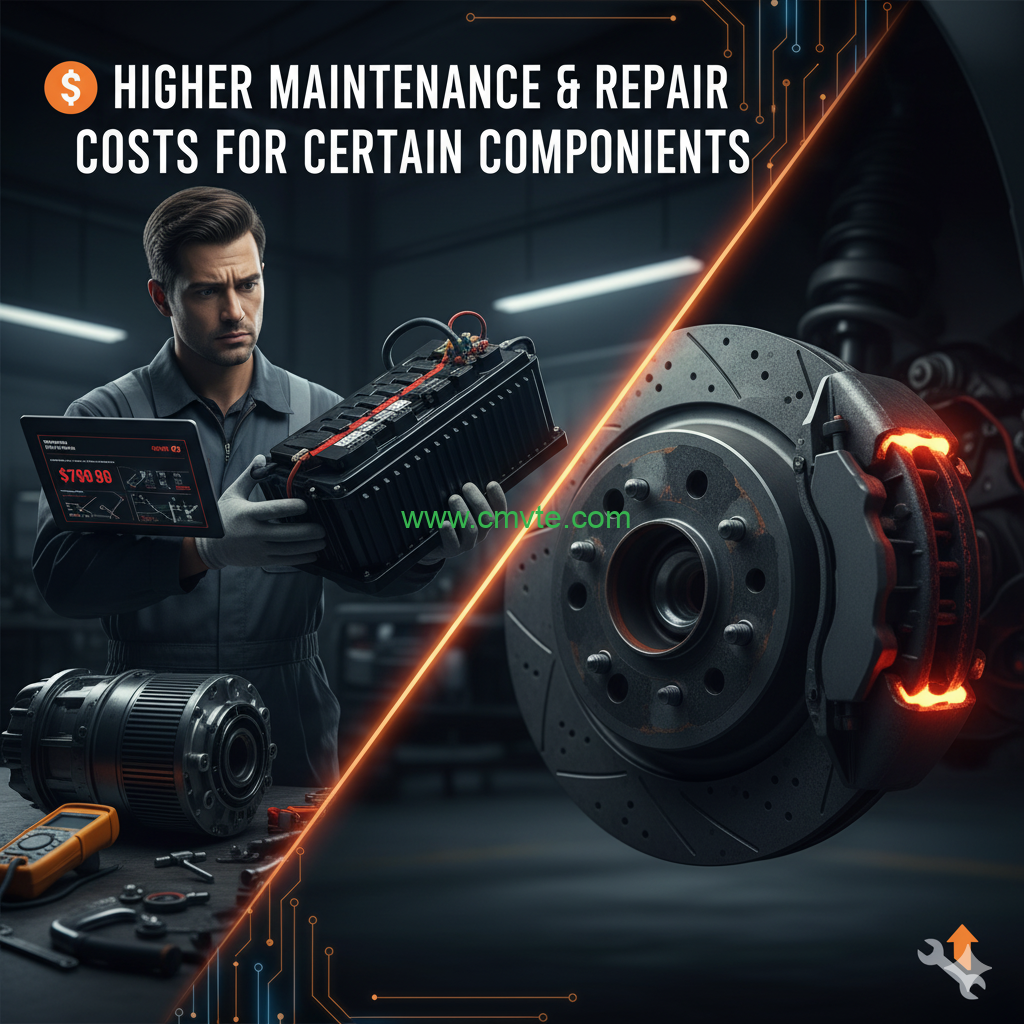
Higher Maintenance & Repair Costs for Certain Components

Higher Maintenance & Repair Costs for Certain Components

While EVs do have fewer moving parts, each vehicle has specialized parts like battery systems, high-voltage controllers, and thermal management systems that will need expert servicing. For these repairs, expert technicians will be needed, along with sophisticated diagnostic equipment and expensive parts that may need to be ordered. Having such expensive components may also lead to increased insurance rates. The CMVTE conversion kits are designed to be reliable, efficient, and have a long-life span, but all electric systems need some attention.

Environmental Concerns Around Battery Production

There are fewer tailpipe emissions with EVs, but on a bigger scale, the ecosystem is still harmed due to the necessary production of batteries which involves the mining of lithium, cobalt along with other raw materials. This is also the case with the communities around these local. Carbon emissions are produced during the manufacturing process and also the ecosystem is made worse. CMVTE has always espoused and provided long-life, high-quality battery packs to all our customers. Long-life packs reduce the amount of waste and batteries that get replaced, thereby contributing to better overall sustainability.

Performance Issues in Extreme Weather

Every electric vehicle will experience a drop in performance in extremely hot or cold weather. In cold weather, EV batteries are less efficient which causes a lower range and longer charging times. In hot weather, cooling the battery and the cabin will use extra energy and decrease the performance range. CMVTE uses liquid-cooling systems and efficient HVAC kits to solve weather performance problems, but liquid electric systems will always have problems with energy losses due to the weather. EV owners using vehicles in extreme weather will have to make compromises and consider battery sizes and cooling systems that offer the best trade-offs between range, dependability, and weather usage.

Towing & Load Limitations

Towing also has a big impact on range. Pulling a trailer demands extra energy and drag, and will likely decrease the expected range. Not all EV platforms are built to accommodate the trailer weight and cargo, which causes problems for commercial users. CMVTE will provide custom energy efficient vehicles with PMSM electric motors for commercial use, but will use a lot more energy when vehicles are towing.

Grid Demand and Home Charging Limitations

Older homes may be lacking the necessary electrical capacity needed for home charging. Upgrading home panels or wiring is also expensive. Charging during peak times can also lead to higher costs. With more widespread adoption of EVs, there is a strain on the local grid. CMVTE offers efficient, onboard chargers, modular DC/DC converters and smart charging systems to offer a solution to reduce power waste and improve energy flow. However, before EV chargers can be installed, homeowners need to understand the electrical systems in their homes. Smart grid integration during the energy management of charged converted vehicles is essential to alleviate the risk of overloading, improve charging reliability, and ultimately safe and cost effective charged converted vehicles.

Lack of Model Variety in Certain Vehicle Segments

The availability of more EVs is on the rise. However, there are still significant gaps to fill in certain segments, including, heavy-duty trucks, vans, and budget-friendly vehicles, as well as their long waiting times and manufacturing delays Is in high demand and limited availability. CMVTE is helping to address this issue with their custom built conversion kits for sedans, SUVs, classic cars, commercial fleets, and specialty vehicles to electrify , and their able to electrify vehicles/platforms that the manufacturers have less support on.

FAQs

Are EVs really cheaper in the long run?

When being purchased as new, electric vehicles have lower fuel and maintenance expenses, which can make them more affordable long-term. 

How long do electric car batteries last?

The general timeframe of an electric vehicle battery is 8-15 years, depending on multiple environmental and behavioral factors. Good quality battery packs with effective cooling systems are more likely to have their operating lifespans extended.

What is the biggest disadvantage of EVs?

The most prominent issues with electric vehicles are their restricted operational driving range and lengthy battery depletion recharge durations. This is particularly the case when driving long distances, or being in areas that have a shortage of electric vehicle charging stations.

Do EVs lose range in cold weather?

Yes, this is true. There is battery inefficiency on account of the cold, and more energy is consumed to heat the vehicle; this creates a very noticeable drop in driving range and a considerable lag in charging durations.

Is it difficult to find charging stations while traveling?

Sure. Rural places, highways etc, are known to be very busy and can lack fast charging stations. This can require long distance travel planning before journeys taken by owners.

Are EV batteries bad for the environment?

Yes, and this is a concerning factor. The mining of lithium and cobalt that is needed to make batteries is environmentally destructive; current recycling efforts are minimal, and the demand to sustainably resource these batteries is critical.

How long does it take to charge an EV at home?

When fully drained, residential electric vehicle charging can take anywhere between 6 to 12 hours to complete. This time range is dependent on the size of the battery in the vehicle, the onboard charger capacity, and the charging infrastructure which includes level 2 chargers.

DIY Electric Car Conversion Kit: A Complete Guide
Previous Post

DIY Electric Car Conversion Kit: A Complete Guide

Next Post

PMSM Motor: Working Principle, Features & Applications

PMSM Motor: Working Principle, Features & Applications

Leave a Reply

Shopping cart