

Converting your Honda Civic to electric power steering (EPS) for an EV build should not cost $800-$1,500 for a US brand kit that still needs modification to fit. CMVTE ships a complete column-type EPS steering kit — motor, controller, torque sensor, harness, and mounting bracket — factory-direct from $249, and it works across Civic generations EG, EK, EF, and FD with minimal fabrication.

What You Actually Pay for a Honda Civic EPS System
| Option | Kit Price | Shipping | Total Cost |
|---|---|---|---|
| US brand EPS kit (column or rack) | $800 – $1,500+ | $50 – $80 | $850 – $1,580+ |
| Used OEM EPS + DIY controller | $300 – $600 | Varies | $300 – $600+ (requires fabrication, wiring, tuning) |
| CMVTE EPS kit, factory direct | $249 – $399 | Included | $249 – $399 |
CMVTE offers three power levels — 180W, 220W, and 360W — so you pick the assist strength for your Civic's weight and steering geometry. The price includes the motor, controller, torque sensor, full wiring harness, mounting bracket, and installation guide. No hidden fees, no markups from distributors.
Why EPS Is Essential for Your Civic EV Conversion
A Honda Civic EV conversion removes the engine, which means no belt-driven hydraulic pump to power the steering system. An electric power steering kit solves this cleanly:
- Zero parasitic loss — EPS only draws current when you turn the wheel, unlike hydraulic pumps that run constantly. This adds 3-5% to your EV range.
- Clean engine bay — No pump, no hoses, no reservoir, no fluid. The column-mounted motor and controller live under the dash, completely out of sight.
- 12V compatible — CMVTE EPS kits run on standard 12V DC, drawing from your existing accessory battery. No high-voltage integration required.
- Adjustable assist — The controller allows you to tune steering effort from "one-finger light" for parking lots to "firm and sporty" for highway driving.
Which Kit Fits Your Civic Generation
- EG / EK / EF (1992-2000): The 220W EPS kit ($299) is the sweet spot. The column-mount motor fits the tight EG and EK dash areas with a simple bracket. Most builders complete the install in one day.
- FD / FN (2001-2011): The 360W EPS kit ($399) matches the heavier front-end weight. The torque sensor integrates with the existing steering column with minor modification.
- Performance / track builds: Use the 360W kit with the assist turned down. The higher-power motor provides consistent feel even at low speeds in autocross or track conditions.
What's in the Box
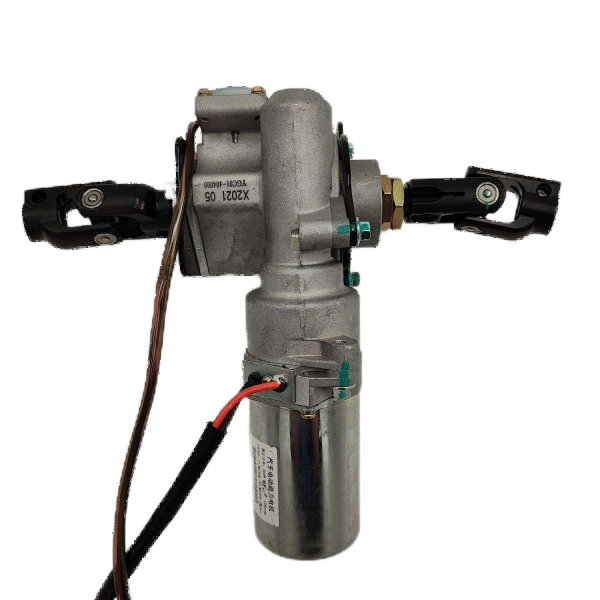
Every CMVTE EPS steering kit ships with 6 components, fully tested before leaving our Foshan factory:
- EPS motor — brushless DC motor, rated for continuous automotive use
- Controller (ECU) — pre-programmed with default assist curves, adjustable via potentiometer or CAN
- Torque sensor — detects steering input and sends the signal to the controller
- Wiring harness — color-coded, labeled, with weatherpack connectors
- Mounting bracket — CNC-machined steel, designed for column-mount installation
- Installation guide — step-by-step with photos and torque specs
US brand kits at $800+ typically include the motor and controller only — you source the bracket, harness, and sensor separately. CMVTE includes everything in one box at one price.
Installation and Tuning
The EG and EK Civic (1992-2000) are the most common platforms for EPS retrofits. With a CMVTE kit, you remove the lower dash panel, mount the EPS motor to existing column support holes (no drilling on most EG/EK), install the torque sensor on the intermediate shaft, and connect the controller to 12V power. Most DIY builders finish in 4-6 hours.
The adjustable controller lets you change the assist curve without reprogramming:
One advantage of the CMVTE EPS kit over used OEM EPS parts is the adjustable controller. You can change the assist curve without reprogramming or external tools:
- Low assist — minimal assistance, feels like a manual rack with power assist only at parking speeds. Best for track cars and experienced drivers who want road feedback.
- Medium assist — balanced for daily driving. Light enough for parallel parking, firm enough for highway stability.
- High assist — maximum power at all speeds. Best for drivers with physical limitations, heavy off-road tires, or urban stop-and-go traffic.
The controller also supports speed-dependent assist if you connect the vehicle speed signal wire. CMVTE provides instructions for tapping the VSS wire on EG/EK/EF/FD Civics.
Why Factory-Direct Matters
CMVTE has manufactured EPS systems since 2011 at our Foshan Shunde factory. We supply steering components to EV builders, UTV manufacturers, and agricultural vehicle producers across 130+ countries. Buying direct means:
- No distributor markup — US brands buy from factories and add 100-300% margin. CMVTE sells at factory price.
- Customization — need a longer harness? Different bracket? Higher power motor? We can adjust production to your spec.
- Full support — our engineers respond within 24 hours. We supply wiring diagrams, installation videos, and troubleshooting guides.
Start Your Civic EPS Conversion
CMVTE has shipped over 1,000 EPS kits globally. Whether you are building a full EV conversion, a track car, or just eliminating hydraulic steering complexity, our factory-direct EPS kits deliver the same performance as $800+ US brand kits at one-third the cost.
Contact CMVTE now with your Honda Civic year and generation — we will send you the right EPS steering kit quote within 24 hours.

