

A plug-and-play EV conversion system is designed to simplify the retrofitting process by integrating key electric drive components into a pre-configured and compatible solution. Instead of sourcing motors, controllers, batteries, and electrical components separately, retrofit companies can deploy a complete electric drive package with faster installation and improved reliability.
Today, plug-and-play EV systems are widely used in electric tricycles, low-speed utility vehicles, shuttle vehicles, industrial transport equipment, and fleet electrification projects. For companies involved in oil-to-electric conversion services, integrated EV systems can significantly improve deployment efficiency while reducing engineering complexity.
Why Plug-and-Play EV Conversion Systems Are Important
Lowering the Technical Barrier
A plug-and-play system comes pre‑configured and tested, making it accessible to smaller workshops, hobbyists, and even DIYers without years of electrical engineering experience.At the same time, for sellers, it can also reduce unnecessary after-sales processing time and repetitive and cumbersome wiring guidance tasks.
Standardization & Scalability
When a conversion system is truly plug-and-play, it can be produced in volume, which lowers component costs. Standard interfaces also mean that future upgrades (e.g., higher capacity battery or a more efficient motor) become easier – the owner simply unplugs the old module and plugs in the new one.
Ensuring Safety & Reliability
Plug-and-play systems are engineered as a matched set (motor, controller, battery interface, wiring, and often a pre-programmed display). This reduces fire risk and ensures the system works as intended out of the box.
In any case, these three points are particularly important.
What exactly constitutes a complete Plug-and-Play system?
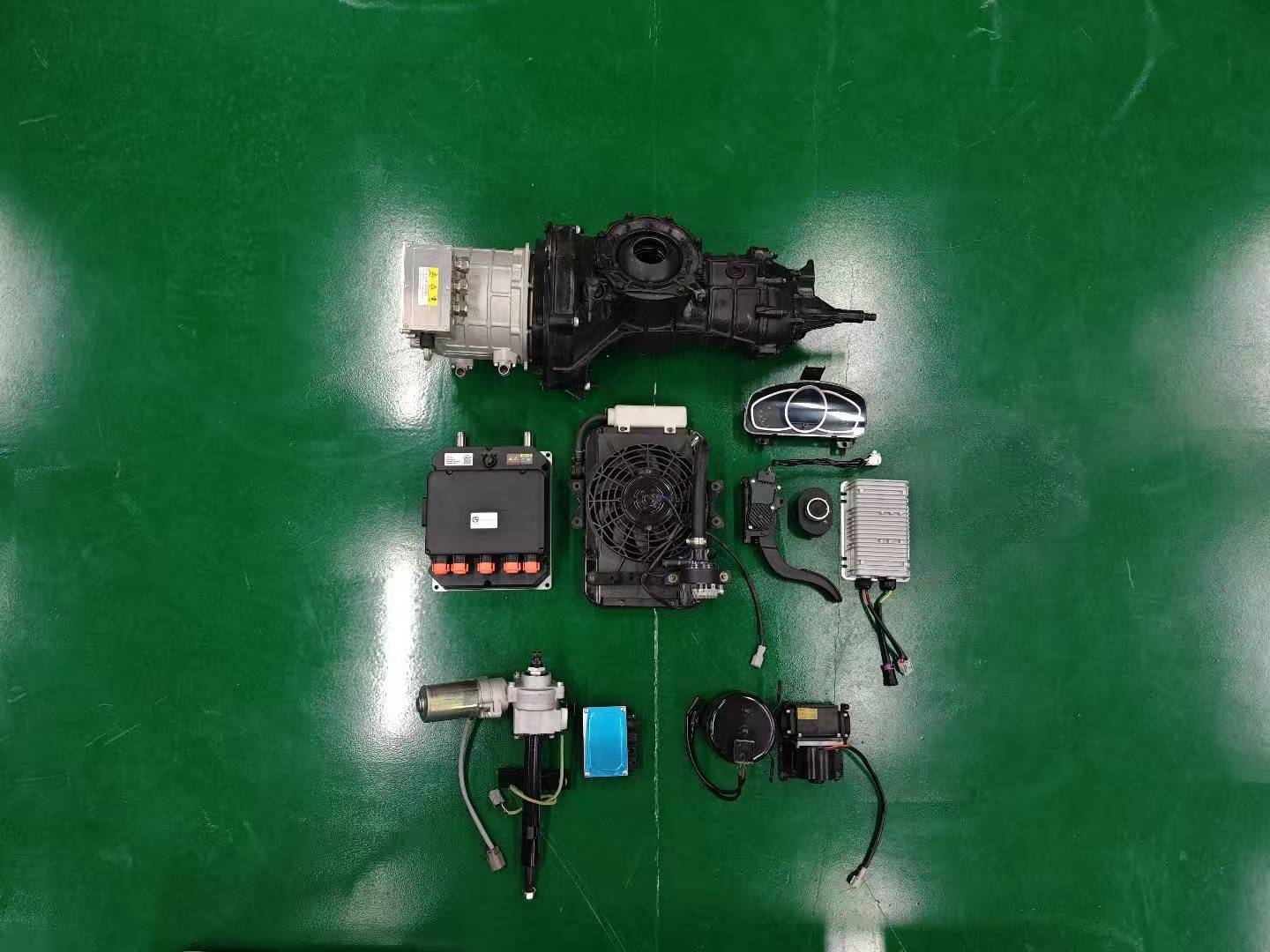
A plug-and-play EV conversion system is a pre-configured electric drive solution designed to simplify vehicle electrification and reduce installation complexity. Unlike traditional retrofit methods that require independent component matching and extensive manual calibration, these systems integrate key electrical and mechanical components—including the electric motor, motor controller, battery integration solution, wiring harness, DC-DC converter, vehicle control unit, and communication interfaces—into a standardized package. The objective is to create a conversion platform that can be installed faster and with fewer engineering modifications, as reducing installation complexity is often just as critical as improving vehicle performance in retrofit applications.
How to Choose the Right Plug-and-Play EV Conversion System
Define Your Vehicle & Driving Needs
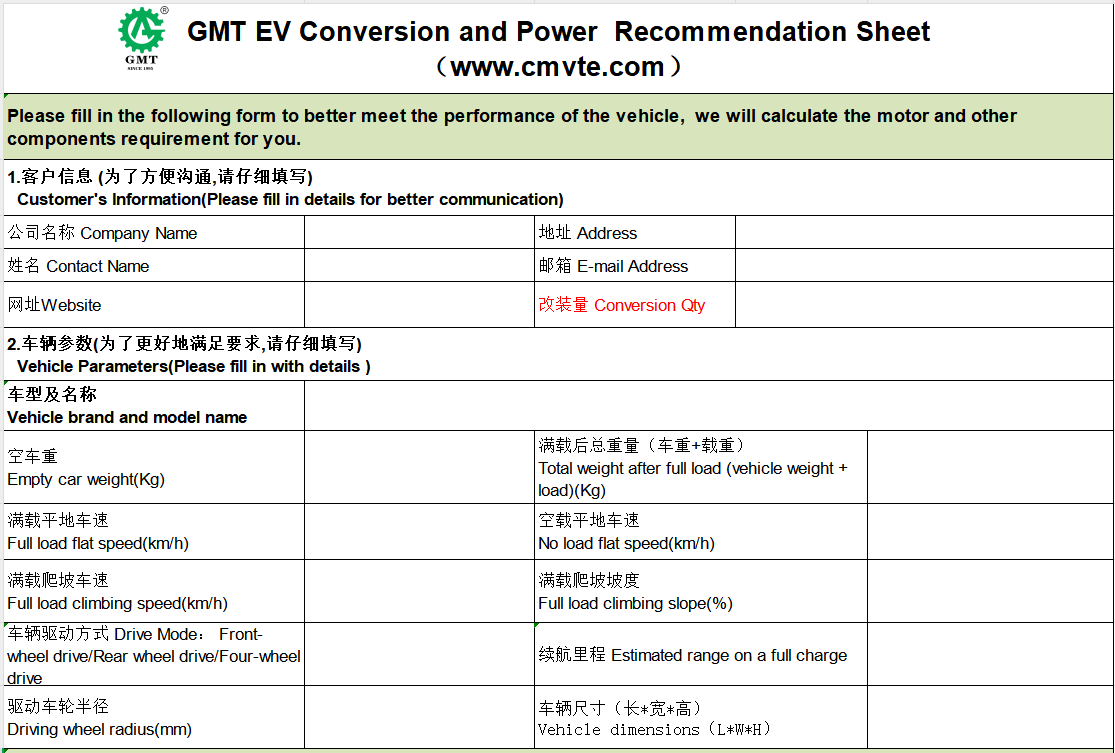
| Parameter | What to Consider |
|---|---|
| Vehicle type | Car, van, truck, golf cart, boat, or light commercial vehicle. Each has different space, weight, and cooling constraints. |
| Gross vehicle weight (GVW) | Heavier vehicles require more torque (especially at low speed) and higher continuous power. |
| Typical speed range | Urban delivery (stop‑and‑go) vs. highway commuting (constant high speed) → affects motor type and gearing. |
| Gradeability | Does your route include hills? If yes, you need a motor with high low‑end torque (mid‑motor is better than hub motor). |
| Range requirement | Determines battery capacity (kWh) and system efficiency. |
Verify “Plug‑and‑Play” Claim
1-Are all connectors included (no crimping or soldering required)?
2- Is the controller pre‑programmed for my vehicle type (e.g., golf cart vs. delivery van)?
3-Does the kit include a throttle adapter (for replacing a cable‑type accelerator)?
4-Is there a detailed wiring diagram and a quick start guide?
Check Compatibility with Your Original Drivetrain
1-Manual transmission → motor can connect to the original gearbox (clutch may be removed or retained).
2-Direct drive (differential) → motor must match the final drive ratio (chain/belt/shaft).
3-Axle / suspension – ensure motor dimensions fit within the chassis without cutting.
Cooling & Duty Cycle
| Application | Cooling Needed |
|---|---|
| Low‑speed golf cart (flat ground) | Air‑cooled (usually sufficient) |
| Hilly area / heavy loads | Liquid‑cooled or upgraded air‑cooling |
| Highway speeds > 70 km/h (long duration) | Liquid‑cooled strongly recommended |
A plug‑and‑play system should specify continuous power (not just peak power). Continuous power determines how long you can drive without overheating.
As demand for efficient and cost-effective electric drive solutions continues to grow, plug-and-play EV conversion systems are expected to become an increasingly important part of the global EV retrofit market.
FAQ 1: What is a plug-and-play EV conversion system?
For individual users:
A plug-and-play EV conversion system is a pre‑engineered kit that includes all major components (motor, controller, wiring harness, DC‑DC converter, display, and often battery interface) – pre‑matched and pre‑tested. You simply bolt the motor in, connect a few colour‑coded cables, and the vehicle runs. No custom engineering, no complex programming, and no risk of mismatched parts.
For commercial fleets:
It is a standardized, turnkey solution that eliminates the need for in‑house design or external consultants. Your mechanics can install the same kit across multiple vehicles following a simple manual. This reduces conversion time, training costs, and dependency on specialised engineers – allowing you to scale EV retrofitting predictably.
FAQ 2: How does a plug-and-play EV system simplify installation?
For individual users:
-
All components arrive in one box with pre‑cut cables and matching connectors – no crimping or soldering.
-
The controller comes pre‑programmed with safe default parameters (e.g., acceleration curve, regen strength).
-
Mounting brackets are designed to fit common vehicle models, so you don’t fabricate parts.
-
A step‑by‑step manual and video guide walk you through the mechanical and electrical work – often doable in a home garage.
For commercial fleets:
-
Standardised installation process means every vehicle takes the same labour hours, making cost and time predictable.
-
Plug‑and‑play reduces downtime – a typical conversion can be completed in 2–3 days instead of weeks.
-
No need for a dedicated electrical engineer; existing mechanics can be trained quickly.
-
Factory‑matched components eliminate post‑installation troubleshooting, allowing you to put vehicles back on the road faster.
FAQ 3: Are plug-and-play EV systems suitable for commercial fleets?
For individual users:
Yes – if you are a sole proprietor (e.g., a delivery person, landscaper, or tradesman) converting your work vehicle, a plug‑and‑play system lets you switch to electric without disrupting your income. The predictable installation and reliable components mean less downtime and lower long‑term running costs.
For commercial fleets:
Absolutely. Plug‑and‑play systems are ideal for fleets because:
-
Scalability – you can roll out the same solution across dozens or hundreds of vehicles.
-
Lower total cost of ownership – reduced fuel, maintenance, and repair costs.
-
Predictable conversion budget – each vehicle takes the same labour and parts cost.
-
Faster return on investment – shorter installation time means vehicles are back generating revenue sooner.
-
Centralised spare parts – stocking one set of motors, controllers, and harnesses simplifies fleet maintenance.
Larger fleets often negotiate custom pre‑programming (e.g., speed limit, power curve) directly from the kit manufacturer, further optimising the system for their specific duty cycles.

