

Episode 6: Wiring the EV System, No-Load Testing & Connecting the Motor to the Original Gearbox
In Episode 5, we unpacked every major component that will power our electric Toyota Hilux—from the PMSM motor and controller to the onboard charger, DC-DC converter, wiring harness, and battery management system.
With all the hardware inspected and ready, it’s finally time to put everything together.
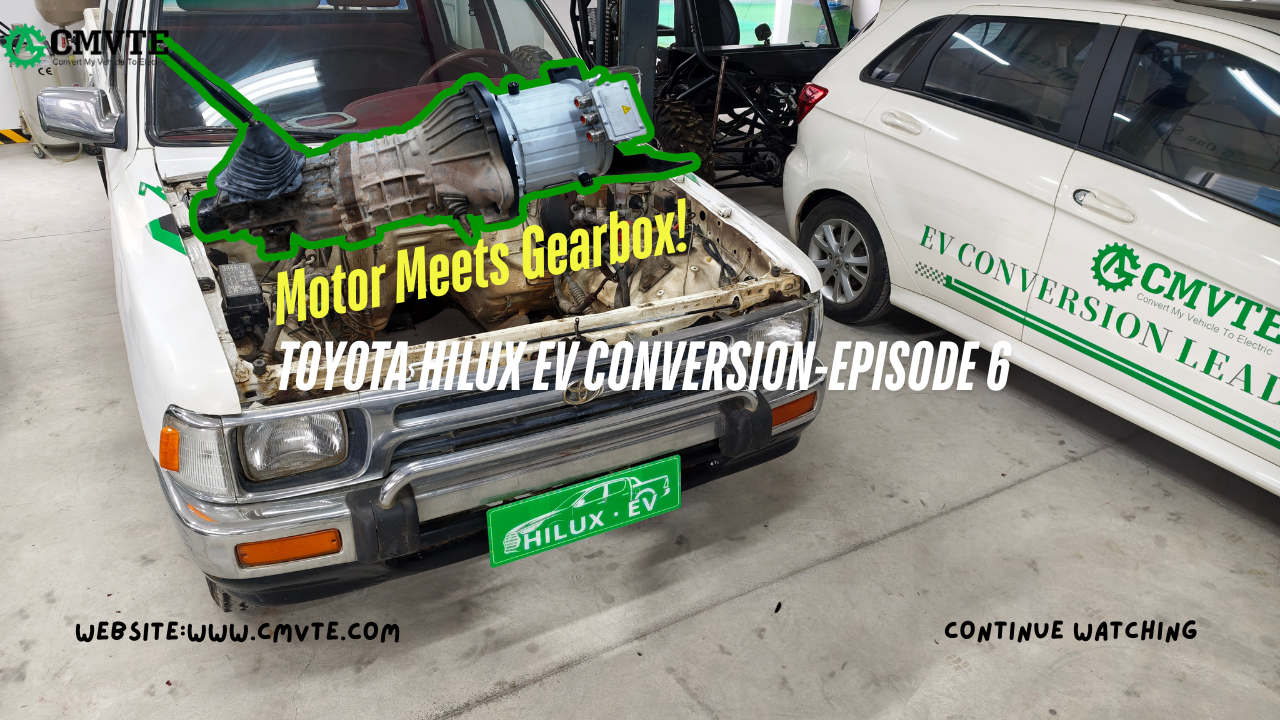
In Episode 6, we begin assembling the electric drivetrain by wiring the major components, performing the first no-load system test, and successfully connecting the electric motor to the original Toyota Hilux manual transmission.
🎥 Watch Episode 6 on YouTube:
https://www.youtube.com/watch?v=RtFgap7oR9Y&list=PLH_S-bVz1dh8&index=6
Turning Individual Components into One Complete EV System
An EV conversion is much more than installing parts.
The real challenge is integrating every component into a complete, reliable, and safe electric drivetrain.
In this episode, our engineers begin assembling the system by connecting:
- Motor controller
- Electric motor
- High-voltage wiring harness
- Low-voltage wiring
- Accelerator pedal
- On-board charger
- DC-DC converter
- Auxiliary electrical systems
Each connection is carefully checked before power is applied, ensuring that every component can communicate correctly with the others.
Wiring Matters More Than Most People Think
One of the most common causes of problems in DIY EV conversions isn’t the motor or battery—it’s poor wiring.
A professional wiring layout helps ensure:
- Reliable communication between components
- Stable power delivery
- Easier maintenance and troubleshooting
- Better protection against electrical faults
- Cleaner installation with improved serviceability
That’s why we take the time to route, secure, and verify every cable before moving on to testing.
The First No-Load System Test
Before the Hilux ever drives under its own power, every major function must be verified.
In this episode, we perform the vehicle’s first no-load system test to confirm that the electrical system is operating correctly.
During this stage, we check:
- Motor rotation direction
- Controller operation
- Accelerator pedal response
- CAN communication
- Safety protection functions
- Electrical connections
Testing the system without load allows potential issues to be identified and corrected before the vehicle reaches the road, reducing commissioning time and improving long-term reliability.
Connecting the Electric Motor to the Original Manual Transmission
One of the highlights of this episode is the final assembly of the electric motor and the factory Toyota Hilux manual gearbox.
As introduced in Episode 3, our engineers designed a custom adapter plate and precision coupling assembly specifically for this conversion. Now it’s time to install them.
The motor is aligned and mounted to the original transmission using:
- Custom adapter plate
- Precision coupling assembly
- Original manual gearbox
By retaining the factory transmission, we preserve the Hilux’s proven drivetrain while significantly reducing the amount of chassis modification required.
This approach also allows the vehicle to benefit from the gearbox’s torque multiplication when carrying heavy loads or climbing steep grades.
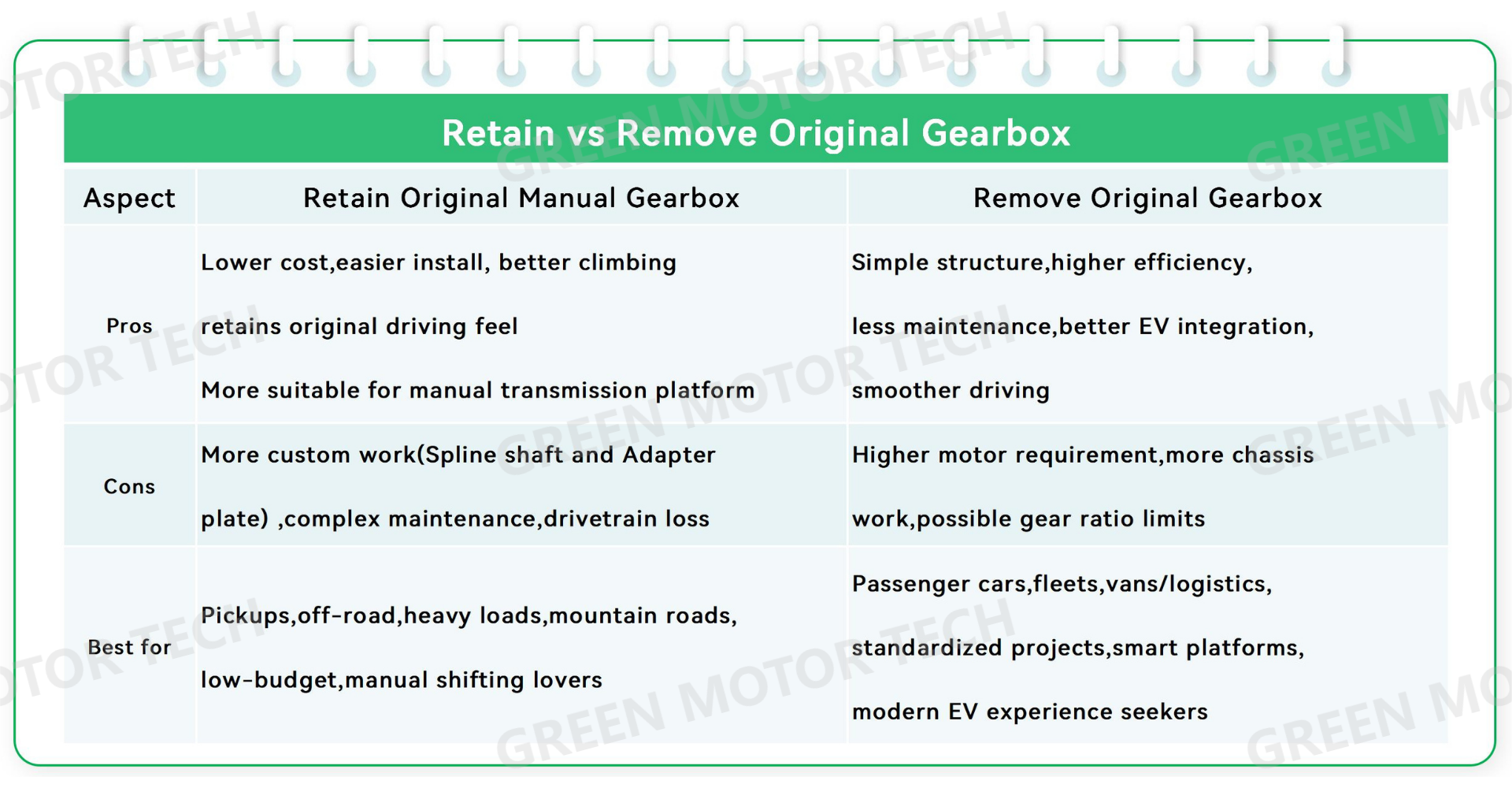
Why We Keep the Original Gearbox
Many people ask whether an EV conversion still needs a manual transmission.
For commercial vehicles like the Toyota Hilux, retaining the original gearbox offers several advantages:
- Lower conversion costs
- Faster installation
- Minimal structural modifications
- Better low-speed torque multiplication
- Excellent off-road capability
- Familiar driving characteristics
- Easier maintenance using existing drivetrain components
For many pickup conversions, keeping the factory transmission is the most practical and reliable solution.
When you don’t know whether to retain or remove original gearbox, you can take below for reference:
Another Major Milestone Completed
Although the battery packs have not yet been installed, Episode 6 marks one of the biggest milestones in the entire project.
The mechanical and electrical systems are now coming together into a complete electric powertrain.
From this point onward, the Hilux is beginning to look—and function—like a true electric pickup rather than a dismantled diesel truck.
What’s Coming Next?
With the drivetrain assembled and the electrical system successfully tested, the next stage of the project focuses on installing the battery packs, integrating the cooling system, and preparing the vehicle for its first powered drive.
The transformation is getting closer to completion, and some of the most exciting moments are still ahead.
Stay tuned for the next episode of the Toyota Hilux EV Conversion Diary.
Planning Your Own Hilux EV Conversion?
Every EV conversion is unique.
Choosing the right motor, battery, controller, and transmission configuration depends on how the vehicle will be be used.
At GMT, we’ve already helped customers electrify vehicles such as the Toyota Hilux, Isuzu D-Max, and other commercial vehicles. We’re also documenting our own Hilux EV conversion project step by step to share the real engineering process behind a successful conversion.
If you’re considering converting your own pickup truck, we’d be happy to help.
Simply contact us by [email protected] with your vehicle details, and we’ll provide a preliminary Bill of Materials (BOM), recommended system configuration, and an estimated project budget based on your project requirements.

