

Converting a classic Chevy into an electric vehicle sounds simple on paper. In reality, most people quickly realize the cost isn’t just about the motor—it’s about the whole system working together.
So let’s talk honestly about what an EV conversion for a Chevy actually costs today, and where most people usually land when building a practical setup.
So… how much does it cost?
There’s no single price, but in most real-world projects, Chevy EV conversions usually fall into three rough categories:
Entry-level builds usually start around $3,000–$6,000, but these are often low-power setups meant for light driving or experimental use.
Mid-range builds—where most serious projects sit—are typically $6,000–$15,000. This is the sweet spot for pickup trucks and older utility Chevys that still need usable torque and daily reliability.
High-performance conversions can easily go beyond $20,000, especially when larger battery packs or highway-grade performance are involved.
But here’s the truth most people learn after their first build:
the motor kit alone doesn’t decide the success of the project.
A practical setup: 60kW conversion system
For most Chevy pickups and light commercial builds, a 60kW class EV conversion system tends to hit the balance point between cost, usability, and performance.
This type of setup is not trying to be a race car. It’s designed to feel like a working vehicle again—just electric.
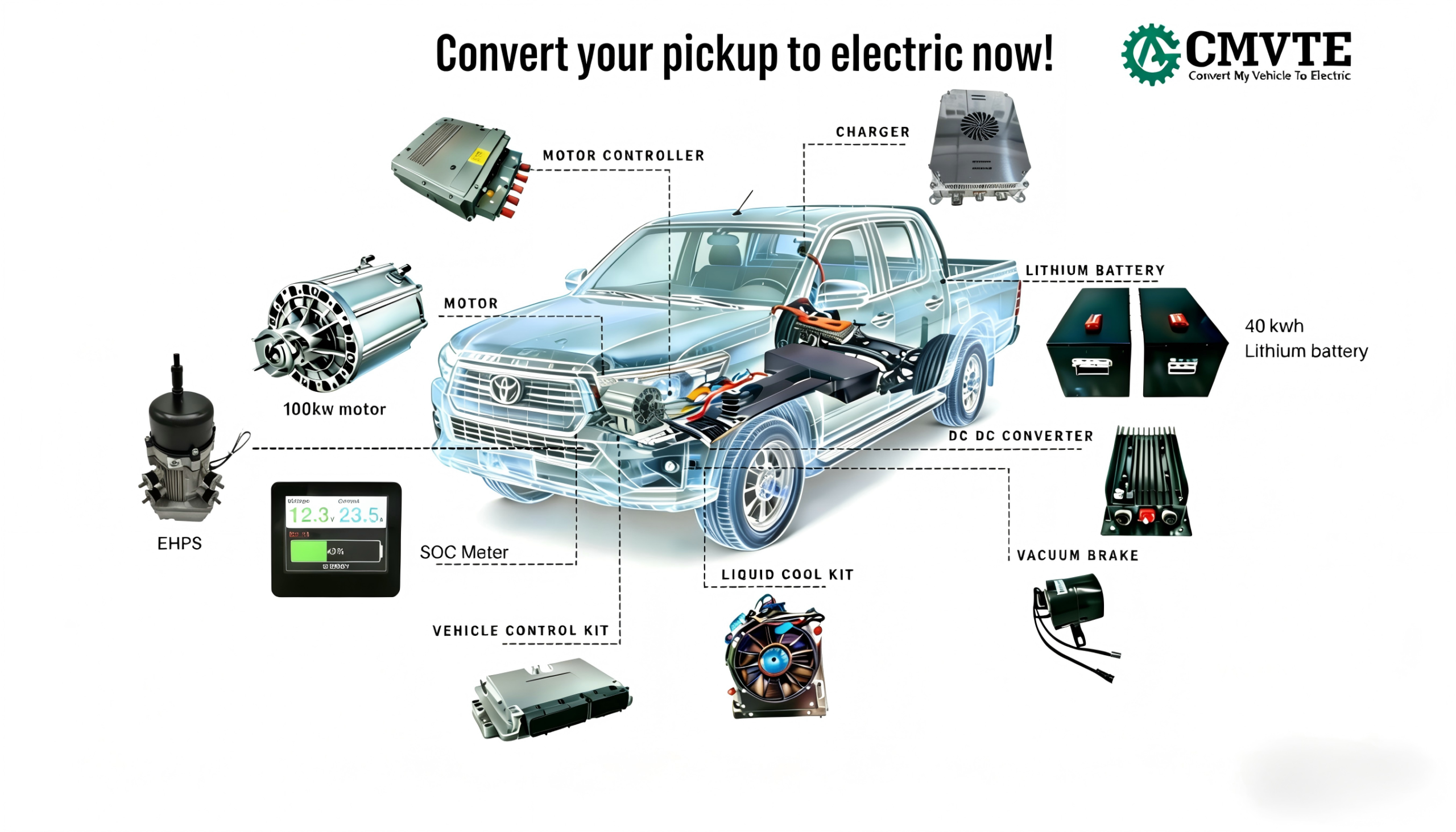
A typical configuration looks like this:
- 60kW rated motor system
- Up to 120kW peak output
- High torque delivery suitable for trucks
- Liquid cooling for sustained load driving
In practice, this kind of system is often used for older Chevy pickups, delivery trucks, or fleet vehicles that need reliability more than speed.
Why Chevy platforms work so well for EV conversion
Chevy trucks have one big advantage: they were built simple.
There’s space. There’s structure. And most importantly, they were never over-complicated electronically.
That means:
- You can fit batteries without completely redesigning the vehicle
- The chassis handles weight reasonably well
- Gearbox retention is straightforward if you want it
- Repairs and customization stay affordable
For conversion builders, that simplicity is gold.
What people usually forget about cost
The motor kit is only part of the story.
In most real builds, the budget splits like this:
- Motor + controller system
- Battery pack (usually the biggest cost)
- Wiring, cooling, DC-DC systems
- Labor and integration work
And depending on range expectations, the battery alone can change the whole project cost dramatically.
That’s why two Chevy conversions that “look similar” on paper can end up with very different final prices.
Where a 60kW system really fits
A 60kW platform sits in a very practical zone:
- Strong enough for daily driving and light cargo
- Efficient enough to keep battery size reasonable
- Not overkill for older chassis
- Still affordable for workshops and small fleets
It’s not the biggest system you can build—but in many cases, it’s the one that actually gets finished and used.
Final thought
If you look at successful Chevy EV conversions, most of them don’t chase extreme performance. They chase something simpler: a usable electric vehicle that starts every morning and doesn’t drain the budget halfway through the project.
That’s really where mid-power systems like a 60kW setup make sense—they keep the project realistic.

