

Building a DIY electric pickup truck is one of those ideas that looks simple at first—but gets real very quickly once you start dealing with power levels, weight distribution, and drivetrain matching.
Most projects don’t fail because of motivation.
They fail because the system design was never realistic in the first place.
We’ve seen this pattern many times at GMT, especially when customers come in after trying low-voltage or mismatched setups that looked fine on paper but didn’t survive real road conditions.
So let’s break it down in a more practical way.
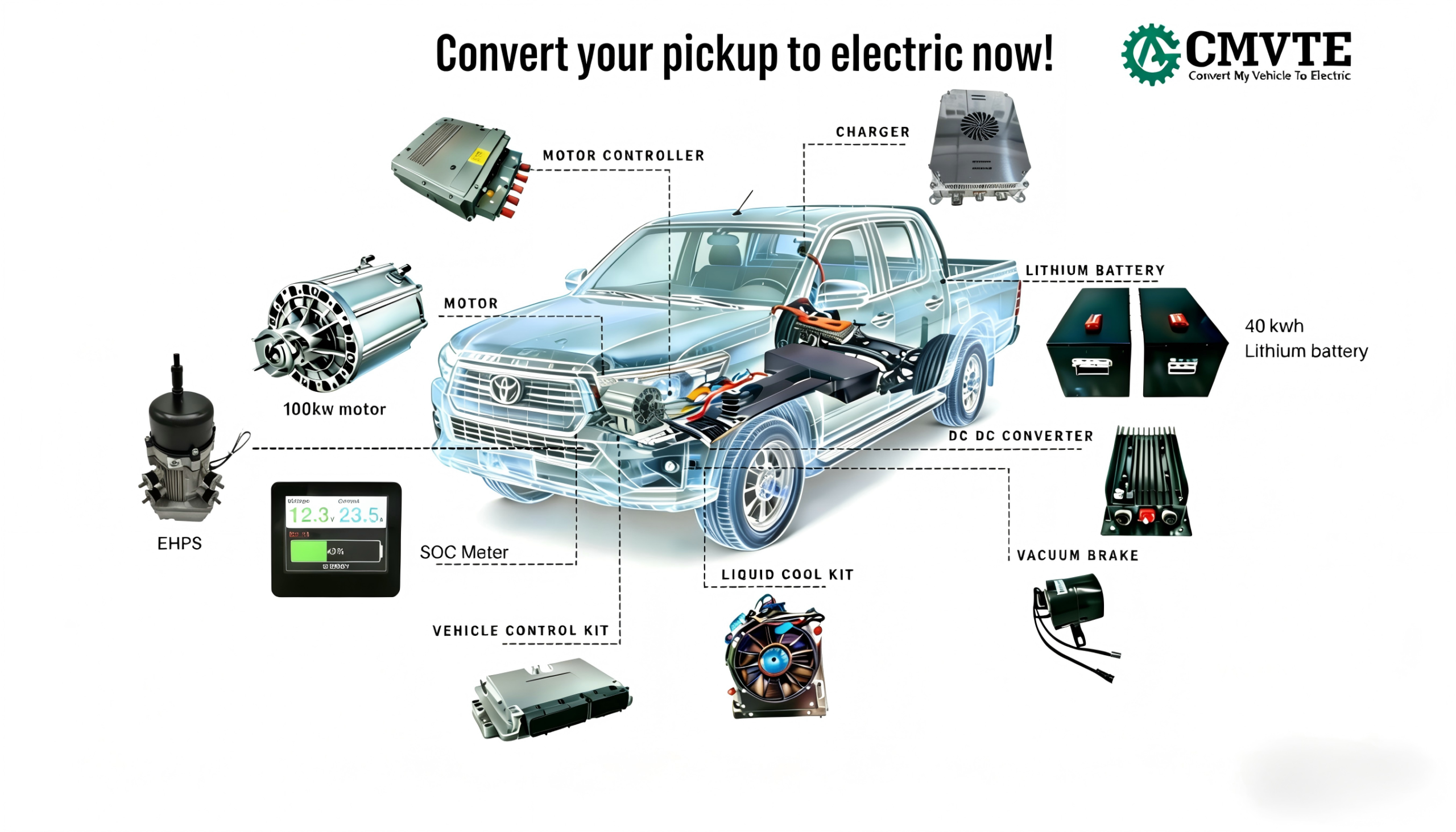
Voltage defines everything in a pickup conversion
A common DIY assumption is:
“Just pick a motor, add batteries, and it will work.”
In reality, voltage affects everything:
- current level
- cable sizing
- heat generation
- system efficiency
- controller cost
- long-term reliability
For pickup trucks, low-voltage systems like 72V or 96V quickly hit limitations when the vehicle starts carrying real load or climbing under stress.
These setups can work for small utility carts—but not for a full-size pickup used in daily conditions.
What actually works for pickup EV conversions
After working on multiple platforms including Toyota Hilux and Isuzu D-Max conversions, one clear pattern emerges:
Pickup trucks perform best in a mid-to-high voltage architecture range.
Typical workable platforms are:
- 144V (entry-level conversion builds)
- 240V (most balanced DIY + commercial builds)
- 300–400V (modern high-efficiency platform)
This range keeps current under control while allowing flexible battery sizing and stable thermal performance.
For example, a 60kW system behaves very differently depending on voltage:
- At 96V → extremely high current, inefficient for sustained use
- At 240V → stable and practical for real driving
- At 350V → OEM-level efficiency and lower heat stress
Same motor. Completely different behavior in real conditions.
A practical DIY pickup setup (what we usually recommend)
For real-world use, not just prototype builds, a balanced configuration looks like this:
⚙️ Motor system
- 40–60kW rated power
- 100–120kW peak capability
- High torque output for load conditions
- Liquid cooling for continuous operation
🔋 Battery architecture
- 144V / 240V / 336V depending on budget and target use
- 60–120kWh scalable pack design
- Modular layout for serviceability
⚙️ Transmission strategy
Most successful builds still use:
- retained manual gearbox (for torque multiplication and flexibility)
- or simple reduction drive for simplified setups
For older pickup platforms, gearbox retention often makes the system far more forgiving and practical.
Real projects we’ve supported (GMT experience)
At GMT, we’ve supported multiple pickup conversion programs across different markets.
Some recent examples include:
- Toyota Hilux EV conversion projects for utility and fleet use
- Isuzu D-Max electrification for light commercial applications
- Custom pickup builds for off-grid and rural logistics
In most cases, customers initially aimed for low-voltage systems to reduce cost, but later moved to higher voltage architectures after real load testing.
That shift usually marks the difference between a prototype and a usable vehicle.
Why most DIY builds underestimate cost
The motor is rarely the expensive part.
In a real conversion, cost is distributed across:
- EV drive system (motor + controller)
- battery pack (largest variable cost)
- HV wiring and safety systems
- cooling system design
- integration and labor
This is why two similar-looking projects can end up with very different total budgets.
Example BOM & pricing support
For serious builders or workshops, we usually provide structured technical packages including:
- full BOM (Bill of Materials)
- system wiring reference
- voltage architecture recommendation
- controller matching guide
- pricing options by performance level
This helps avoid one of the most common DIY problems: component mismatch between motor, battery, and controller.
We can also support:
- entry / standard / upgraded configurations
- cost breakdown by subsystem
- integration guidance for specific pickup models

