

When converting a classic Mini into an electric vehicle, one important question often comes up: What happens to the original gearbox?
Unlike a traditional engine replacement, an electric vehicle conversion requires a different approach to power delivery. The original transmission may be retained, modified, or replaced depending on the vehicle’s existing drivetrain, the selected electric motor, and the overall conversion design.
For our Classic Mini EV conversion project, the original automatic transmission is removed and replaced with a dedicated electric drivetrain consisting of a CMVTE electric motor, gearbox, and driveshaft.
This approach creates a new power delivery system designed specifically for electric propulsion while preserving the classic Mini’s original exterior character.
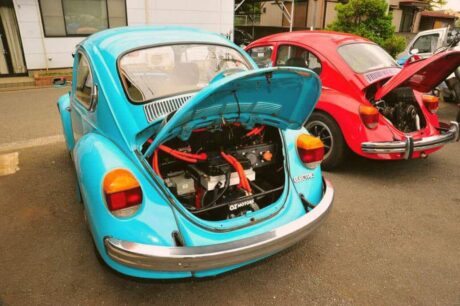
1. Does a Classic Mini Need Its Original Gearbox After EV Conversion?
Not necessarily.
In a conventional gasoline-powered Mini, the engine generates power and transfers it through the transmission to the drive wheels. The gearbox plays an important role in matching engine speed and torque to different driving conditions.
An electric motor works differently.
Electric motors can deliver strong torque from low speeds and operate across a broad speed range. This means an EV conversion does not always require the same transmission arrangement as the original gasoline vehicle.
There are three common approaches to handling the original gearbox:
Option 1: Retain the Original Transmission
Some EV conversions keep the original manual transmission. An adapter plate and motor coupling connect the electric motor to the existing gearbox.
This approach can preserve the familiar shifting experience and make use of the vehicle’s existing transmission and drivetrain layout.
However, the transmission’s condition, gear ratios, clutch arrangement, and compatibility with the electric motor must all be evaluated before choosing this solution.
Option 2: Modify the Original Transmission
In some projects, the original transmission is retained but modified to work with the electric motor.
This may involve adapting the clutch, input shaft, or motor mounting arrangement. The objective is to achieve reliable mechanical integration without unnecessarily changing the original drivetrain structure.
Option 3: Replace the Original Transmission
Another approach is to remove the original gearbox and install a dedicated electric drivetrain.
This is the solution used in our featured Classic Mini conversion project.
The original automatic transmission is removed, and a new electric motor, gearbox, and driveshaft are integrated into the vehicle.
Each approach has different engineering requirements. The right choice depends on the original vehicle configuration and the intended driving performance.

2. Our Classic Mini EV Conversion: Replacing the Original Automatic Transmission
For this Classic Mini project, we chose a different drivetrain arrangement instead of retaining the original automatic transmission.
The conversion involves three main components:
- Electric motor
- Dedicated gearbox
- Driveshaft
The original automatic transmission is removed to make room for the new electric powertrain.
The CMVTE electric motor becomes the vehicle’s primary power source. Instead of relying on the original gasoline engine and automatic transmission, the new drivetrain transfers electric motor output through a dedicated gearbox and driveshaft to the wheels.
This arrangement allows the conversion system to be designed around the electric motor rather than forcing the new powertrain to follow every limitation of the original automatic transmission.
See the actual Classic Mini gearbox conversion: Watch our Classic Mini EV Conversion: What Happens to the Gearbox? Short to see the drivetrain concept behind this project.
The key is not simply removing the original gearbox. It is making sure the replacement drivetrain works as a complete mechanical system.
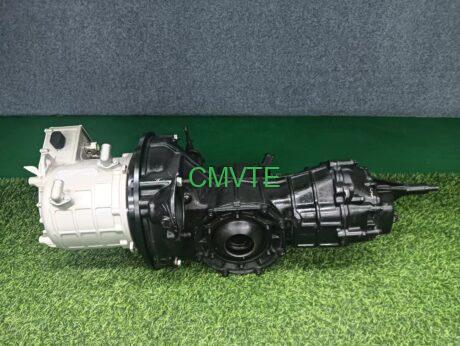
3. How Does the Electric Motor, Gearbox, and Driveshaft Work Together?
After removing the original automatic transmission, the new electric drivetrain must provide a reliable path for transferring power to the wheels.
Here is how the main components work together.
Electric Motor: Generating Driving Power
The electric motor replaces the original gasoline engine as the vehicle’s power source.
When the driver presses the accelerator pedal, the motor controller regulates the electrical power supplied to the motor.
The motor converts electrical energy from the battery into mechanical rotation, producing the torque needed to move the vehicle.
For a lightweight vehicle like the classic Mini, motor selection should consider vehicle weight, target speed, acceleration requirements, available installation space, and battery capacity.
CMVTE can evaluate different motor configurations for classic vehicle projects. Explore our PMSM Motor Solutions for EV Conversion to understand the available motor technologies and power options.
Gearbox: Matching Motor Output to the Drivetrain
Although electric motors provide a wide operating speed range, a suitable gearbox can still be important in a conversion project.
The gearbox helps establish the relationship between motor speed and wheel speed.
Its gear ratio influences:
- Vehicle acceleration
- Wheel torque
- Maximum vehicle speed
- Motor operating speed under different driving conditions
For this Classic Mini project, a dedicated gearbox is used as part of the replacement drivetrain.
Its specifications must be matched to the selected motor, tire dimensions, vehicle weight, and desired driving characteristics.
Driveshaft: Transferring Power to the Wheels
The driveshaft connects the drivetrain output to the vehicle’s driven wheels.
Once the electric motor generates power and the gearbox provides the required output ratio, the driveshaft transfers the mechanical power through the drivetrain.
Correct alignment, mounting strength, and mechanical compatibility are essential.
A poorly matched drivetrain can introduce vibration, excessive mechanical stress, and unnecessary energy losses.
That is why the motor, gearbox, and driveshaft should be considered together rather than selected as completely independent components.
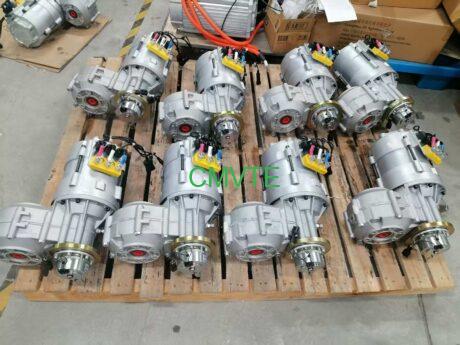
4. Why Not Simply Keep the Original Automatic Transmission?
This is a common question when discussing classic car EV conversions.
The answer is that keeping the original transmission is not always the most suitable engineering choice.
Several factors need to be considered.
Original Transmission Compatibility
An automatic transmission is designed around the characteristics of its original combustion engine.
Its torque converter, hydraulic control system, internal gear ratios, and lubrication requirements may not be directly compatible with a newly installed electric motor.
Mechanical Integration
Retaining the original transmission may require additional adapter design, coupling modifications, and mechanical adjustments.
Depending on the transmission design, these modifications can increase installation complexity.
Overall Drivetrain Design
Replacing the original transmission allows the conversion system to be designed around the electric motor and its intended operating characteristics.
However, this does not mean that removing the original gearbox is always better.
For a classic Mini equipped with a suitable manual transmission, retaining the original gearbox may still be a practical option.
The important thing is to select the drivetrain configuration based on the actual vehicle and conversion requirements.
5. What Should Be Considered When Choosing a Gearbox for a Classic Mini EV Conversion?
Before selecting a replacement gearbox, several engineering factors should be evaluated.
Motor Power and Torque
The gearbox must be compatible with the selected electric motor’s rated power, peak power, torque, and operating speed.
A gearbox that is not properly matched may limit performance or experience excessive mechanical loading.
Gear Ratio
The gear ratio directly affects the relationship between motor RPM and wheel speed.
A higher reduction ratio generally increases wheel torque while reducing wheel speed at a given motor RPM.
The correct ratio depends on the intended balance between acceleration, cruising speed, and motor efficiency.
Vehicle Weight and Tire Size
A classic Mini is a compact, lightweight vehicle, so its weight and tire dimensions should be included in drivetrain calculations.
These factors influence the torque required at the wheels and the overall gear ratio selection.
Installation Space
The Mini’s compact engine compartment creates important packaging challenges.
The motor, gearbox, mounting brackets, and associated components must fit within the available space without interfering with steering, suspension, or other vehicle systems.
Drivetrain Reliability
The complete system should be evaluated for mechanical strength, shaft alignment, mounting stability, and thermal conditions.
A successful EV conversion is not simply about installing a motor that fits. All components must work together reliably.
6. Building a Complete Electric Drivetrain for a Classic Mini
The gearbox is only one part of a successful electric conversion.
A complete Classic Mini EV conversion requires coordinated integration of several systems, including:
- Electric motor and motor controller
- Motor mounting and mechanical connection components
- Gearbox and driveshaft
- Lithium battery pack and battery management system
- On-board charger
- DC-DC converter
- High-voltage wiring and protection
- Accelerator pedal and vehicle control interfaces
Each component has a specific role, but the overall performance depends on how well these systems work together.
For example, motor selection must match the battery voltage and controller specifications. The mechanical drivetrain must also be designed around the motor’s output characteristics.
CMVTE provides integrated electric conversion solutions for classic vehicles, helping customers coordinate the electric drive system, power electronics, battery system, and supporting components.
You can also explore our Classic Mini Electric Conversion Solution to learn more about our vehicle-specific conversion approach.
For a broader overview of the conversion process, read our Classic Mini Electric Vehicle Conversion Ultimate Guide.
7. Why Choose a Complete EV Conversion Solution Instead of Individual Components?
One of the biggest challenges in an EV conversion project is making sure that all components are compatible.
Purchasing an electric motor, controller, battery, and gearbox separately does not automatically create a working electric vehicle.
The motor must match the controller. The controller must work with the battery system. The gearbox must be compatible with the motor’s output. The entire electrical and mechanical architecture must also fit the vehicle.
This is especially important for classic vehicles like the Mini, where installation space is limited and original vehicle structures must be carefully considered.
CMVTE focuses on providing complete EV conversion systems rather than simply supplying individual components.
Our approach includes:
- Electric motor and controller matching
- Battery and power electronics integration
- Mechanical drivetrain planning
- Vehicle-specific installation considerations
- Technical documentation and engineering support
For other classic vehicles, our Conversion Kits for Vintage and Classic Cars provide another reference for understanding how an integrated conversion system can be adapted to different vehicle platforms.
8. Final Thoughts: The Right Gearbox Depends on the Conversion Design
So, what happens to the original gearbox during a Classic Mini EV conversion?
The answer depends on the vehicle’s original transmission and the selected electric drivetrain.
Some projects retain the original manual gearbox, while others modify it or replace it with a dedicated electric drivetrain.
In our featured Classic Mini project, the original automatic transmission is removed and replaced with a CMVTE electric motor, gearbox, and driveshaft arrangement.
The objective is to create a properly matched electric powertrain while preserving the iconic appearance of the classic Mini.
At CMVTE, we believe that a successful EV conversion is about more than replacing a gasoline engine with an electric motor. It requires a complete system in which mechanical, electrical, and battery components work together.
Planning your own Classic Mini EV conversion?
Contact CMVTE to discuss your vehicle configuration, motor requirements, gearbox arrangement, and complete electric conversion solution.
We help customers turn classic vehicles into modern electric vehicles with integrated conversion systems and engineering support.
Frequently Asked Questions (FAQ)
1. Can you keep the original gearbox when converting a Classic Mini to electric?
Yes, in some projects. A suitable original manual gearbox can be retained by using an adapter plate and motor coupling. However, compatibility must be evaluated based on the transmission condition, clutch arrangement, motor specifications, and drivetrain design.
2. Does a Classic Mini EV conversion need a gearbox?
Not every electric conversion uses the same gearbox arrangement. Some systems retain the original transmission, while others use a dedicated reduction gearbox or another drivetrain configuration. The appropriate solution depends on motor speed, torque, vehicle weight, and target performance.
3. Why remove the original automatic transmission?
In our featured Classic Mini project, the original automatic transmission is removed to accommodate a replacement electric drivetrain consisting of an electric motor, gearbox, and driveshaft. This allows the new drivetrain to be designed around the electric motor.
4. What does the gearbox do in an electric Classic Mini?
The gearbox establishes the relationship between motor speed and wheel speed. Its ratio influences acceleration, wheel torque, and vehicle speed. It must be selected to match the electric motor and the vehicle’s driving requirements.
5. What motor power is suitable for a Classic Mini EV conversion?
The appropriate motor power depends on vehicle weight, desired acceleration, maximum speed, battery capacity, and driving conditions. CMVTE has discussed 15kW and 20kW configurations for Classic Mini projects. The final selection should be based on the specific vehicle and performance targets.
6. Does CMVTE provide a complete Classic Mini EV conversion system?
CMVTE provides integrated EV conversion solutions covering electric motors, controllers, battery systems, power electronics, and supporting components. Mechanical arrangements such as motor mounting, gearbox selection, and driveshaft integration should be confirmed according to the vehicle configuration.
Contact CMVTE to discuss your Classic Mini EV conversion project.

