

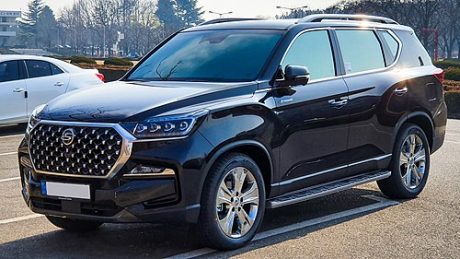
Converting a large SUV like the SsangYong Rexton from diesel to electric power involves much more than removing the original engine and installing an electric motor.
A successful SUV EV conversion requires a complete redesign of the vehicle’s powertrain and supporting systems. The electric motor, controller, battery pack, drivetrain, steering, braking, cooling, and electrical architecture must all work together.
This is particularly important for a vehicle like the SsangYong Rexton, which features a rugged body-on-frame structure and was originally designed for demanding driving conditions.
In our SsangYong Rexton EV conversion project, CMVTE uses a 540V electric drive system featuring a 60kW continuous / 120kW peak PMSM liquid-cooled motor and a high-voltage lithium battery system.
The original diesel engine and transmission are removed, while the original drive shaft and rear axle are retained as part of the redesigned drivetrain.
This project demonstrates why converting a conventional SUV into an electric vehicle is an integrated engineering process rather than a simple engine replacement.
1. Why Is an SUV EV Conversion More Than an Engine Swap?
When people think about converting a diesel vehicle into an electric vehicle, the first thing they usually consider is replacing the engine with an electric motor.
However, an engine is connected to many other vehicle systems.
In a conventional diesel SUV, the engine provides mechanical power not only for driving the wheels but also for supporting other vehicle functions.
For example:
- The engine drives the original transmission.
- The engine provides power for the mechanical or hydraulic steering system.
- The engine generates vacuum for the brake booster.
- The engine drives the air conditioning compressor.
- The engine cooling system manages operating temperatures.
Once the diesel engine is removed, these systems can no longer depend on it in their original form.
An electric conversion must therefore address each affected function.
For the Rexton project, the objective is to replace the combustion powertrain with an integrated electric system while retaining suitable original vehicle structures and components.
This approach helps avoid unnecessary changes to the vehicle while creating a new electric propulsion architecture.
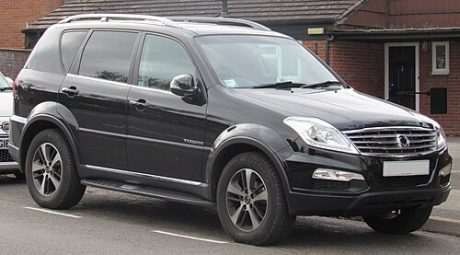
2. The Core Electric Powertrain: 540V PMSM Motor and Controller
The electric motor is the heart of the converted Rexton.
For this project, CMVTE uses a 60kW rated, up to 120kW peak, 540V PMSM liquid-cooled motor and matching controller.
The main specifications include:
- Motor type: Permanent Magnet Synchronous Motor (PMSM)
- Rated power: 60kW
- Peak power: Up to 120kW
- System voltage: 540V class
- Cooling: Liquid cooling
- Motor controller: Matched high-voltage controller
Why Choose a PMSM Motor?
A Permanent Magnet Synchronous Motor is widely used in electric vehicle drive systems because of its high power density, precise torque control, and efficient operation.
For a relatively large SUV, motor selection should consider more than maximum power.
Important factors include:
- Vehicle curb weight and expected payload
- Required acceleration
- Maximum target speed
- Wheel torque requirements
- Driving terrain and gradient
- Continuous operating conditions
- Battery voltage and discharge capability
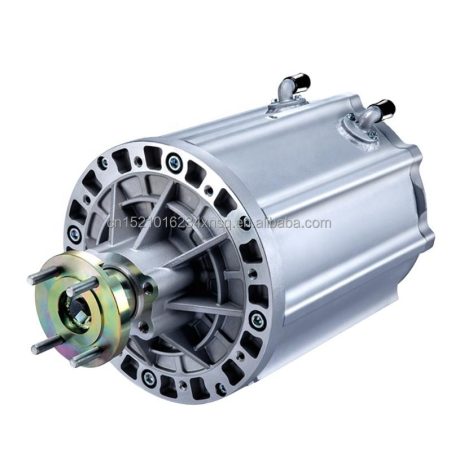
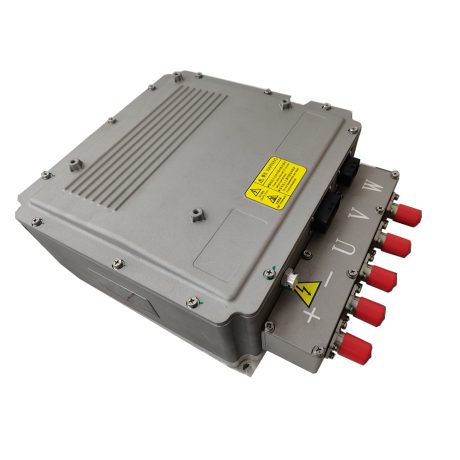
The 60kW continuous and 120kW peak configuration provides different operating power levels for sustained and short-duration demands.
The motor controller regulates power delivery according to accelerator input and operating conditions, helping coordinate the motor and battery system.
Explore CMVTE’s 60kW/120kW 540V PMSM Liquid-Cooled Motor and Controller Solution for more technical information.
3. Drivetrain Redesign: Removing the Original Transmission but Retaining the Rear Axle
One of the most important engineering decisions in the Rexton conversion is how to transfer power from the electric motor to the wheels.
Instead of keeping the original diesel transmission, this project adopts a direct-drive motor configuration.
The original diesel engine and transmission are removed.
The new electric motor connects to the original drive axle through a specially designed flange. The original drive axle then transfers power to the original rear axle.
The drivetrain architecture can be simplified as:
Battery → Motor Controller → PMSM Motor → Connection Flange → Original Drive Axle → Original Rear Axle
Why Retain the Original Drive Axle and Rear Axle?
Retaining suitable original drivetrain components can reduce the need to redesign the entire vehicle structure.
The original rear axle remains part of the vehicle’s mechanical foundation, while the electric motor replaces the original diesel engine as the power source.
However, the connection between the electric motor and original drive axle requires careful engineering.
Several factors need to be evaluated:
- Motor mounting position
- Flange dimensions and alignment
- Shaft connection strength
- Motor operating speed
- Final drive ratio
- Axle load and torque capacity
- Vibration and mechanical stability
The direct-drive arrangement is designed around the selected motor and the original vehicle’s drivetrain characteristics.
It is not a universal solution for every SUV. Each conversion requires vehicle-specific mechanical evaluation.
See the Rexton conversion in action: Watch our More Than an Engine Swap | Rexton EV Conversion video to explore this vehicle conversion project and the electric drivetrain transformation.
4. High-Voltage Battery System: Supplying Power to the Electric SUV
An electric motor cannot operate independently. It needs a battery system capable of supplying the required voltage and current.
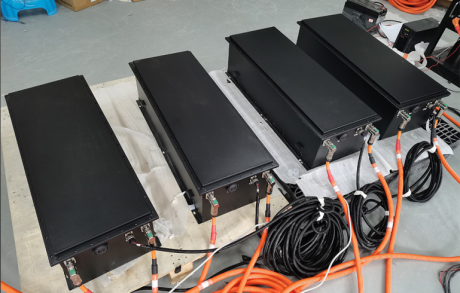
For the Rexton conversion, the proposed battery configuration uses a 537.6V, 105Ah LiFePO4 battery system.
The key specifications are:
- Battery chemistry: LiFePO4
- Nominal voltage: 537.6V
- Capacity: 105Ah
- Total nominal energy: Approximately 56.45kWh
- Battery management: Integrated BMS
The battery pack supplies electrical energy to the motor controller, which regulates the power delivered to the PMSM motor.
Why Is Battery Matching Important?
Battery selection should be based on the vehicle’s actual operating requirements.
For a large SUV, engineers need to evaluate:
1. Voltage Compatibility
The battery voltage must match the motor controller’s operating voltage range.
2. Discharge Capability
The battery must provide sufficient current to support the motor’s rated and peak power demands.
3. Battery Capacity
Battery energy determines the amount of electrical energy available for driving. Actual range depends on vehicle consumption, driving speed, terrain, payload, and operating conditions.
4. Battery Packaging
The battery system must fit within the available vehicle space while considering structural protection, weight distribution, mounting strength, and service access.
5. Battery Management
The BMS monitors battery operating conditions and helps protect the battery cells against abnormal voltage, current, and temperature conditions.
For this Rexton configuration, the approximately 56.45kWh battery system provides the energy foundation for the new electric drivetrain.
Learn more about CMVTE’s High-Voltage LiFePO4 Battery Pack Solutions.
5. Supporting Systems: Steering, Braking, and Air Conditioning
Replacing the engine also means replacing several functions that originally depended on it.
These systems are essential for making the converted SUV practical to operate.
Electric Power Steering
The original power steering system may depend on mechanical power from the diesel engine.
After engine removal, an alternative power source is required.
An electric hydraulic power steering system can provide steering assistance without relying on the original engine.
For a relatively heavy SUV, maintaining appropriate steering assistance is especially important.
The selected solution must be compatible with the original steering hardware and the vehicle’s electrical architecture.
Electric Vacuum Brake Pump
In a conventional diesel vehicle, the brake booster often uses vacuum generated by the engine.
Once the engine is removed, that vacuum source is no longer available.
An electric vacuum pump can provide the required vacuum assistance for the brake booster, allowing the original hydraulic braking system to continue operating with appropriate assistance.
The pump, reservoir, control logic, and vacuum level must be matched to the vehicle’s braking requirements.
Preserving braking assistance is a critical part of a safe EV conversion.
Electric Air Conditioning Compressor
The original air conditioning compressor is normally driven by the engine through a belt.
After conversion, the compressor must be replaced or adapted to an electric-driven solution.
An electric air conditioning compressor operates independently of the original engine and can be integrated into the new electrical system.
This allows the vehicle to maintain cabin cooling without depending on the removed diesel engine.
DC-DC Converter
Another essential component is the high-voltage DC-DC converter.
The traction battery operates at high voltage, while many original vehicle accessories still require a lower-voltage electrical supply.
The DC-DC converter reduces the high-voltage battery output to the appropriate 12V or 24V level, depending on the vehicle’s electrical architecture.
The Rexton conversion solution includes a 3kW DC-DC converter with a 250–750V input range and adjustable 12V/24V output.
It supports the vehicle’s low-voltage electrical system, including accessories, lighting, and instrumentation.
These supporting systems demonstrate why an EV conversion must consider the complete vehicle rather than only the motor and battery.
6. Liquid Cooling and Electrical Integration
A high-power electric drive system requires appropriate thermal management.
The Rexton project uses a liquid-cooled PMSM motor configuration.
The cooling system helps manage motor operating temperatures under different load conditions.
However, cooling is only one part of the integration process.
The complete electrical system also needs:
- High-voltage cables and connectors
- Battery protection and isolation
- Motor controller connections
- BMS communication
- DC-DC power conversion
- Charging connections
- Low-voltage wiring
- Vehicle control and instrumentation interfaces
All these components must be properly matched and integrated.
For example, the motor controller needs to communicate correctly with the battery system, while the vehicle’s low-voltage accessories must receive a stable power supply.
High-voltage wiring also requires appropriate insulation, routing, mechanical protection, and electrical safety measures.
For a 540V-class conversion, the completed installation should be inspected and tested by qualified personnel before the vehicle is operated.
7. Why a Complete EV Conversion System Matters
A common challenge in EV conversion projects is sourcing individual components from different suppliers.
A motor from one supplier, a controller from another, and a battery pack from a third do not automatically form a compatible electric drivetrain.
The components must be coordinated from the beginning of the project.
For the Rexton conversion, the engineering process needs to connect several major systems:
| System | Main Components | Main Function |
|---|---|---|
| Electric Drive | PMSM motor and controller | Generate and regulate propulsion |
| Energy Storage | LiFePO4 battery and BMS | Store and manage electrical energy |
| Drivetrain | Flange, drive axle, rear axle | Transfer motor power to the wheels |
| Power Conversion | DC-DC converter | Supply low-voltage electrical systems |
| Thermal Management | Liquid cooling system | Manage motor operating temperature |
| Auxiliary Systems | Electric steering, vacuum pump, AC compressor | Replace engine-dependent functions |
| Charging | On-board charger and charging connections | Recharge the traction battery |
This is why CMVTE focuses on providing integrated EV conversion systems rather than simply supplying an electric motor.
Our approach combines electric motor manufacturing, controller matching, battery integration, power electronics, and supporting vehicle components.
For customers working on different vehicle platforms, our Complete EV Conversion Kit Solutions provide additional system configurations.
You can also read our guide to Comprehensive Testing and Practical Implementation of EV Conversion to understand how complete electric drive systems are assembled, connected, and tested before vehicle installation.
8. Who Can Benefit from a SsangYong Rexton EV Conversion Solution?
The Rexton project provides a useful reference for several types of customers.
EV Conversion Workshops
Automotive workshops looking to expand into SUV electrification can use the Rexton project as a reference for high-voltage motor, battery, and drivetrain integration.
EV System Integrators
Companies developing vehicle-specific conversion solutions need suppliers that can coordinate the motor, controller, battery, and supporting electrical systems.
Vehicle Owners and Restoration Specialists
Owners who want to retain an existing SUV platform while changing its propulsion system may consider an electric conversion, subject to vehicle condition, engineering feasibility, cost, and applicable regulations.
Fleet Electrification Projects
Businesses operating suitable existing vehicles may also evaluate conversion as an alternative to replacing their entire fleet.
The decision should consider vehicle utilization, charging access, daily operating distance, maintenance requirements, and total conversion cost.
For a broader understanding of the business case, read Benefits of Fleet Electrification: How Electric Drive Systems Can Reduce Operating Costs and Extend Vehicle Life.
9. Final Thoughts: Building an Electric SUV Requires Complete System Integration
The SsangYong Rexton EV conversion demonstrates that transforming a diesel SUV into an electric vehicle involves much more than replacing the engine.
The original diesel engine and transmission are removed, a 540V-class PMSM motor and controller are installed, and the original drive axle and rear axle are integrated into the new drivetrain.
A high-voltage LiFePO4 battery system supplies energy, while the electric steering, vacuum-assisted braking, air conditioning, DC-DC converter, and cooling systems address the functions previously supported by the original engine.
Every component has a role, and the performance and reliability of the finished vehicle depend on how well the entire system works together.
At CMVTE, we focus on developing complete electric conversion solutions for conventional vehicles, from motor and controller matching to battery systems, drivetrain integration, and supporting electrical components.
Planning an SUV or 4WD electric conversion project?
Contact CMVTE with your vehicle model, weight, drivetrain configuration, and target performance requirements.
Our engineering team can help evaluate the vehicle and develop a suitable one-stop EV conversion system for your project.
Frequently Asked Questions (FAQ)
1. Can a SsangYong Rexton be converted into an electric vehicle?
Yes. A Rexton can be evaluated for electric conversion by replacing its original diesel powertrain with a suitable electric motor, controller, battery system, and supporting components. The final design depends on the specific vehicle configuration and engineering requirements.
2. What motor is used in the CMVTE Rexton EV conversion?
The featured conversion solution uses a 60kW rated and up to 120kW peak 540V PMSM liquid-cooled motor with a matching controller.
3. Does the original Rexton transmission need to be removed?
In the featured direct-drive configuration, the original diesel transmission is removed. The electric motor connects to the original drive axle through a flange, and the original rear axle is retained.
Other Rexton conversion configurations may require different mechanical arrangements.
4. What battery is used in the Rexton electric conversion?
The listed battery configuration is a 537.6V, 105Ah LiFePO4 system, providing approximately 56.45kWh of nominal energy.
5. Can the original steering and braking systems still work after conversion?
Yes, with suitable supporting components and integration. The conversion needs an appropriate electric power steering solution and an electric vacuum pump to maintain brake booster assistance where required.
6. Why is liquid cooling important for the Rexton electric motor?
Liquid cooling helps manage the motor’s operating temperature, especially under demanding loads. The cooling system must be matched to the motor’s thermal requirements and operating conditions.
7. Does CMVTE provide a complete Rexton EV conversion kit?
CMVTE provides the major electronic and electric drive components for the Rexton conversion, together with wiring diagrams, component manuals, and technical support. Vehicle-specific mechanical installation and final integration should be confirmed according to the project requirements.
8. Can the Rexton EV conversion system be customized?
Yes. Motor power, battery capacity, voltage configuration, drivetrain arrangement, and supporting components should be evaluated according to the vehicle’s weight, intended application, performance targets, and installation space.
Contact CMVTE to discuss your SsangYong Rexton EV conversion or other SUV electrification project.

