

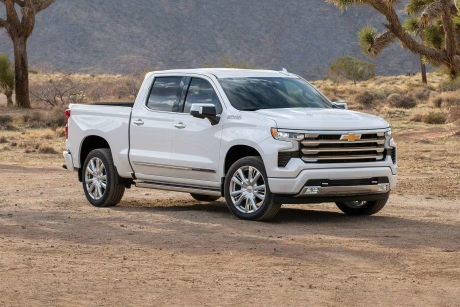
Chevrolet pickup trucks have earned their reputation through years of practical use, dependable performance, and versatile working capabilities. From daily transportation to hauling equipment and supporting commercial operations, these trucks are built around functionality.
But what if you could keep the pickup platform you already know while replacing its conventional engine with an electric powertrain?
A Chevrolet pickup truck EV conversion offers a way to modernize an existing vehicle without necessarily replacing the entire truck. By integrating an electric motor, controller, battery system, and supporting electrical components, a conventional Chevrolet pickup can be transformed into an electric vehicle designed around its intended driving and working requirements.
At CMVTE, we approach pickup electrification as a complete system integration project. The goal is not simply to replace the engine, but to develop a coordinated electric conversion solution that supports smooth driving, reliable operation, and practical vehicle functionality.
1. Why Convert a Chevrolet Pickup Truck to Electric?
For many Chevrolet owners, an existing pickup truck represents more than just transportation. It may be a familiar work vehicle, a valuable restoration project, or an important part of a commercial operation.
Replacing the entire vehicle with a new electric pickup is not always the preferred option. Converting an existing truck offers another path: retain the vehicle platform while upgrading its powertrain.
There are several reasons why owners and businesses consider this approach.
Keep an Existing Vehicle Platform
A Chevrolet pickup may still have a serviceable chassis, body, suspension, and drivetrain layout even when its original engine needs replacement.
An electric conversion allows the owner to retain much of the existing vehicle structure while redesigning the propulsion system.
The actual components retained will depend on the truck’s model year, condition, transmission, drivetrain configuration, and conversion objectives.
Develop a Powertrain Around Real Working Requirements
Pickup trucks have different operating requirements from ordinary passenger cars.
A converted Chevrolet pickup may need to handle:
- Daily driving and local transportation
- Equipment and material transportation
- Commercial or utility operations
- Frequent acceleration and stopping
- Occasional operation on sloped roads
These requirements influence motor power, torque, battery capacity, voltage architecture, and thermal management.
Rather than selecting components based only on peak power figures, the conversion system should be designed around the truck’s actual weight, payload, driving conditions, and expected duty cycle.
Explore a Different Operating Cost Structure
Electric powertrains have fewer routine mechanical service requirements than conventional internal combustion engines. They do not require engine oil changes, spark plugs, or conventional fuel-system maintenance.
However, the overall operating cost of a converted vehicle still depends on electricity prices, battery condition, charging infrastructure, component selection, and maintenance practices.
For owners who already have a suitable Chevrolet pickup, conversion may be worth evaluating as an alternative to purchasing an entirely new vehicle.
2. What Does a Chevrolet Pickup EV Conversion Include?
A professional electric conversion involves several interconnected systems. Every major component must be selected and integrated according to the vehicle’s technical requirements.
A complete Chevrolet pickup conversion solution may include the following.
Electric Motor and Controller
The electric motor replaces the original combustion engine as the vehicle’s primary power source.
For pickup applications, motor selection should consider:
- Vehicle curb weight and gross vehicle weight rating
- Required acceleration and driving speed
- Payload and expected working conditions
- Torque requirements during low-speed operation
- Continuous power demand and cooling requirements
The motor controller regulates motor operation and manages the relationship between the driver’s accelerator input and the electric drivetrain.
A properly matched motor and controller help deliver predictable acceleration and responsive power delivery.
For a deeper explanation of motor selection, read our guide: What Size Electric Motor for Your Truck Conversion?.
Battery Pack and Battery Management System
The battery pack stores the energy required to operate the electric vehicle.
Its capacity should be determined by the target driving range, available installation space, vehicle weight limits, and expected energy consumption.
A complete battery solution also requires a Battery Management System (BMS) to monitor battery conditions and support safe operation.
For Chevrolet pickup conversions, battery packaging is particularly important. Battery modules may need to be distributed across suitable chassis or vehicle compartments while maintaining appropriate weight distribution and ground clearance.
Drivetrain and Transmission Integration
One of the most important decisions in a pickup conversion is how the electric motor will connect to the existing drivetrain.
Depending on the vehicle and conversion design, the original manual transmission may be retained, or a different reduction-drive arrangement may be considered.
Retaining the original gearbox can provide additional flexibility in torque multiplication and may simplify integration in some projects.
However, the correct solution depends on the original transmission, axle configuration, motor speed range, and intended operating conditions.
For an example of how these engineering considerations apply to a Chevrolet platform, see our Chevrolet Silverado 1500 Electric Powertrain Swap guide.
Supporting Electrical Systems
An electric pickup conversion also needs to address vehicle systems that originally depended on the combustion engine.
Depending on the vehicle configuration, these may include:
- DC-DC converter for the low-voltage electrical system
- Onboard charger for battery charging
- Electric vacuum pump for brake assistance
- Electric power steering or electro-hydraulic power steering
- Electric air-conditioning compressor
- High-voltage wiring and safety protection
- Vehicle display and monitoring equipment
These components are essential to making the converted pickup function as a complete vehicle rather than simply an electric motor installation.

3. Smooth Driving Starts with Proper System Matching
The driving experience of an electric pickup is determined by the entire powertrain, not by motor power alone.
A well-designed conversion should provide predictable acceleration, suitable low-speed torque, stable power delivery, and reliable performance under the intended operating conditions.
Responsive Electric Torque
Electric motors can deliver torque from low operating speeds, which is useful for vehicles that frequently start, stop, or carry loads.
However, the controller must be calibrated to match the vehicle’s weight, drivetrain, and intended use.
An overly aggressive accelerator response may make a work pickup difficult to control, while insufficient torque can affect its ability to move under load.
The objective is a balanced driving experience rather than simply maximizing peak output.
Stable Motor and Controller Operation
The motor and controller must be matched in terms of voltage, current, power, and operating speed.
Thermal management also matters. A system designed for occasional light driving may not be suitable for a vehicle that operates for extended periods or carries heavy loads.
For more demanding pickup applications, liquid-cooled motor systems can be considered where the selected motor and duty cycle require them.
Practical Battery Configuration
A battery pack must provide sufficient energy and power for the vehicle’s expected operation.
Battery capacity, discharge capability, voltage range, and thermal characteristics all need to be considered together.
This is why CMVTE treats battery selection as part of the complete powertrain design rather than an isolated purchasing decision.
4. Chevrolet Pickup Conversion: Different Models Need Different Solutions
Chevrolet has produced pickup trucks across different generations and vehicle categories. Their chassis layouts, engine compartments, transmission systems, and electrical architectures can vary considerably.
As a result, one conversion configuration should not automatically be applied to every Chevrolet pickup.
For example, a classic Chevrolet C10 project may have different integration requirements from a more modern Silverado 1500.
CMVTE provides dedicated content for these platforms:
- Classic Chevrolet C10: Explore our Chevy C10 Electric Conversion Kit for an example of a system designed around a classic manual-transmission pickup.
- Chevrolet Silverado 1500: Read our Silverado 1500 Electric Powertrain Swap guide for a discussion of motor selection, battery packaging, drivetrain integration, and vehicle compatibility.
Before developing a conversion proposal, the following information should be evaluated:
- Chevrolet model and production year
- Original engine and transmission configuration
- Two-wheel-drive or four-wheel-drive layout
- Vehicle curb weight and gross vehicle weight rating
- Target driving range and maximum speed
- Expected payload and working conditions
- Available battery installation space
This assessment helps determine which motor, controller, battery, and supporting components are appropriate for the project.
5. Why Complete System Integration Matters
A reliable electric pickup conversion is not simply a collection of individually selected components.
The motor, controller, battery, charger, DC-DC converter, drivetrain, cooling system, and vehicle accessories must operate together.
For example, a motor with sufficient peak power may still be unsuitable if the battery cannot provide the required discharge current. Likewise, a properly sized battery will not deliver the intended performance if the controller, wiring, or thermal system is incorrectly configured.
A complete conversion project should therefore address several areas.
Mechanical Integration
Motor mounting, adapter plates, couplings, drivetrain alignment, and battery brackets must be designed around the vehicle’s existing structure.
Electrical Integration
High-voltage wiring, low-voltage power distribution, signal connections, safety interlocks, and component communication need to be coordinated.
Thermal Management
Motor and controller operating temperatures should be considered under the vehicle’s expected driving and working conditions.
Vehicle Functionality
Braking assistance, steering, air conditioning, dashboard information, and other necessary vehicle functions must be addressed when their original engine-driven systems are removed.
Testing and Verification
Before delivery, the conversion system should undergo appropriate inspections and functional tests.
Depending on the project, these may include motor and controller operation, throttle response, charging, electrical protection, cooling-system operation, and drivetrain checks.
Learn more about our approach in Comprehensive Testing and Practical Implementation of Electric Vehicle Conversion.
6. Watch the Chevrolet Pickup Electric Conversion
Technical specifications explain how an electric conversion system is designed, but seeing the vehicle provides another perspective on the finished conversion.
In this short video, CMVTE presents an electric conversion for a Chevrolet pickup truck, focusing on a smooth, reliable result that is ready for practical use.
Electric Conversion for Chevrolet Pickup Trucks | Smooth, Reliable, and Ready to Work
Watch the Chevrolet Pickup Truck EV Conversion on YouTube
The video offers a visual introduction to the conversion project and complements the technical considerations discussed in this article.
For owners, workshops, and businesses considering a similar project, the next step is to evaluate the original vehicle and define the required electric powertrain configuration.
7. CMVTE: A One-Stop EV Conversion Solution Supplier
At CMVTE, we focus on providing complete electric vehicle conversion solutions for different vehicle platforms.
Our work covers more than electric motors and controllers. We support the selection and integration of the components required to transform an existing combustion-engine vehicle into a functional electric vehicle.
Depending on the project, a conversion solution may include:
- PMSM or other suitable electric motor options
- Matching motor controller and vehicle control components
- Lithium battery packs and BMS
- Motor couplings, adapter plates, and drivetrain components
- Onboard chargers and DC-DC converters
- Electric power steering and braking support systems
- Cooling systems and high-voltage accessories
- Technical documentation and integration support
For Chevrolet pickup owners and conversion workshops, the system can be configured according to the vehicle platform, target performance, range requirements, and working conditions.
Explore our EV conversion kit solutions or contact our team to discuss a vehicle-specific proposal.
8. Frequently Asked Questions
Can a Chevrolet pickup truck be converted to electric?
Yes. Many Chevrolet pickup platforms can be evaluated for electric conversion. Feasibility depends on the vehicle’s condition, chassis layout, drivetrain, available battery space, and the intended performance requirements.
Can I convert a Chevrolet Silverado 1500 to electric?
A Chevrolet Silverado 1500 can be considered for an electric powertrain conversion. The motor, battery system, transmission approach, and supporting components must be designed around the specific model year and vehicle configuration.
Can the original transmission be retained?
In some Chevrolet pickup conversions, the original manual transmission can be retained through a suitable motor adapter and coupling system. Whether this is appropriate depends on the transmission condition, motor characteristics, drivetrain layout, and project requirements.
What electric motor power is suitable for a Chevrolet pickup?
There is no single motor rating suitable for every Chevrolet pickup. Motor selection depends on vehicle weight, target speed, payload, road conditions, torque requirements, and continuous operating demands.
How much battery capacity does a Chevrolet electric pickup need?
Battery capacity depends on the required driving range, energy consumption, available installation space, and vehicle weight limits. The battery’s discharge capability must also be matched to the motor and controller.
Will an electric Chevrolet pickup still be suitable for work?
It can be, provided the conversion is engineered around the vehicle’s intended working conditions. Payload, towing requirements, motor continuous power, battery output, thermal management, and drivetrain strength all need to be evaluated before the conversion.
Does CMVTE provide complete Chevrolet pickup conversion systems?
CMVTE provides integrated EV conversion solutions that can include motors, controllers, battery systems, chargers, DC-DC converters, drivetrain components, and supporting vehicle systems. The final configuration is determined by the specific vehicle and project requirements.
Final Thoughts
Converting a Chevrolet pickup truck to electric power is an opportunity to combine an established vehicle platform with a modern electric drivetrain.
But a successful conversion involves much more than replacing the original engine. Motor selection, battery configuration, transmission integration, electrical accessories, thermal management, and system testing all contribute to the final result.
With a vehicle-specific engineering approach and a properly matched conversion system, an existing Chevrolet pickup can be developed into an electric vehicle designed for smooth driving and practical operation.
Have a Chevrolet pickup you want to convert?
Contact CMVTE to discuss your vehicle model, target driving range, performance requirements, and complete electric conversion solution.

