

Introduction
As electric vehicle technology continues to evolve, the discussion around axial flux motor vs PMSM is becoming more important.
Both motor technologies are associated with high efficiency and strong performance, but they are not the same. In many cases, the comparison is not simply about one motor replacing the other. Instead, it is about understanding how different motor architectures affect power density, weight, packaging, efficiency, and real-world EV performance.
For manufacturers, engineers, and EV conversion specialists, this topic matters because motor selection influences not only drivetrain output but also overall vehicle design.
If you want a broader understanding of how different motor technologies fit into electric vehicle systems, you can first read our complete guide to EV motor types here:
👉 https://cmvte.com/ev-motor-types-explained/
In this article, we will explain the key differences between axial flux motors and PMSM motors, examine where each technology performs best, and explore whether axial flux designs represent the future of high-performance EVs.
What Is an Axial Flux Motor?
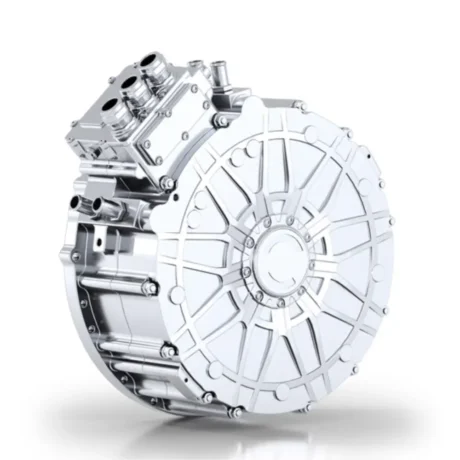
An axial flux motor is an electric motor in which the magnetic flux runs parallel to the shaft axis.
This is different from the more traditional radial flux layout, where magnetic flux moves outward from the center of the motor.
Because of this design, axial flux motors are often flatter, more compact, and capable of delivering very high torque density.
Key Characteristics of Axial Flux Motors
-
short axial length
-
compact and lightweight structure
-
very high power density
-
strong torque output in a small package
These traits have made axial flux technology especially attractive in performance vehicles, motorsport, aviation, and advanced EV platforms.
What Is a PMSM Motor?
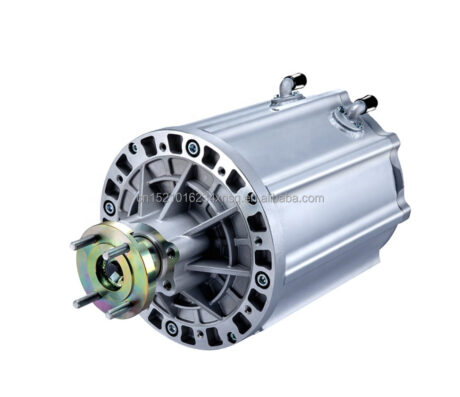
A Permanent Magnet Synchronous Motor (PMSM) is a motor that uses permanent magnets in the rotor and operates in sync with the stator’s rotating magnetic field.
PMSM is one of the most common motor technologies used in modern electric vehicles because it combines strong efficiency, compact packaging, and excellent torque performance.
Key Characteristics of PMSM Motors
-
high efficiency
-
smooth torque delivery
-
strong low-speed response
-
broad use in mainstream EVs
It is important to note that many axial flux motors can also be PMSM motors, depending on how the motor is designed.
That means the comparison of axial flux motor vs PMSM is often a comparison between motor geometry and motor operating type, rather than two completely unrelated technologies.
For readers who want a broader understanding of where axial flux and conventional PMSM systems fit within the wider EV drivetrain landscape, our guide to EV motor types provides a full overview.
Axial Flux Motor vs PMSM: Why This Comparison Can Be Confusing
One reason this topic causes confusion is that axial flux refers mainly to the motor’s structural layout, while PMSM refers to how the motor operates using permanent magnets and synchronous rotation.
In practice:
-
axial flux motors can be designed as permanent magnet synchronous motors
-
many conventional PMSM motors use radial flux geometry
So when people search for axial flux motor vs PMSM, they are usually comparing:
-
axial flux motor architecture
vs -
the more common radial-flux PMSM used in many EVs
This is also why the term axial flux vs radial flux motor often overlaps with this discussion.
Axial Flux vs Radial Flux Motor: Core Structural Difference
To understand axial flux motor vs PMSM, it helps to start with axial flux vs radial flux motor design.
Axial Flux Motor
In an axial flux motor:
-
magnetic flux moves parallel to the shaft
-
the motor is often disc-shaped
-
torque is produced across a larger effective radius
This can improve torque density and reduce package length.
Radial Flux Motor
In a radial flux motor:
-
magnetic flux moves outward or inward relative to the shaft
-
the motor is usually cylindrical
-
this is the most common design in mainstream EV drivetrains
Most traditional PMSM motors used in EVs today are radial flux designs.
Axial Flux Motor Advantages
One of the main reasons interest is growing in this field is the list of strong axial flux motor advantages.
1. Higher Power Density
Axial flux motors can deliver very high power and torque relative to their size.
This makes them attractive for applications where space and weight matter.
2. Compact Packaging
Because the motor can be flatter and shorter in axial length, it may fit more easily into some advanced drivetrain layouts.
3. Lower Weight
In many designs, axial flux motors can reduce system weight while maintaining strong output.
This is especially useful in performance EVs where every kilogram matters.
4. Strong Torque Characteristics
The larger active radius of the motor can help improve torque generation.
For high-performance vehicles, this can be a major advantage.
These benefits are why many engineers view axial flux technology as a possible next step in advanced EV powertrain design.
PMSM Advantages in Mainstream EV Applications
Although axial flux designs are exciting, conventional PMSM motors still dominate the EV market for good reasons.
PMSM strengths include:
-
proven production scalability
-
excellent efficiency
-
mature supply chain
-
strong reliability in passenger EVs
-
broad compatibility with current EV platforms
For mainstream vehicle production, these benefits are extremely important.
That is why PMSM remains one of the most widely adopted electric vehicle motor types.
PMSM is not only compared with axial flux designs, but also frequently evaluated against BLDC systems in smaller EV platforms, as explained in our BLDC motor vs PMSM motor guide.
Axial Flux Motor vs PMSM: Efficiency Comparison
In many cases, both technologies can offer very high efficiency.
However, efficiency depends heavily on:
-
motor design quality
-
thermal management
-
controller strategy
-
operating speed range
A well-designed axial flux motor can be extremely efficient, especially in performance-oriented conditions. At the same time, modern PMSM systems are already highly optimized and proven in mass-market EVs.
So the answer is not always that axial flux is automatically more efficient. Instead, axial flux offers the potential for excellent efficiency combined with strong packaging and power density advantages.
Axial Flux Motor vs PMSM: Power Density and Packaging
This is where axial flux motors often stand out most clearly.
Compared with traditional radial-flux PMSM motors, axial flux motors may offer:
-
more compact axial dimension
-
higher torque density
-
lighter overall package
These features make axial flux motors particularly attractive in:
-
high-performance EVs
-
racing applications
-
premium electric platforms
-
specialized conversion projects with limited packaging space
When the design goal is to maximize output while minimizing size and weight, axial flux technology becomes especially compelling.
Axial Flux Motor vs PMSM: Cost and Manufacturing Reality
This is where conventional PMSM motors usually have the advantage today.
Even though axial flux motors offer exciting technical benefits, they are not yet as established in large-scale automotive manufacturing as radial-flux PMSM systems.
PMSM advantages in manufacturing:
-
mature mass production
-
established supply chain
-
proven automotive integration
-
lower commercialization risk
Axial flux challenges may include:
-
more specialized design and manufacturing
-
higher production complexity
-
less standardized industry adoption
So while axial flux motors may be technically impressive, PMSM motors are currently easier to scale across mainstream EV production.
Which Motor Is Better for High-Performance EVs?
If the goal is mainstream passenger EV production, PMSM remains the safer and more proven choice.
If the goal is maximum power density, lightweight architecture, and advanced packaging, axial flux motors may offer stronger long-term potential.
So in the debate around axial flux motor vs PMSM, the answer depends on the vehicle’s priorities:
Choose PMSM if you prioritize:
-
mature EV technology
-
proven efficiency
-
scalable manufacturing
-
mainstream passenger EV reliability
Choose axial flux if you prioritize:
-
compact packaging
-
high power density
-
lower weight
-
next-generation performance-focused drivetrain design
For a different perspective on PMSM performance and efficiency, especially against magnet-free designs, see our article on induction motor vs PMSM.
What This Means for EV Conversion Projects
For EV conversion projects, motor selection is often influenced by packaging space, target performance, and integration complexity.
Traditional PMSM systems are usually easier to source, package, and support in real-world conversion projects.
Axial flux motors may become a compelling option for specialized or high-performance conversions, especially when compact motor dimensions are important.
But for many current conversion projects, conventional PMSM systems remain the more practical solution.
If you are evaluating motor technologies across the full EV landscape, our main guide to EV motor types gives a broader breakdown of PMSM, BLDC, induction, and axial flux systems:
👉 https://cmvte.com/ev-motor-types-explained/
While axial flux motors are promising for advanced EV systems, most builders still need to compare several practical motor options before choosing a drivetrain.
For a broader selection guide, read our article on the best motor for EV conversion.
Quick Comparison Table: Axial Flux Motor vs PMSM
| Feature | Axial Flux Motor | Conventional PMSM |
|---|---|---|
| Core Design | Axial flux geometry | Usually radial flux geometry |
| Power Density | Very high | High |
| Packaging | Flat and compact | Compact, cylindrical |
| Weight Potential | Very low | Low to moderate |
| Production Maturity | Emerging | Highly mature |
| Main Use Case | High-performance and specialized EVs | Mainstream passenger EVs |
Is Axial Flux the Future of EV Motors?
Axial flux motors are one of the most promising technologies in advanced EV drivetrain development.
Their combination of:
-
high torque density
-
compact size
-
lightweight potential
makes them highly attractive for future high-performance EV applications.
However, “the future” does not necessarily mean immediate replacement of PMSM systems.
More likely, the market will continue to use both technologies:
-
PMSM for mainstream mass-market EVs
-
axial flux motors for premium, high-performance, and specialized platforms
This balanced view is more realistic than treating one technology as the total winner.
FAQ
What is the main difference between axial flux motor and PMSM?
Axial flux refers to motor geometry, while PMSM refers to a permanent magnet synchronous operating principle. Many axial flux motors can also be PMSM motors.
Is axial flux motor better than PMSM?
Not always. Axial flux motors may offer better power density and packaging, while conventional PMSM motors offer better production maturity and wider EV adoption.
What are the main axial flux motor advantages?
The main axial flux motor advantages include high power density, compact shape, strong torque output, and lower weight potential.
What is the difference between axial flux vs radial flux motor?
In axial flux motors, magnetic flux runs parallel to the shaft. In radial flux motors, magnetic flux moves outward or inward relative to the shaft.
Conclusion
The comparison of axial flux motor vs PMSM is not simply a contest between old and new. It is a deeper engineering discussion about motor geometry, operating principles, packaging, and real-world vehicle goals.
Axial flux motors offer exciting advantages in power density, compactness, and performance potential. Conventional PMSM motors remain the dominant solution for mainstream EVs because they are efficient, proven, and easier to scale.
For high-performance electric vehicles, axial flux technology may play a much bigger role in the future. For mass-market EVs and many conversion applications, PMSM still remains the practical standard.
If you want to understand how this comparison fits into the larger picture of electric drivetrain technology, start with our full guide to EV motor types:
👉 https://cmvte.com/ev-motor-types-explained/
