
When it comes to efficiently managing electrical power in various electronic systems, DC-DC converters play a crucial role. These essential devices, also known as DC to DC converters, enable the transformation of one direct current (DC) voltage level to another, making them indispensable in countless applications from consumer electronics to industrial machinery.
Whether you're an electrical engineer designing a complex system, a hobbyist working on a DIY project, or a professional seeking the right components for industrial equipment, understanding DC-DC converters is fundamental to ensuring optimal performance, energy efficiency, and system reliability.

What Are DC-DC Converters?
DC-DC converters are electronic circuits or devices that convert a source of direct current (DC) from one voltage level to another. This voltage transformation can either be stepping up (increasing) the voltage, stepping down (decreasing) the voltage, or in some cases, providing both functions in a single device known as a buck-boost converter.
Unlike AC-DC converters that convert alternating current to direct current, DC to DC converters operate exclusively with direct current inputs and outputs. They achieve voltage conversion through a combination of inductors, capacitors, transistors, and diodes that work together to store energy temporarily and release it at the desired voltage level.
The efficiency of modern DC-DC converters can reach up to 98%, making them highly effective at minimizing energy loss during the conversion process. This efficiency is particularly important in battery-powered devices where energy conservation directly impacts operational life.
How Do DC-DC Converters Work?
The basic operating principle of DC-DC converters involves switching techniques to regulate the output voltage. Unlike linear regulators that dissipate excess energy as heat, switching DC-DC converters use high-frequency switching to store energy in an inductor or transformer and then release it at the desired voltage level.
Here's a simplified breakdown of the process:
- The input DC voltage is switched on and off at a high frequency (typically between 10 kHz and 1 MHz)
- This switched voltage is applied to an inductor or transformer, which stores energy in its magnetic field
- When the switch is turned off, the inductor releases its stored energy through a diode to the output circuit
- Capacitors in the output circuit smooth out the voltage ripple, providing a stable DC output
- A feedback mechanism continuously monitors the output voltage and adjusts the switching duty cycle to maintain the desired voltage level, even as the input voltage or load conditions change

Types of DC-DC Converters
DC-DC converters come in several types, each designed for specific voltage conversion requirements. The primary classifications include:
Buck Converters (Step-Down Converters)
Buck converters are DC to DC converters that reduce the input voltage to a lower output voltage. They are commonly used in applications where a lower voltage is required than what's available from the power source. For example, in automotive systems, a buck converter might reduce the 12V battery voltage to 5V for powering electronic components.
A high-quality example of a buck converter is the 500W High Efficiency DC-DC Converter 60V to 12V, which efficiently steps down higher voltages to a stable 12V output.
Boost Converters (Step-Up Converters)
Boost converters perform the opposite function of buck converters, increasing the input voltage to a higher output voltage. These are essential in applications where the available voltage is insufficient for the device being powered. A common example is in portable electronics where a single 3V battery might need to be boosted to 5V to power a USB device.
Buck-Boost Converters
Buck-boost converters are versatile DC-DC converters that can both increase and decrease voltage as needed. They are particularly useful in applications where the input voltage may vary above or below the desired output voltage. Solar power systems often use buck-boost converters to maintain a stable output voltage despite fluctuations in input from solar panels.
SEPIC and Ćuk Converters
SEPIC (Single-Ended Primary-Inductor Converter) and Ćuk converters are more specialized types that offer similar functionality to buck-boost converters but with different characteristics in terms of input/output isolation, ripple, and component requirements.
Isolated vs. Non-Isolated Converters
Another important classification is whether DC-DC converters are isolated or non-isolated:
- Non-isolated converters share a common ground between input and output, making them simpler and more efficient for applications where electrical isolation isn't required.
- Isolated converters use a transformer to separate the input and output grounds, providing electrical isolation. This is crucial for safety in high-voltage applications and for preventing ground loops in sensitive electronic equipment.
Key Specifications of DC-DC Converters
When selecting DC-DC converters, several key specifications must be considered to ensure compatibility and optimal performance:
Input Voltage Range
This specifies the minimum and maximum DC voltage that the converter can accept. For example, automotive converters might be designed for an input range of 9V to 36V to accommodate varying vehicle electrical systems.
Output Voltage
The regulated DC voltage that the converter provides. This can be a fixed voltage or an adjustable range. High-quality converters maintain stable output voltage even with variations in input voltage or load.
Output Current and Power Rating
The maximum current (in amps) and power (in watts) that the converter can deliver to the load. It's essential to select a converter with a power rating that exceeds the requirements of your application to ensure reliability and prevent overheating.
For high-power applications, converters like the 3kW DC to DC Converter are designed to handle substantial power requirements, making them suitable for electric vehicles and industrial equipment.
Efficiency
The ratio of output power to input power, expressed as a percentage. Higher efficiency means less energy is wasted as heat, which is particularly important for battery-powered devices and high-power applications.
Voltage Regulation
How well the converter maintains the output voltage despite changes in input voltage (line regulation) or load current (load regulation). Tighter regulation ensures more stable operation of the powered device.
Protection Features
Many modern DC-DC converters include protection mechanisms such as overcurrent protection, overvoltage protection, undervoltage lockout, and thermal shutdown to prevent damage to the converter and connected equipment.
Switching Frequency
The frequency at which the internal switch operates, typically ranging from 10 kHz to several megahertz. Higher frequencies allow for smaller components but may introduce more electromagnetic interference (EMI).

Applications of DC-DC Converters
DC-DC converters are used in a wide range of applications across various industries. Their ability to efficiently convert voltage levels makes them essential in modern electronics and electrical systems.
Automotive and Transportation
Vehicles of all types rely heavily on DC to DC converters to power their various electrical systems. Modern cars, trucks, and electric vehicles have numerous components requiring different voltage levels, from 12V infotainment systems to 48V advanced driver-assistance systems (ADAS).
Specialized converters like the 500W DC to DC Converter Adapter 144V to 12V for Electric Vehicles are designed specifically for the demanding environment of electric vehicles, providing reliable voltage conversion from high-voltage batteries to standard 12V systems.
Telecommunications
Telecommunication systems, including cellular base stations, network routers, and data centers, use numerous DC-DC converters to power their complex electronics. These systems often require multiple voltage levels for different components, all derived from a central power source.
Consumer Electronics
Nearly all portable electronic devices incorporate DC-DC converters. Smartphones, laptops, tablets, and portable media players use them to convert battery voltage to the various levels required by their processors, displays, and other components.
Industrial Equipment
Industrial machinery, automation systems, and process control equipment rely on DC-DC converters to power sensors, actuators, controllers, and communication modules. These applications often require rugged converters capable of operating in harsh environments with wide temperature ranges.
Renewable Energy Systems
Solar power systems and wind turbines use DC-DC converters to optimize power extraction and convert voltages to levels suitable for battery storage or grid connection. Maximum Power Point Tracking (MPPT) converters are a specialized type used in solar systems to maximize energy harvest.
Medical Devices
Medical equipment often requires precise voltage regulation and isolation for safety. Isolated DC-DC converters are commonly used in devices such as patient monitors, infusion pumps, and diagnostic equipment to provide stable power while protecting patients and医护人员 from electrical hazards.
Choosing the Right DC-DC Converter
Selecting the appropriate DC-DC converter for your application requires careful consideration of several factors. Making the right choice ensures optimal performance, reliability, and efficiency.
Determine Your Voltage Requirements
First, identify your input voltage range and required output voltage. This will determine whether you need a buck, boost, or buck-boost converter. Consider any possible variations in input voltage that might occur in your application.
Calculate Power Needs
Determine the maximum current and power requirements of your load. Choose a converter with a power rating that exceeds your calculated needs by a safety margin (typically 20-30%) to accommodate transient loads and ensure reliability.
For electric vehicle applications requiring substantial power, options like the 1.2kW DC to DC Converter for Electric Vehicles provide the necessary power handling capabilities in a compact design.
Consider Environmental Factors
Evaluate the operating environment, including temperature range, vibration, humidity, and potential exposure to dust or liquids. Industrial applications may require converters with ruggedized packaging and wider operating temperature ranges.
Efficiency Considerations
Look for converters with high efficiency, especially in battery-powered applications where energy conservation is critical. Higher efficiency also reduces heat generation, which can extend component life and reduce cooling requirements.
Protection Features
Select converters with appropriate protection features based on your application. Overcurrent protection is essential in most systems, while overvoltage protection may be critical for sensitive electronics.
Size and Form Factor
Consider the physical constraints of your application. Compact converters are available for space-constrained designs, while larger units may offer better thermal performance for high-power applications.
Regulation Requirements
Determine how tightly regulated the output voltage needs to be. Precision applications like laboratory equipment may require converters with very tight regulation, while some industrial applications can tolerate more variation.
Isolation Needs
Decide whether electrical isolation between input and output is required for safety, noise reduction, or ground loop prevention. Isolated converters are essential in medical equipment and high-voltage applications.
Recommended DC-DC Converters
Based on various application requirements, here are some high-quality DC-DC converters suitable for different scenarios:

500W 60V to 12V Step-Down Converter
High-efficiency buck converter ideal for applications needing to step down from 60V to a stable 12V output, delivering up to 500W of power.
View Product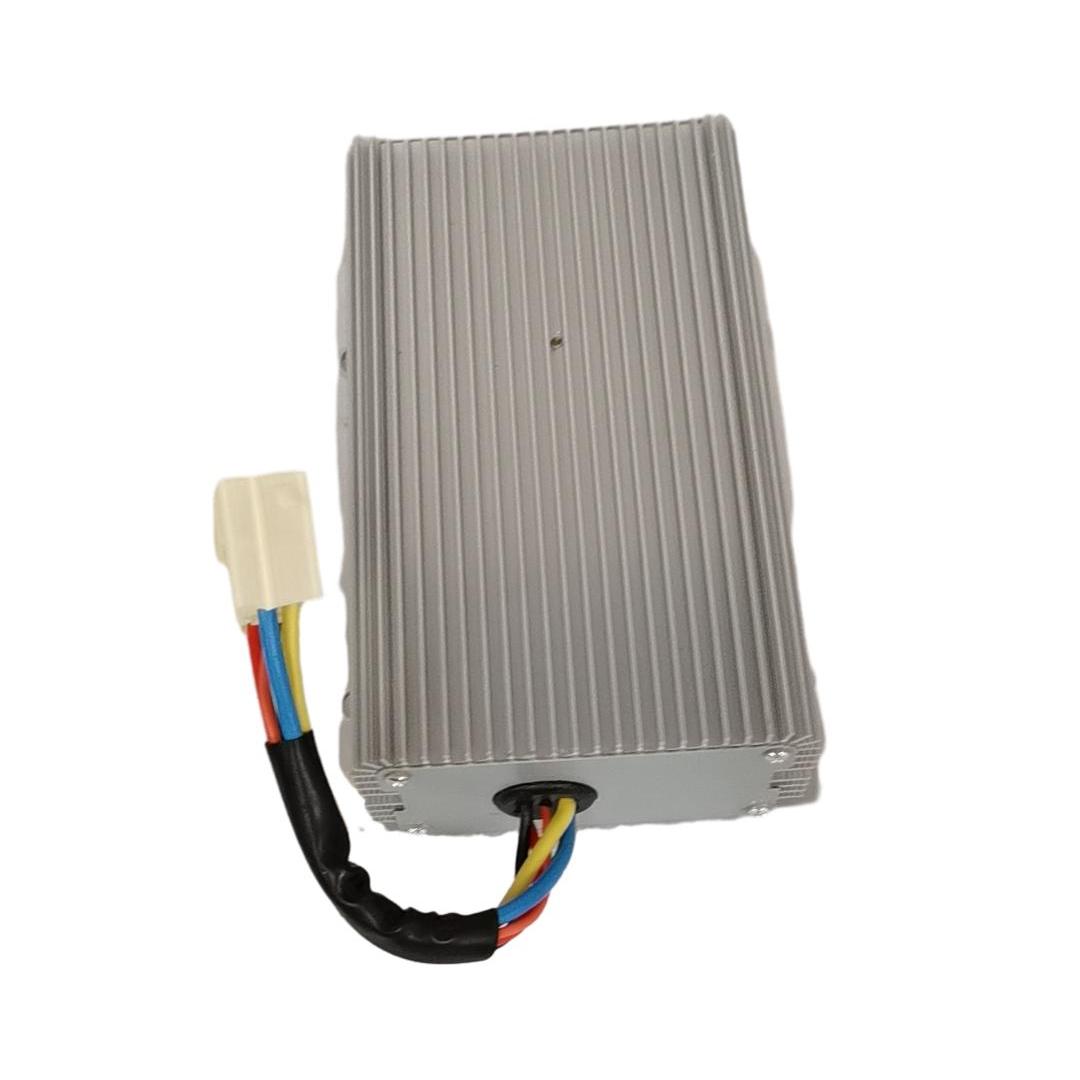
500W EV DC-DC Converter (144V to 12V)
Specialized converter designed for electric vehicles, efficiently converting 144V battery voltage to 12V for auxiliary systems.
View Product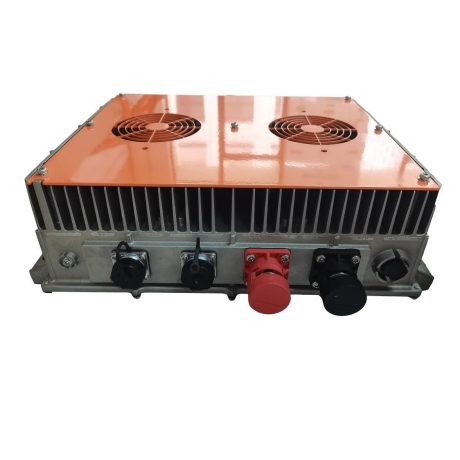
3kW High-Power DC-DC Converter
Heavy-duty converter handling 250V-750V input with 12V or 24V output, perfect for high-power electric vehicle systems.
View Product
1.2kW EV DC-DC Converter
Versatile converter for electric vehicles, accepting 200V-450V input and providing stable 12V or 24V output with 1.2kW capacity.
View ProductInstallation and Maintenance Tips
Proper installation and maintenance of DC-DC converters are essential for ensuring optimal performance, safety, and longevity. Follow these guidelines for best results:
Installation Best Practices
- Ensure proper heat dissipation by mounting the converter on a heatsink or metal surface when necessary, especially for high-power units
- Follow the manufacturer's guidelines for input and output wiring, using appropriately sized conductors to prevent voltage drops and overheating
- Keep input and output wiring separated to minimize electromagnetic interference (EMI)
- Use fuses or circuit breakers on both input and output sides as recommended by the manufacturer
- Ensure proper grounding according to the application requirements and local electrical codes
- Allow adequate ventilation around the converter to prevent overheating
- Protect the converter from environmental hazards such as moisture, dust, and vibration when installing in harsh environments
Maintenance Guidelines
- Periodically inspect the converter for signs of overheating, corrosion, or physical damage
- Check connections regularly to ensure they remain tight and free from corrosion
- Clean cooling fins and heatsinks as needed to maintain proper thermal performance
- Monitor output voltage periodically to ensure it remains within specified limits
- Replace any converters that show signs of degradation or fail to maintain proper regulation
- Follow the manufacturer's recommendations for service intervals and replacement parts
Frequently Asked Questions About DC-DC Converters
The primary difference lies in how they regulate voltage. Linear regulators work by dissipating excess voltage as heat, which makes them inefficient, especially when there's a large difference between input and output voltage. DC-DC converters use switching technology to store and release energy, resulting in much higher efficiency (typically 80-98%) and less heat generation. This makes DC-DC converters more suitable for applications where efficiency is important, such as battery-powered devices.
Yes, but you should select a converter designed for sensitive electronics. Look for models with low output ripple, tight voltage regulation, and possibly isolation. Some DC-DC converters include additional filtering to minimize electromagnetic interference (EMI) that could affect sensitive components. For critical applications like medical equipment or precision instrumentation, consider converters specifically certified for such use cases.
To select the correct size, calculate the total power requirements of your load in watts (voltage × current). Choose a converter with a power rating that exceeds this value by at least 20-30% to account for transient loads and ensure reliability. Also, consider the physical dimensions to ensure it fits in your enclosure or mounting space. High-power converters typically require more space for heat dissipation.
Voltage ripple is the small AC component present in the DC output, caused by the switching action of the converter. It can be minimized by using high-quality capacitors with low equivalent series resistance (ESR) in the output circuit, proper PCB layout techniques, and additional filtering components if needed. Many modern DC-DC converters include built-in filtering to reduce ripple to acceptable levels for most applications.
Some DC-DC converters are designed to be connected in parallel for increased current capacity, but this isn't possible with all models. Parallel operation requires special current-sharing circuitry to ensure each converter shares the load equally. Check the manufacturer's specifications to see if a particular converter model supports parallel operation. Using converters not designed for parallel operation can result in unstable performance and potential damage.
Temperature has a significant impact on both efficiency and reliability. Higher temperatures typically reduce efficiency and can shorten the lifespan of components, especially capacitors and semiconductors. Most DC-DC converters have a specified operating temperature range, and exceeding this range can lead to performance degradation or failure. Proper heat dissipation through heatsinks, cooling fans, or adequate ventilation is crucial for maintaining performance in high-temperature environments.
Important protection features include overcurrent protection (OCP) to prevent damage from excessive load current, overvoltage protection (OVP) to protect downstream components from voltage spikes, undervoltage lockout (UVLO) to prevent operation when input voltage is too low, and thermal shutdown to protect the converter from overheating. Some converters also include short-circuit protection, reverse polarity protection, and over-power protection. The specific protection features needed depend on your application and the potential hazards present.
Safety certifications depend on your application and geographic region. For industrial applications, look for certifications like UL 60950-1 or IEC 60950-1 for information technology equipment. Medical applications typically require IEC 60601-1 certification. Automotive converters may need ISO 26262 or AEC-Q100 qualification. These certifications ensure the converter meets specific safety standards for its intended use, providing an extra level of assurance regarding reliability and safety.
Conclusion
DC-DC converters are essential components in modern electronic systems, enabling efficient voltage conversion for a wide range of applications. From consumer electronics to industrial machinery and electric vehicles, these versatile devices provide the voltage regulation necessary for reliable operation.
Understanding the different types of DC to DC converters, their specifications, and selection criteria is crucial for choosing the right component for your application. By considering factors like voltage requirements, power needs, efficiency, and environmental conditions, you can select a converter that will provide reliable performance and long service life.
Whether you need a compact converter for a portable device or a high-power unit for industrial equipment, the right DC-DC converter ensures efficient power management, protecting your equipment and optimizing energy usage.
