

The global shift towards sustainable transportation isn’t just about passenger cars; it’s profoundly reshaping the commercial and utility vehicle sectors. As environmental concerns escalate and fuel prices remain volatile, a growing number of businesses and individuals are looking for ways to electrify their existing fleets. This is where the concept of an **electric motor conversion kit for trucks** becomes a game-changer. Instead of investing in costly new electric trucks, converting an existing internal combustion engine (ICE) vehicle offers a compelling alternative.
This comprehensive guide will walk you through everything you need to know about **electric truck conversion kits**, from understanding what they entail to the benefits, technical considerations, installation processes, costs, and crucial legal aspects. Whether you’re considering how to convert a diesel truck to electric for commercial use or looking for an **EV conversion kit for pickup trucks** for personal utility, you’ll find the insights to make an informed decision and discover why CMVTE is your ideal partner in this transition.
—
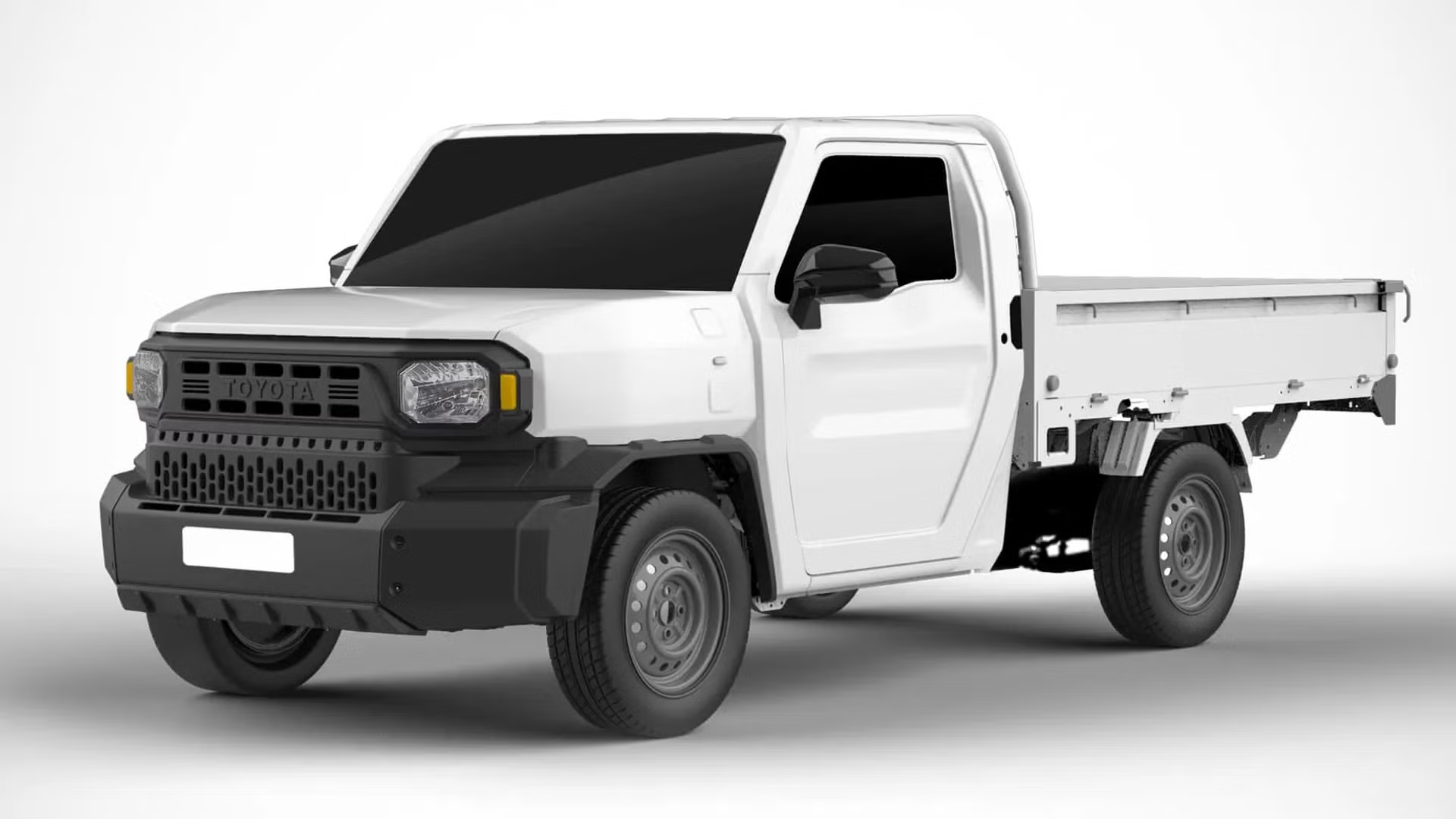
I. Introduction: The Rise of Electric Truck Conversions
The motivation behind converting trucks to electric power is multifaceted, driven by a blend of economic, environmental, and performance advantages:
- Environmental Imperative & Policy Push: Governments worldwide are implementing stricter emission regulations and offering incentives for zero-emission vehicles. Converting an ICE truck to electric drastically reduces its carbon footprint, aligning with global sustainability goals and avoiding potential penalties or restrictions in low-emission zones.
- Escalating Fuel Costs: Diesel and gasoline prices continue to fluctuate, impacting operating budgets significantly. Electricity, generally more stable and cheaper per mile, offers a compelling cost-saving opportunity for businesses with high-mileage fleets.
- Enhanced Performance & Driving Experience: Electric motors deliver instant torque, leading to quicker acceleration and smoother power delivery, especially beneficial for heavy loads and stop-and-go city driving. The reduced noise and vibrations also significantly improve driver comfort.
- Extended Vehicle Lifespan: A truck’s chassis and body can often outlast its original engine and drivetrain. Converting to electric breathes new life into a robust existing asset, delaying the need for a complete vehicle replacement.
This article serves as your definitive guide to the **electric motor conversion kit for trucks**, equipping you with the knowledge to embark on this transformative journey.
—
II. What Is an Electric Motor Conversion Kit for Trucks?
An **electric motor conversion kit for trucks** is a comprehensive package designed to replace a conventional truck’s internal combustion engine (diesel or gasoline) and its associated drivetrain components with an electric motor, battery system, and control electronics. It’s a fundamental shift from fuel-burning to electric propulsion.
Key Components of a Standard EV Conversion Kit:
- Electric Motor: This is the heart of the new drivetrain. Common types include Permanent Magnet Synchronous Motors (PMSM) or AC Induction Motors, selected for their efficiency, power density, and torque characteristics suitable for truck applications. The motor connects to the existing or modified transmission/driveshaft.
- Battery Pack: The energy storage unit, typically comprised of high-density lithium-ion (Li-ion) or Lithium Iron Phosphate (LFP) cells. The pack’s capacity determines the vehicle’s range, and its voltage platform (e.g., 300V, 400V, 600V) influences motor performance and charging speed.
- Motor Controller (Inverter): This critical component converts DC power from the battery into AC power to drive the electric motor. It also controls motor speed, torque, and regenerative braking, acting as the “brain” of the electric powertrain.
- Battery Management System (BMS): Essential for battery safety and longevity. The BMS monitors cell voltage, temperature, current, and state of charge, balancing cells and protecting against overcharge, over-discharge, and overheating.
- Drive Axle/Transmission Adapters: Depending on the kit, it might include an adapter plate to mate the electric motor to the truck’s existing transmission, or in more integrated solutions, a new electric drive axle with an integrated motor and differential.
- On-Board Charger (OBC) & DC-DC Converter: The OBC converts AC power from a wall outlet (Level 2 charging) into DC power to charge the high-voltage battery. The DC-DC converter steps down the high voltage from the main battery to 12V, powering the truck’s auxiliary systems (lights, wipers, radio, etc.).
- Vehicle Control Unit (VCU) & Instrumentation Integration: The VCU is the master controller, orchestrating communication between all EV components, managing power flow, and often integrating with the truck’s existing dashboard for battery status, speed, and other vital information.
- Wiring Harnesses & Connectors: High-voltage cabling, low-voltage control wiring, and robust connectors specifically designed for EV applications.
- Cooling System: For managing temperatures of the motor, inverter, and battery pack.
A well-designed **electric motor conversion kit for trucks** offers a cohesive and robust solution for transformation.
—
III. Why Convert Your Truck to Electric?
The benefits of an **electric drivetrain retrofit for commercial trucks** or personal pickups extend far beyond simply swapping engines:
- Significant Cost Savings:
- Reduced Fuel Expenses: Electricity is generally cheaper per mile than diesel or gasoline, leading to substantial savings, especially for high-mileage fleets.
- Lower Maintenance Costs: Electric motors have far fewer moving parts than ICEs, eliminating oil changes, spark plug replacements, fuel filter changes, and complex exhaust after-treatment systems. This means less downtime and fewer trips to the mechanic.
- Environmental Compliance & Regulations:
- Zero Emissions: Eliminate tailpipe emissions, contributing to cleaner air and reducing your carbon footprint.
- Regulatory Compliance: Meet increasingly stringent emission standards and gain access to low-emission zones or urban areas where ICE vehicles might be restricted.
- Government Incentives: Qualify for various government subsidies, tax credits, or grants available for EV adoption and conversions.
- Superior Driving Experience:
- Instant Torque: Electric motors deliver peak torque from zero RPM, providing powerful and smooth acceleration, ideal for hauling heavy loads or navigating city traffic.
- Quiet & Smooth Operation: The absence of engine noise and vibrations creates a much quieter and more comfortable cabin environment, reducing driver fatigue.
- Urban Access & Policy Advantages:
- Preferred Access: Zero-emission vehicles often receive preferential treatment, such as access to dedicated lanes, free parking, or exemption from congestion charges in many urban centers.
- Brand Image: Demonstrate environmental responsibility, enhancing your company’s public image and attracting eco-conscious customers.
—
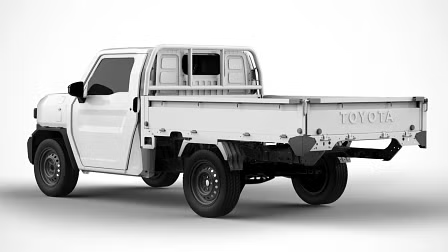
IV. Types of Trucks Suitable for EV Conversion
The versatility of **electric motor conversion kits for trucks** means a wide range of vehicles can benefit from an electric powertrain. The key is matching the kit’s power and battery capacity to the truck’s original weight, payload, and intended use.
- Pickup Trucks:
- Examples: Ford F-150, Chevrolet Silverado (C/K series), Toyota Tacoma, RAM 1500.
- Suitability: Highly popular for personal use, utility, and light commercial applications. Their robust frames and ample space for battery placement (e.g., in the bed or under the chassis) make them excellent candidates for an **EV conversion kit for pickup trucks**. Ideal for daily commutes, light hauling, and off-road enthusiasts seeking quiet operation.
- Small/Medium Duty Light Trucks:
- Examples: Isuzu NPR, Hino 195, Dongfeng Xiaokang (in Asian markets), various cab-over chassis trucks.
- Suitability: These are workhorses for urban delivery, landscaping, and last-mile logistics. Converting them to electric greatly reduces operating costs in stop-and-go traffic and helps meet city emission regulations. They often have dedicated chassis space for battery packs.
- Medium to Heavy-Duty Commercial Vehicles:
- Examples: Freight trucks (e.g., box trucks, stake trucks), school buses, refuse trucks, refrigerated transport vehicles.
- Suitability: While more complex, the long-term savings and environmental benefits are enormous for these vehicles. An **electric drivetrain retrofit for commercial trucks** can significantly reduce fuel consumption and maintenance on fixed routes. Their larger size allows for substantial battery packs to support greater range and power demands. Special considerations for payload and thermal management are crucial here.
The key is a thorough assessment of the existing vehicle and its operational profile to determine the optimal **electric truck conversion kit** solution.
—
V. Motor & Battery Options Explained
The heart of any **electric motor conversion kit for trucks** lies in its motor and battery components. Understanding the choices is crucial for matching performance to application.
Motor Types:
- Permanent Magnet Synchronous Motor (PMSM):
- Pros: High efficiency, excellent power density (more power for its size), superior torque at low RPMs, good for regenerative braking. Often preferred for performance and range.
- Cons: Can be more expensive, involve rare-earth magnets, and require more complex control. This is often the **best electric motor for truck conversion** if performance is a priority.
- AC Induction Motor:
- Pros: Robust, reliable, relatively simple construction, lower cost, good at high RPMs. Does not use rare-earth magnets.
- Cons: Generally less efficient than PMSM, especially at low speeds, and lower power density. Suitable for applications where extreme efficiency isn’t the primary concern.
- Brushless DC (BLDC) Motor:
- Pros: Often used in smaller, lighter applications. Good efficiency.
- Cons: Typically not powerful enough for heavy-duty truck applications without multiple units.
Battery Choices:
The battery pack’s capacity (measured in kWh) directly dictates the truck’s range, while its voltage platform affects charging speed and motor efficiency.
- Lithium-ion (Li-ion): Higher energy density (more range for less weight), but can be more sensitive to temperature extremes. Often used in passenger EVs.
- Lithium Iron Phosphate (LFP): Excellent thermal stability and longer cycle life (more charge/discharge cycles) than Li-ion, generally safer, and more robust, though slightly lower energy density. Increasingly popular for commercial EVs due to durability and cost-effectiveness.
Voltage Platform: Common voltage platforms range from 300V to 800V. Higher voltages generally allow for faster charging and more efficient power delivery to the motor.
Range & Power Matching Calculation Example:
To determine the ideal battery capacity and motor power, consider:
- Vehicle Weight (GVWR): Heavier trucks require more power and larger batteries.
- Intended Use: City delivery (frequent starts/stops) vs. highway hauling (sustained speeds).
- Desired Range: How many miles do you need to cover between charges? (e.g., 100 miles, 200 miles).
- Payload Capacity: The weight of the cargo directly impacts energy consumption.
For instance, a medium-duty truck with a Gross Vehicle Weight Rating (GVWR) of 15,000 lbs (approx. 6,800 kg) needing 150 miles (approx. 240 km) of range for city delivery might require a battery pack of 100-150 kWh and an electric motor offering continuous power of 80-120 kW (107-160 hp) with significant peak torque.
CMVTE offers modular battery solutions and motor options (from 80kW to 200kW+) to precisely match your truck’s requirements.
—
VI. How to Install an Electric Motor Conversion Kit
Installing an **electric motor conversion kit for trucks** is a complex process best undertaken by experienced professionals or qualified technicians. Here’s a general overview of the steps involved:

(Image Suggestion: A schematic diagram illustrating the general layout of the electric motor, battery packs, and control units within a truck chassis, perhaps with arrows indicating power flow.)
1. Preparatory Work: Vehicle Assessment & Removal of Fuel System:
- Detailed Assessment: Before starting, a thorough structural and mechanical inspection of the donor truck is crucial to ensure its chassis, suspension, brakes, and steering are in good condition and can safely handle the new electric drivetrain components.
- ICE System Removal: This involves carefully disconnecting and removing the original internal combustion engine, transmission, fuel tank, exhaust system, radiator, and all associated plumbing and wiring. Proper disposal of hazardous materials is essential.
2. Electric Motor Installation:
- Mounting: The **electric motor** is mounted onto a custom or supplied adapter plate that interfaces with the truck’s existing transmission bell housing or a new drive axle.
- Drivetrain Connection: The motor is then securely bolted to the adapter, ensuring proper alignment with the transmission input shaft or the new electric drive unit. Custom motor mounts might be fabricated to secure the motor to the chassis.
3. Battery Pack Layout & Integration:
- Strategic Placement: Battery modules are strategically positioned within the truck’s chassis, often under the frame, in the truck bed (for pickups, sometimes consuming some bed space), or in custom battery boxes. The goal is to optimize weight distribution, maintain ground clearance, and ensure accessibility for maintenance.
- Mounting & Protection: Robust, crash-resistant enclosures and mounting brackets are designed to protect the battery packs from impacts and environmental elements. Adequate ventilation and thermal management are critical.
4. Control System Integration:
- Wiring Harness Design: A custom high-voltage (HV) and low-voltage (LV) wiring harness is meticulously designed and installed to connect all EV components (motor, battery, controller, BMS, charger, DCDC) safely and efficiently. Proper shielding and grounding are paramount.
- BMS & VCU Integration: The Battery Management System (BMS) is connected to the battery pack to monitor and manage its health. The Vehicle Control Unit (VCU) is integrated to communicate with the BMS, motor controller, and the truck’s existing systems (like the dashboard and throttle pedal).
- Software & Control Logic: The VCU’s software is programmed to translate throttle inputs into motor commands, manage regenerative braking, handle fault conditions, and integrate with the truck’s power steering, braking, and HVAC systems.
5. On-Road Testing & Diagnostics:
- Initial Power-Up & Diagnostics: After assembly, the system undergoes rigorous diagnostic checks to ensure all components are communicating correctly and safely.
- Low-Speed Testing: Initial tests are performed in a controlled environment to verify basic functionality, acceleration, and braking.
- Road Testing: Comprehensive road tests evaluate performance under various driving conditions, including acceleration, regenerative braking, range, and thermal management. Data logging is crucial for fine-tuning.
- Troubleshooting: Any issues identified during testing are diagnosed and resolved, often requiring adjustments to software parameters or component calibrations.
CMVTE provides detailed installation manuals, wiring diagrams, and remote technical support to guide the conversion process.
—
VII. Cost Breakdown: How Much Does It Cost?
The investment in an **electric motor conversion kit for trucks** varies significantly based on the truck type, desired range, and power output. While the initial outlay can be substantial, the long-term savings often make it a compelling financial decision.
Kit Price Reference (Illustrative, prices vary):
| Power Output (Motor) | Battery Capacity (kWh) | Typical Truck Type | Estimated Kit Price (USD) | Notes |
|---|---|---|---|---|
| 30-50 kW | 40-60 kWh | Small Pickup / Light Duty Truck | $15,000 – $30,000 | Basic city driving, shorter range |
| 80-120 kW | 80-120 kWh | Mid-size Pickup / Medium Duty Truck | $30,000 – $60,000 | Balanced performance, moderate range |
| 150-200+ kW | 150-300+ kWh | Heavy Duty Truck / Commercial Vehicle | $60,000 – $150,000+ | High power, extended range, specialized applications |
Note: These are rough estimates for the **electric motor conversion kit for trucks** itself and do not include installation, shipping, or taxes.
Installation & Labor Costs:
- DIY (Do-It-Yourself): If you have the expertise, tools, and time, you can save on labor costs. However, this is only recommended for highly experienced individuals due to the complexity and safety risks involved with high-voltage systems.
- Professional Service: Hiring a specialized EV conversion shop or a certified mechanic familiar with high-voltage systems is highly recommended. Installation costs can range from **$10,000 to $30,000+**, depending on the truck’s complexity, regional labor rates, and any custom fabrication required. This typically includes removal of ICE components, motor/battery mounting, wiring, and initial testing.
Long-Term Economic Analysis:
The true cost benefit of an **electric truck conversion kit** becomes evident over its operational lifespan. Consider a 5-year comparison:
- Fuel Savings: Calculate your average monthly fuel bill for the ICE truck. Compare that to your estimated monthly electricity cost for charging the EV. The difference can be substantial.
- Maintenance Savings: Factor in the elimination of routine ICE maintenance (oil changes, filter replacements, spark plugs, etc.) and potentially fewer major repairs.
- Incentives: Include any government subsidies, tax credits, or reduced registration fees you might qualify for.
- Reduced Downtime: EVs generally require less unscheduled maintenance, leading to more operational uptime for commercial fleets.
Over 3-5 years, many converted trucks can recoup their initial conversion costs, especially for high-mileage vehicles, making **how to convert a diesel truck to electric** a financially viable solution.
—

VIII. Real World Case Studies
The success of **electric motor conversion kits for trucks** is best demonstrated through real-world applications. These examples highlight the tangible benefits and growing adoption of converted electric trucks.
- North American Pickup Truck Conversion: A Ford F-150 Example
Numerous independent shops and enthusiasts in North America have successfully converted popular pickup trucks like the Ford F-150 to electric. Typically, these conversions involve replacing the V8 engine and transmission with a powerful **electric motor for truck conversion** (often 100-150 kW) and installing a 60-100 kWh battery pack in the bed or under the chassis. Owners report significantly reduced running costs, improved acceleration, and a surprisingly quiet ride, making their classic trucks viable for daily use with zero emissions. - Chinese Cold Chain Logistics Truck Electrification Project
In China, with aggressive electrification targets for commercial fleets, many internal combustion engine (ICE) refrigerated trucks are undergoing **electric drivetrain retrofit for commercial trucks**. A typical project might involve converting a mid-sized diesel cold chain truck (e.g., Dongfeng Xiaokang or similar light commercial vehicle) to a pure electric setup with an 80-100 kWh LFP battery and a 90 kW motor. The result is a drastic reduction in daily fuel costs (often saving hundreds of USD per month per truck), lower maintenance, and the ability to operate silently in urban areas, which is crucial for nighttime deliveries and noise-sensitive zones. These projects underscore the immediate operational benefits of **how to convert a diesel truck to electric** in high-utilization commercial settings. - EU Urban Delivery Truck Zero-Emission Demonstration Program
Facing stringent zero-emission urban delivery regulations (e.g., in London’s ULEZ or Paris’s ZFE-m), many European businesses are exploring EV conversions for their existing medium-duty delivery trucks. Demonstration projects have successfully converted vehicles like Isuzu NPR chassis or similar platforms. These converted electric trucks comply with new city access rules, reduce noise pollution in residential areas, and showcase a sustainable alternative for last-mile logistics, proving the viability of **electric motor conversion kits for trucks** as a rapid path to fleet electrification.
—
IX. Challenges & Considerations
While the benefits of an **electric motor conversion kit for trucks** are compelling, it’s crucial to acknowledge the challenges and critical considerations involved:
- Regulatory Compliance:
- Registration & Licensing: Laws vary significantly by country, state, or even municipality. You’ll need to research if **electric truck conversion** requires re-registration as an EV, special inspections, or certification for roadworthiness.
- Emissions Testing: While converting eliminates tailpipe emissions, some jurisdictions may still require specific safety or performance checks.
- Insurance: Insuring a modified vehicle can sometimes be more complex. Ensure your insurance provider understands the conversion.
- Legality of Non-OEM Modifications: In some regions, there might be strict regulations or outright prohibitions on modifying vehicle powertrains, especially for commercial use, if not done by an OEM-approved process. Always verify local laws before starting.
- Technical Complexities:
- Battery Layout & Thermal Management: Safely integrating large battery packs requires careful planning for weight distribution, structural reinforcement, and robust thermal management (cooling/heating) to prevent overheating or cold-weather performance degradation.
- Electronic Control Logic: Integrating the new VCU with the truck’s existing systems (power steering, brakes, HVAC, dashboard gauges) requires sophisticated programming and wiring, which can be challenging.
- Weight & Payload: While electric components can be heavy, the removal of the ICE can sometimes balance this out. However, always verify the new gross vehicle weight and ensure it doesn’t compromise payload capacity or vehicle dynamics.
- Drive System Integration: Ensuring the electric motor seamlessly connects to the existing transmission or a new drive axle, maintaining proper gear ratios for the truck’s intended use.
- Charging Infrastructure: Consider how and where the converted truck will be charged. While Level 2 AC charging is common, fast DC charging (Level 3) capabilities are often desired for commercial fleets and require compatible charging infrastructure.
Thorough planning and expert guidance are essential to navigate these complexities and ensure a successful and compliant **electric truck conversion**.
—
X. FAQ: Frequently Asked Questions
Q1: Can an EV converted truck be legally driven on roads? Does it need to be registered?
Yes, in many regions, legally driving an EV converted truck is possible, but it absolutely requires proper registration and approval from local authorities. Laws vary significantly by country, state, or even city. You will typically need to re-register the vehicle, updating its fuel type to “electric” or “battery electric vehicle (BEV)” on its registration documents. This often involves inspections to ensure the conversion meets safety and technical standards. Always check with your local Department of Motor Vehicles (DMV) or equivalent transport authority regarding specific requirements before starting the conversion.
Q2: Can an EV converted truck be used for long-distance transport?
It depends on the battery capacity of your electric motor conversion kit and the availability of charging infrastructure. For long-distance transport, you would need a very large battery pack (e.g., 200 kWh or more) to achieve substantial range, and access to powerful DC fast chargers along your route. While possible, long-haul conversions are currently more challenging due to battery weight, cost, and charging time constraints compared to urban or regional transport applications where fixed routes and overnight charging are common.
Q3: How often do the batteries need to be replaced in a converted EV truck?
Modern EV batteries (Li-ion or LFP) are designed for long lifespans, typically 8-15 years or 100,000-200,000+ miles before significant degradation. Most batteries are considered to have reached their “end of life” for automotive use when their capacity drops to about 70-80% of original. However, they can often still be used for second-life applications (e.g., stationary energy storage). Proper thermal management (cooling/heating) and disciplined charging habits (avoiding frequent full charges/discharges and extreme temperatures) can extend battery life.
Q4: What are the typical range and charging times for a converted EV truck?
Range and charging times vary widely based on battery capacity, motor efficiency, truck weight, driving style, and ambient temperature.
- Range: A typical converted light-duty pickup might achieve 80-150 miles (130-240 km) with a 60-100 kWh battery. Medium-duty commercial trucks might aim for 100-200 miles (160-320 km) with larger packs (100-200 kWh).
- Charging Time:
- Level 2 AC (240V): Charging a 100 kWh battery can take 8-12 hours for a full charge, depending on charger power (e.g., 7-11 kW).
- DC Fast Charging (Level 3): If the kit supports it, a 100 kWh battery could charge from 20% to 80% in 45-90 minutes at a 50-100 kW charging station.
Q5: Can I get subsidies or special license plates (like green plates) after the conversion?
Potentially, yes, but this is highly region-dependent. Many governments offer incentives for zero-emission vehicles, which *may* extend to legally converted EVs. These can include:
- Purchase Incentives: Subsidies or tax credits for EV adoption.
- Registration Benefits: Reduced or waived registration fees.
- License Plates: Eligibility for special EV-specific license plates (like “green plates” in some regions) that grant benefits like access to HOV lanes or preferential parking.
However, eligibility criteria can be strict, often requiring certification of the conversion components and process. You must check with your local and national government agencies for current policies and specific requirements for converted vehicles.
—
XI. Why Choose CMVTE Electric Truck Conversion Kits?
CMVTE stands at the forefront of the electric vehicle conversion industry, offering comprehensive and reliable solutions for transforming your trucks. We understand the complexities of **electric motor conversion kit for trucks** and provide the expertise needed for a successful transition.
- One-Stop Solution: We provide end-to-end service, from initial design consultation and component supply to installation guidance and final debugging. Our integrated approach ensures a seamless conversion process.
- Proven Global Experience: With a robust portfolio of successful projects, CMVTE has a proven track record in EV conversions across diverse markets, including North America, Europe, the Middle East, and Southeast Asia. We have accumulated valuable experience from converting hundreds of vehicles.
- High-Performance Components: Our kits feature high-power electric motors (ranging from 80kW to 200kW+) designed for robust truck performance. We utilize modular battery packs (Lithium-ion or LFP) for flexible integration and optimal energy density. Our smart Vehicle Control Units (VCU) ensure intelligent power management and seamless integration with your truck’s systems.
- Reliable After-Sales & Technical Support: Our commitment doesn’t end with the sale. CMVTE offers extensive after-sales support and expert technical assistance, including remote diagnostics and troubleshooting, to ensure your converted truck operates efficiently and reliably for years to come.
- Customization & Scalability: We offer flexible solutions that can be tailored to specific truck models, desired power outputs, and range requirements, whether you’re converting a single pickup or an entire commercial fleet.
Choosing CMVTE means partnering with a leader dedicated to high-quality, safe, and efficient **electric truck conversion kit** solutions.
—
XII. Conclusion & Call to Action
The electrification of trucks through conversion is not just a trend; it’s a critical and sustainable path forward for the automotive industry. By leveraging an **electric motor conversion kit for trucks**, you can significantly reduce operational costs, contribute to environmental protection, and enhance the driving experience of your existing vehicles.
CMVTE is proud to have empowered countless businesses and individuals, providing **electric motor conversion kits for trucks** to transform hundreds of vehicles worldwide. Our comprehensive solutions, robust technology, and dedicated support make us the ideal partner for your transition to electric mobility. Don’t let the complexity deter you; the future of trucking is electric, and it’s more accessible than ever.


