

The heavy-duty trucking industry stands at the precipice of a monumental transformation. Driven by tightening global emission regulations, a surging demand for cleaner energy, and the volatile economics of fossil fuels, the shift towards electrification is no longer a distant vision but a pressing reality. While new electric semi trucks are emerging, they often come with significant upfront costs and long lead times.
This is where the concept of an **electric semi truck conversion kit** offers a powerful and flexible alternative. For fleet managers and owner-operators, retrofitting existing diesel semi trucks with an electric drivetrain provides a pragmatic pathway to achieving emission targets, slashing operational costs, and embracing sustainable logistics without the immediate capital expenditure of purchasing entirely new vehicles.
This comprehensive guide delves deep into what an **electric semi truck conversion kit** entails, exploring its components, the compelling benefits, compatible truck models, core technical aspects, and the intricate installation process. We’ll also dissect the costs, analyze the return on investment (ROI), share real-world success stories, and address common challenges and frequently asked questions. Discover how CMVTE’s expert solutions can empower your fleet’s journey towards electrification and a greener future.
—
I. Introduction: The Push for Electrifying Heavy-Duty Trucks
The global push for sustainability has placed an unprecedented focus on reducing emissions from all sectors, with heavy-duty transportation being a prime target. Class 7 and 8 trucks, the workhorses of global logistics, contribute significantly to air pollution and greenhouse gas emissions. This growing pressure, coupled with evolving clean energy trends, makes electrification not just an option, but an imperative for fleets worldwide.
Key drivers behind this urgent need for change include:
- Global Emission Regulations: Stricter mandates like California’s Advanced Clean Fleets (ACF) rule, European Union’s CO2 emission standards for heavy-duty vehicles, and similar regulations in other major markets are forcing fleets to transition to zero-emission vehicles (ZEVs).
- Urban Accessibility & Port Emission Control: Many cities and port authorities are implementing low-emission or zero-emission zones, restricting access for diesel trucks and incentivizing electric alternatives.
- Corporate Sustainability Goals: An increasing number of corporations are committing to ambitious decarbonization targets across their supply chains, driving demand for electric transportation.
- Fuel Price Volatility: The unpredictability of diesel prices creates significant budget uncertainties for logistics companies. Electric power offers a more stable and generally lower operating cost.
While purpose-built electric semi trucks like the Tesla Semi are garnering attention, the practical reality for many fleets involves leveraging existing assets. This is precisely where an **electric semi truck conversion kit** becomes invaluable. This article will provide a holistic view, covering everything from what an **EV semi truck conversion** entails to the specific technologies, financial implications, and regulatory hurdles.
—
II. What Is an Electric Semi Truck Conversion Kit?
An **electric semi truck conversion kit** is a highly specialized, comprehensive system designed to fundamentally transform a diesel or gasoline-powered heavy-duty truck into a fully electric vehicle. Its core objective is to entirely replace the existing internal combustion engine, conventional transmission, fuel tanks, and exhaust systems with an advanced electric powertrain.
Key Components of a Heavy-Duty EV Retrofit Kit:
These kits are far more complex than those for smaller vehicles, owing to the immense power and energy demands of Class 7-8 trucks. A typical **electric drivetrain for heavy trucks** conversion kit includes:
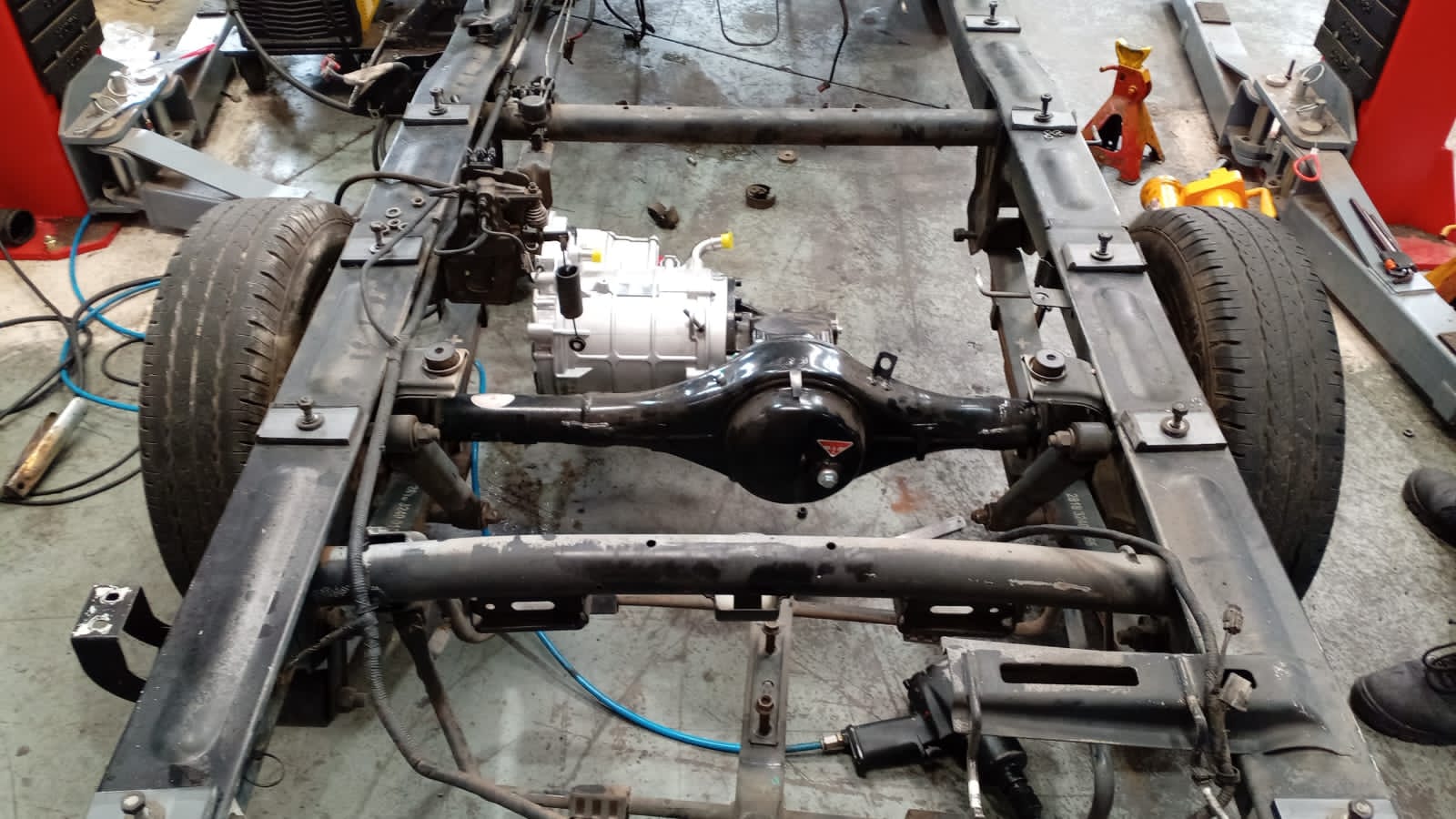
- High-Power Electric Motor(s): This is the prime mover. Kits may feature a single, very powerful electric motor, a dual-motor setup for increased torque and redundancy, or an integrated e-axle where the motor(s) are built directly into the drive axle, eliminating the need for a traditional transmission. These motors are typically Permanent Magnet Synchronous Motors (PMSM) or high-performance AC Induction Motors.
- High-Voltage Battery System (HV Battery Pack): The energy reservoir, ranging from 200 kWh to 600 kWh or more, depending on the desired range and payload capacity. These typically consist of robust Lithium Iron Phosphate (LFP) or high-nickel Lithium-ion modules, designed for high power output and long cycle life.
- Power Electronics & Control Systems:
- Vehicle Control Unit (VCU): The central “brain” of the electric truck, managing power flow, throttle response, regenerative braking, thermal management, and communicating with all other subsystems.
- Motor Control Unit (MCU) / Inverter: Converts DC power from the battery into AC power to drive the motor(s) and precisely controls motor speed and torque.
- Battery Management System (BMS): A critical safety component that monitors individual battery cell voltage, temperature, current, and overall state of charge (SoC) and state of health (SoH), ensuring optimal performance and protecting against thermal runaway or over/under-charging.
- DC-DC Converter: Steps down the high voltage from the main battery to supply 12V or 24V power for the truck’s auxiliary systems (lights, wipers, dashboard, infotainment, etc.).
- Fast Charging System: Includes an onboard charger for AC charging and a DC Fast Charge (DCFC) inlet compatible with high-power charging standards (e.g., CCS, NACS, ChAdeMO, GB/T) to enable rapid replenishment of the large battery pack.
- Thermal Management Module: A sophisticated system for actively cooling the battery pack, electric motors, and power electronics to maintain optimal operating temperatures, crucial for performance, efficiency, and longevity, especially under heavy loads or extreme climates.
- Auxiliary Systems: Electrically driven components replacing mechanical ones, such as electric air compressors (for air brakes and suspension), electric power steering pumps, and electric cooling pumps for cab HVAC.
- High-Voltage Cabling & Connectors: Robust, shielded cabling and safety-interlocked connectors designed to handle thousands of volts and hundreds of amps safely.
- Dashboard Integration & Telematics: Solutions to display EV-specific information (e.g., range, battery SoC, power consumption) on the existing dashboard or via a new display, often with telematics capabilities for fleet management.
The goal of an **electric semi truck retrofit** is to create a fully integrated, high-performance electric heavy-duty vehicle capable of meeting or exceeding the operational demands of its diesel predecessor.
—
III. Why Convert a Semi Truck to Electric?
The decision to **convert diesel semi to electric** is increasingly driven by a powerful combination of economic savings, environmental mandates, and operational advantages:
Cost-Benefit Analysis:
- Massive Fuel Savings: This is arguably the most compelling economic driver. The cost of electricity per mile is significantly lower and more stable than diesel prices. Fleets can expect to save **$20,000+ annually per truck** on fuel alone, depending on mileage and regional electricity rates.
- Reduced Maintenance Costs: Electric powertrains have far fewer moving parts than diesel engines. This eliminates the need for oil changes, fuel filter replacements, complex exhaust after-treatment (DEF/DPF systems), spark plug changes, and frequent belt/hose replacements. This translates to substantial savings in parts and labor, as well as reduced downtime.
- Government Subsidies & Incentives: Many governments offer significant financial incentives, tax credits, or grants for the adoption of zero-emission commercial vehicles and their conversions, helping to offset the initial investment.
- Lower Operating Noise: Electric trucks operate with significantly less noise pollution, making them ideal for urban deliveries, night-time operations, and improving driver comfort and reducing noise complaints in residential areas.
Environmental & Regulatory Compliance:
- Zero Tailpipe Emissions: Directly contributes to cleaner air, reducing smog, particulate matter, and greenhouse gas emissions, especially critical in densely populated urban and port environments.
- Compliance with ZEV Regulations: Enables compliance with stringent Zero-Emission Vehicle (ZEV) mandates and access to restricted low-emission zones (LEZs) and Ultra Low Emission Zones (ULEZs) where diesel trucks may face fines or bans.
- Enhanced Corporate Image: Demonstrates a commitment to sustainability, which can boost public perception, attract eco-conscious clients, and align with corporate ESG (Environmental, Social, and Governance) goals.
For fleets, the long-term operational savings and environmental benefits of an **electric semi truck retrofit** offer a powerful return on investment, making **fleet electrification** a strategic imperative.
—
IV. Applicable Semi Truck Models
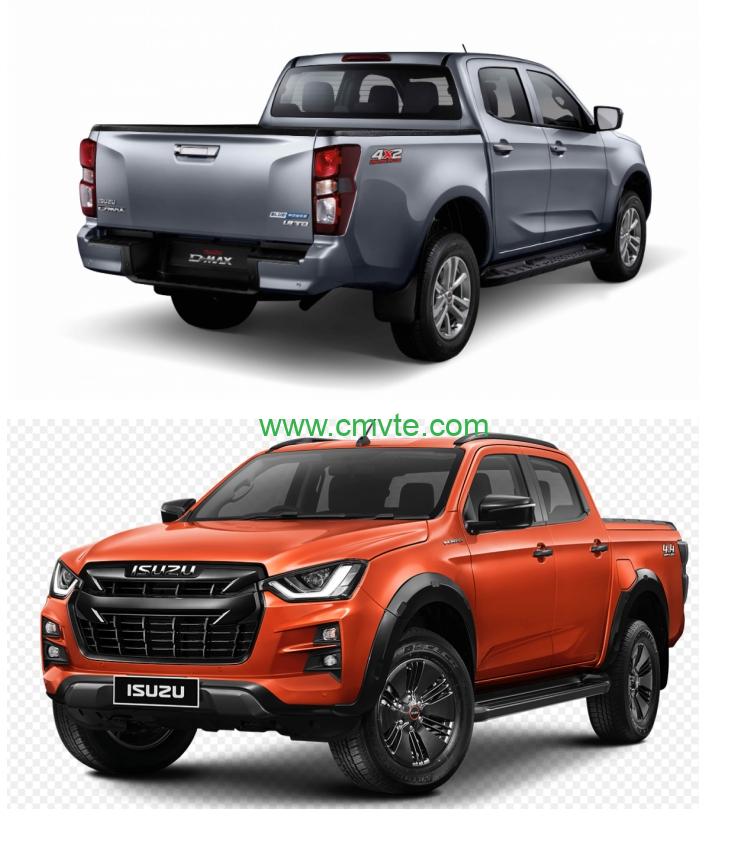
The adaptability of an **electric semi truck conversion kit** allows for the electrification of a wide range of popular heavy-duty truck chassis. The suitability often depends on the robust frame, available space for battery integration, and the general architecture of the existing vehicle.
Commonly adaptable semi truck models include:
- North American Market:
- Freightliner Cascadia: One of the most common Class 8 trucks in North America, its robust chassis and widespread use make it a frequent candidate for **class 8 truck electric conversion**.
- Peterbilt 579: Known for its aerodynamic design and driver comfort, the 579 series can be effectively converted to electric, maintaining its premium appeal.
- Kenworth T680: Another highly popular aerodynamic truck, offering a solid platform for heavy-duty EV retrofits, especially for regional hauling.
- Volvo VNL Series: Volvo’s VNL trucks provide a sturdy chassis and well-integrated systems that lend themselves to electric conversion, often leveraging Volvo’s own EV expertise.
- Chinese Market (and often global exports):
- Jiefang (FAW) J6 / J7: As a leading heavy truck manufacturer in China, many Jiefang chassis are ideal for electric conversions, especially for domestic and regional logistics.
- Sinotruk (CNHTC) Howo Series: Widely used for various applications, Howo chassis provide a reliable foundation for heavy-duty electric drivetrain retrofits.
- Dongfeng Trucks: Known for their versatility, Dongfeng heavy-duty chassis are also suitable for electrification, catering to diverse transport needs.
The key to successful conversion is a thorough engineering assessment of the specific truck’s chassis, weight distribution capabilities, and existing auxiliary systems to ensure optimal integration of the new **electric drivetrain for heavy trucks**.
—
V. Core Technical Components Explained
The efficacy of an **electric semi truck conversion kit** hinges on the performance and seamless integration of its core technical components. For heavy-duty applications, these components must be robust, powerful, and efficiently managed.
1. Electric Motor Selection:
The motor is the powerhouse. For a semi truck, raw power and sustained torque are critical. Common considerations:
- Power Requirements: Heavy trucks typically demand continuous power outputs ranging from **250kW (approx. 335 hp) to 500kW (approx. 670 hp)**, with even higher peak torque capabilities for starting heavy loads or climbing steep grades. The selected motor must match or exceed the performance of the original diesel engine.
- Motor Configuration:
- Single High-Power Motor: A single large electric motor often connects to the existing driveline via an adapter plate, utilizing the truck’s original transmission (or a simplified version) for gear reduction.
- Dual-Motor Setup: Two synchronized motors can provide increased total power and torque, often enhancing redundancy and efficiency across different speed ranges.
- Integrated Electric Axle (E-Axle): This cutting-edge solution integrates the electric motor(s), gearbox, and differential directly into the drive axle. This simplifies the drivetrain, reduces weight, and improves efficiency by eliminating a separate transmission and driveshaft, making it a strong contender for the **best electric motor for heavy truck conversion**.
- All-Wheel Drive (AWD) / Multi-Axle Systems: For specialized applications requiring maximum traction (e.g., construction, off-road), kits can incorporate electric motors on multiple axles.
2. Battery System Design:
The battery pack is the energy source, determining range and affecting payload capacity. For heavy-duty applications, high capacity and robust design are paramount.
- Modular vs. Custom Solutions:
- Modular: Battery modules (e.g., 50-100 kWh units) can be combined and configured to achieve the desired total energy capacity. This offers flexibility in design and scalability.
- Customized: Highly integrated battery packs designed specifically for a particular truck chassis can maximize energy density and structural integration.
- Installation Methods:
- Side-Mounted: Battery enclosures mounted along the frame rails of the chassis, similar to fuel tanks.
- Under-Mounted (Skid-Mounted): Battery packs integrated into structural skids beneath the chassis, offering good weight distribution.
- Behind-Cab / Top-Mounted: For very large capacities or specific truck designs, batteries might be placed behind the cab or even on the roof (less common for semi-trucks due to height limits).
- Capacity & Range:
- Regional Haul: 200-400 kWh batteries can provide a range of 200km to 400km (approx. 125-250 miles).
- Extended Range: 400 kWh to 600+ kWh batteries are needed for ranges exceeding 400km (250+ miles), though these add significant weight and cost.
3. Control Systems & Communication Interfaces (CAN/OBD):
The electronic brains of the EV powertrain are critical for seamless operation and safety.
- VCU (Vehicle Control Unit): The central arbiter. It takes inputs from the accelerator pedal, brake pedal, and other vehicle sensors; interprets driver commands; and sends instructions to the motor controller(s) and BMS. It also manages auxiliary systems and integrates with the truck’s existing CAN bus (Controller Area Network) for diagnostics and data exchange.
- MCU (Motor Control Unit) / Inverter: Responsible for precise control of the electric motor’s speed, torque, and direction, as well as managing regenerative braking (converting kinetic energy back into electrical energy to recharge the battery).
- BMS (Battery Management System): Monitors and balances individual battery cells, manages charging and discharging, and activates safety protocols in case of abnormalities (e.g., over-temperature, over-voltage).
- Original Vehicle System Compatibility: A well-designed conversion kit includes a VCU with algorithms specifically adapted for heavy-duty applications, managing power delivery for steep inclines, heavy loads, and optimized regenerative braking modes. It must communicate effectively with the original truck’s ABS, air brake system, steering, and dashboard displays via interfaces like CAN bus or OBD-II.
CMVTE’s **electric drivetrain for heavy trucks** is designed with intelligent VCU integration to ensure robust performance and compatibility.
—
VI. Installation Process: How Is a Semi Converted?
The **electric semi truck retrofit** process is a complex engineering undertaking, requiring specialized knowledge, equipment, and strict safety protocols. Here’s a generalized overview:

(Image Suggestion: A detailed schematic or 3D rendering showing the precise placement of the electric motor, battery modules (side or under-mounted), inverter, VCU, charger, and cooling lines within a typical semi truck chassis.)
1. Preliminary Assessment & Frame Preparation:
- Detailed Engineering Study: Before any physical work begins, a thorough assessment of the donor semi truck’s chassis, structural integrity, weight distribution capabilities, and existing systems is performed. CAD modeling is often used to plan component placement.
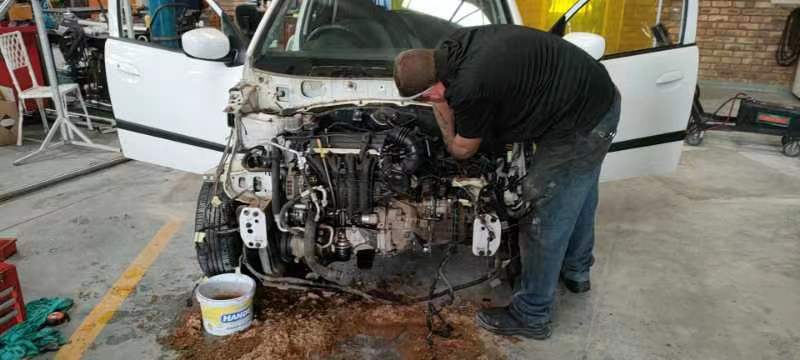
- Removal of ICE Components: This involves meticulously disconnecting and removing the diesel engine, transmission, driveshafts (if applicable), fuel tanks, exhaust system (including DPF/SCR), radiator, and all associated fluid lines, electrical wiring, and mounting brackets. Proper hazardous waste disposal is crucial.
2. Electric Drivetrain & Battery Module Installation:
- Motor Mounting: The high-power electric motor(s) or e-axle are precisely mounted onto custom-designed subframes or adapter plates that integrate with the truck’s existing frame rails. Correct alignment with the driveline is critical.
- Battery System Integration: The modular battery packs are carefully hoisted and secured into their predetermined locations (e.g., side-mounted along the frame rails, or custom under-chassis compartments). Robust, crash-resistant enclosures are used to protect the batteries. High-voltage cables are routed securely and safely.
- Auxiliary Component Mounting: Electric air compressors, steering pumps, and cooling systems are installed and integrated.
3. Control System & High-Voltage Integration:
- Wiring Harness Installation: A new, high-voltage, shielded wiring harness is installed, connecting the battery packs to the motor controller(s), VCU, and charging system. Low-voltage wiring for control signals is also integrated.
- VCU & BMS Connection: The Vehicle Control Unit (VCU) and Battery Management System (BMS) are wired to their respective components. Communication lines (e.g., CAN bus) are established between all EV components and interfaced with the truck’s existing systems.
- Cooling System Hook-up: Lines for the liquid cooling systems for the motor(s), power electronics, and battery packs are connected and filled.
- Charging Port Installation: The DC fast charge inlet is securely mounted and wired.
4. System Debugging & Safety Validation:
- Initial Power-Up & Diagnostics: The system is powered up for the first time, and extensive diagnostic checks are performed to verify all connections, sensor readings, and component communication.
- Software Calibration: The VCU’s software is calibrated to optimize performance for the specific truck, payload, and desired driving characteristics (e.g., throttle response, regenerative braking aggressiveness).
- On-Road Testing: Rigorous test drives are conducted under various load conditions, including acceleration, sustained speed, uphill/downhill performance, and regenerative braking. Data is logged and analyzed for fine-tuning.
- Safety Verification: Comprehensive safety checks, including insulation resistance tests for high-voltage systems and emergency shut-off validations, are performed to ensure compliance with relevant safety standards.
CMVTE offers comprehensive engineering support, including detailed installation manuals and remote assistance, to ensure a smooth and safe **electric semi truck conversion** process.
—
VII. Cost Overview & ROI Analysis
The upfront investment for an **electric semi truck conversion kit** can be significant, but the long-term operational savings often present a compelling return on investment (ROI) for fleet operators.
Conversion Cost Range:
The total cost for a full **EV semi truck conversion** typically ranges from **$70,000 to $150,000+ USD**. This wide range depends heavily on:
- Battery Capacity: Larger battery packs for extended range are the most expensive component.
- Motor Power & Configuration: Higher power motors or integrated e-axles add to the cost.
- Complexity of Integration: Custom fabrication, advanced thermal management, and sophisticated VCU programming can increase costs.
- Labor: Professional installation by a specialized shop will significantly add to the cost compared to a highly skilled in-house team (if applicable).
Comparison with New Electric Trucks:
While an **electric semi truck conversion kit** might seem substantial, it’s generally a fraction of the cost of a brand-new electric Class 8 truck (e.g., a Tesla Semi, which can start from $180,000 to $250,000+ for the initial models). Converting allows fleets to electrify existing assets that may still have many years of useful life in their chassis, deferring the much higher capital expenditure of new vehicle purchases.
Return on Investment (ROI) Period:
The payback period for a **heavy-duty EV conversion** can typically range from **3 to 5 years**, especially for high-utilization vehicles with high annual mileage (e.g., calculating at 100,000 km or 60,000 miles per year). This ROI is primarily driven by:
- Fuel Savings: The difference between diesel costs and electricity costs per mile is the largest contributor.
- Maintenance Savings: Significant reductions in routine maintenance and fewer major engine/transmission repairs.
- Incentives: Government subsidies, tax credits, or green loans can dramatically shorten the payback period.
Example Calculation (Illustrative):
- **Annual Diesel Cost:** 60,000 miles/year * 6 MPG * $4.50/gallon = ~$45,000
- **Annual Electricity Cost:** 60,000 miles/year * 2 kWh/mile * $0.15/kWh = ~$18,000
- **Annual Fuel Savings:** ~$27,000
- **Estimated Annual Maintenance Savings:** ~$5,000 – $10,000
- **Total Annual Savings:** ~$32,000 – $37,000
- Conversion Cost: ~$100,000 (mid-range)
- Payback Period: ~$100,000 / $32,000-37,000/year = **~2.7 to 3.1 years** (before factoring in incentives or downtime savings).
CMVTE can help you perform a detailed ROI analysis tailored to your specific fleet and operational profile, including information on potential green loan channels and policy subsidies.
—
VIII. Real Case Studies: Successful Conversions
The practical viability of **electric semi truck conversion kits** is best illustrated through successful real-world deployments. These examples demonstrate the tangible benefits achieved by fleets embracing this innovative solution.
- North American Logistics Company: Freightliner Cascadia Fleet Electrification
A prominent logistics company in the United States embarked on a pilot project to convert six of their aging **Freightliner Cascadia** Class 8 trucks from diesel to electric. Each truck was equipped with a 300 kWh battery pack and a 350 kW (peak) electric drivetrain. The converted trucks achieve a consistent daily range of approximately 300 km (186 miles), perfectly suiting their regional hub-to-hub delivery routes. The company reported a significant reduction in fuel expenditures and maintenance costs, along with positive driver feedback on the improved quietness and smooth acceleration. This project served as a successful demonstration for future, larger-scale **fleet electrification** initiatives. - Chinese Express Delivery Company: Heavy-Duty Truck Retrofit for Urban Distribution
Facing stringent urban emission limits and seeking to reduce operating costs, a major express delivery company in China decided to retrofit 10 of its heavy-duty trucks (utilizing common domestic chassis like Jiefang or Dongfeng) to pure electric. These trucks, primarily used for short-haul urban and suburban distribution, were fitted with 250 kWh LFP battery packs and 280 kW electric motors. The conversion resulted in substantial annual energy cost savings (estimated at over 30% per vehicle) and virtually eliminated local emissions. The company also highlighted the benefit of reduced noise pollution, allowing for deliveries in residential areas during off-peak hours. This case study underscores the immediate and tangible impact of **convert diesel semi to electric** for high-frequency, fixed-route operations. - European City Logistics: Emission Reduction & Noise Mitigation Project
In a European city, a collaborative project focused on converting heavy-duty trucks used for municipal services and cold chain logistics within urban centers. These vehicles, often operating in newly established Zero Emission Zones, received **electric drivetrain for heavy trucks** retrofits. Post-conversion, the trucks demonstrated an average annual reduction of over **20 tons of CO₂ emissions** per vehicle and drastically lower noise levels, contributing to improved air quality and quality of life in urban environments. This showcases how **electric semi truck conversion kits** are vital tools for achieving ambitious environmental targets beyond just cost savings.
—
IX. Challenges & Limitations
While the prospects of an **electric semi truck conversion kit** are exciting, it’s crucial to approach them with a realistic understanding of the inherent challenges and limitations:
- Battery Weight and Layout Trade-offs:
- Weight Penalty: High-capacity battery packs are inherently heavy. While removing the diesel engine and transmission offsets some weight, the net increase can sometimes reduce payload capacity. Careful engineering is required to manage this.
- Space Constraints: Integrating large battery packs into an existing semi-truck chassis requires creative and robust packaging solutions that do not compromise ground clearance, serviceability, or structural integrity.
- Fast Charging Technology Threshold for Long Range:
- Infrastructure Dependency: Long-haul operations require extensive and powerful DC fast charging infrastructure (e.g., 250 kW+ chargers). The availability of such infrastructure along specific routes is still limited in many regions.
- Battery & BMS Compatibility: The battery system and BMS must be capable of handling high charging rates without excessive heat generation or degradation. This requires advanced thermal management.
- Licensing, Insurance, and Regulatory Certification (FMVSS / GB Standards):
- Complex Certification: Unlike factory-built EVs, converted vehicles must undergo rigorous testing and certification processes to ensure compliance with national and regional safety standards (e.g., FMVSS in the US, GB Standards in China, UNECE regulations in Europe). This can be a time-consuming and costly hurdle.
- Registration Challenges: Re-registering a converted vehicle as an EV can involve specific inspections and paperwork unique to each jurisdiction.
- Insurance Implications: Some insurance providers may be hesitant to insure highly modified vehicles, or may charge higher premiums. It’s crucial to discuss the conversion with your insurer beforehand.
- Downtime Impact on Commercial Operations:
- Conversion Time: The physical conversion process can take several weeks to months, meaning the truck is out of service. For commercial fleets, this downtime needs to be carefully managed and factored into operational planning.
- Debugging & Validation: Post-conversion testing and fine-tuning may require additional off-road time to ensure optimal performance and safety.
Despite these challenges, expert providers like CMVTE have developed robust engineering and support frameworks to mitigate these issues and facilitate successful **electric semi truck retrofit** projects.
—

X. Frequently Asked Questions (FAQ)
Q1: Can an EV converted semi truck haul heavy loads and climb slopes?
Yes, absolutely. A well-designed electric semi truck conversion kit is engineered to provide torque and power equal to or exceeding that of the original diesel engine. Electric motors deliver instant peak torque from 0 RPM, which is highly advantageous for starting heavy loads and climbing steep inclines. The motor and battery configuration will be selected to match the truck’s Gross Combination Weight Rating (GCWR) and intended operational profile, ensuring it can handle its maximum payload and tackle challenging terrains.
Q2: Does the conversion affect the trailer’s braking or electrical systems?
No, a proper electric semi truck conversion kit is designed to maintain full compatibility with existing trailer systems. The truck’s air brake system will be powered by an electric air compressor, and the trailer’s electrical connections (lights, ABS, etc.) will be supplied by the truck’s 12V/24V auxiliary power system (via the DC-DC converter). The conversion focuses on the tractor’s propulsion system and does not alter the trailer’s functionality or its interface with the truck.
Q3: Do I need to replace the truck’s chassis for an EV conversion?
Generally, no. The primary benefit of an electric semi truck conversion kit is to utilize the existing, robust chassis of your semi truck. The conversion involves removing the powertrain components and replacing them with electric equivalents, not altering the fundamental frame structure. However, depending on the battery layout, some minor chassis modifications for mounting brackets or reinforcements might be required. A thorough structural assessment is always performed beforehand.
Q4: Can a converted semi truck be legally registered?
Yes, in many jurisdictions, a converted semi truck can be legally registered, but the process varies significantly by region. It typically requires updating the vehicle’s registration to reflect its new electric propulsion system. This often involves specific inspections to verify safety, compliance with local EV standards, and proper documentation of the conversion. It is crucial to research and understand your local Department of Motor Vehicles (DMV) or equivalent transport authority’s requirements before undertaking a conversion.
Q5: How long does it typically take to fully charge the battery of a converted semi truck?
Charging times for an electric semi truck depend heavily on the battery’s capacity and the charger’s power output.
- Level 2 AC Charging (e.g., 22 kW): For a large 400 kWh battery, this could take over 18 hours for a full charge, making it suitable for overnight depot charging.
- DC Fast Charging (DCFC – e.g., 100 kW to 350 kW+): This is crucial for commercial operations. A 400 kWh battery could achieve an 80% charge in 2-4 hours at a 100 kW charger, or as little as 45-90 minutes with a 350 kW ultra-fast charger.
The conversion kit typically includes a fast-charge inlet compatible with public or fleet charging infrastructure.
—
XI. Why Choose CMVTE’s Semi Truck Conversion Kit?
Navigating the complexities of heavy-duty EV conversions requires an experienced and reliable partner. CMVTE stands as a global leader in providing advanced **electric semi truck conversion kits**, offering unparalleled expertise and support:
- Extensive Global Heavy Truck Conversion Experience: With a proven track record serving clients in over 30 countries across Europe, North America, the Middle East, and Southeast Asia, CMVTE possesses deep insights into diverse market needs and regulatory landscapes for **electric drivetrain for heavy trucks**. We’ve successfully converted hundreds of heavy-duty vehicles.
- Customizable High-Voltage Battery Systems: Our solutions feature modular, high-voltage battery systems (typically operating at >600V) that are highly customizable to meet your specific range requirements and chassis integration challenges. This ensures optimal energy density and performance.
- Comprehensive Engineering Support: We provide full-lifecycle engineering support, including initial solution design and feasibility studies, high-quality component supply, detailed installation guidance, remote debugging, and robust after-sales service. We are with you every step of the **convert diesel semi to electric** journey.
- Robust & Certified Components: Our electric motors, battery packs, and control systems undergo rigorous testing and meet multiple international electrical safety standards, ensuring reliability, performance, and compliance for your **class 8 truck electric conversion**.
- High-Power & Efficient Drivetrains: Our kits are designed with powerful electric motors (e.g., 250kW to 500kW+) and sophisticated control algorithms to deliver the torque and efficiency required for heavy-duty hauling and demanding routes.
Choosing CMVTE means investing in a high-quality, reliable, and expertly supported **electric semi truck retrofit** solution.
—
XII. Conclusion: The Future of Heavy-Duty Truck Electrification
The electrification of heavy-duty trucks is not a question of if, but when and how quickly. As regulatory pressures intensify and the economic benefits become undeniable, transitioning from diesel to electric becomes an increasingly strategic decision for fleet operators.
An **electric semi truck conversion kit** offers a compelling and flexible pathway to this electrified future. It’s not necessarily an “either/or” choice between converting and buying new; rather, it provides a valuable option for upgrading existing, reliable assets to meet modern demands. For businesses seeking to reduce operational costs, enhance their environmental footprint, and comply with evolving regulations, these conversion kits represent a powerful investment.
CMVTE is dedicated to empowering this transition, having provided **electric semi truck conversion kit** solutions for hundreds of heavy-duty vehicles globally. Our expertise, advanced technology, and comprehensive support make us your ideal partner in navigating the complexities of heavy-duty EV retrofits.
Explore CMVTE’s Electric Semi Truck Conversion Kits
Contact Us for a Custom Fleet Electrification Quote


