

Episode 3 – The Engineering Behind the Motor-to-Gearbox Connection
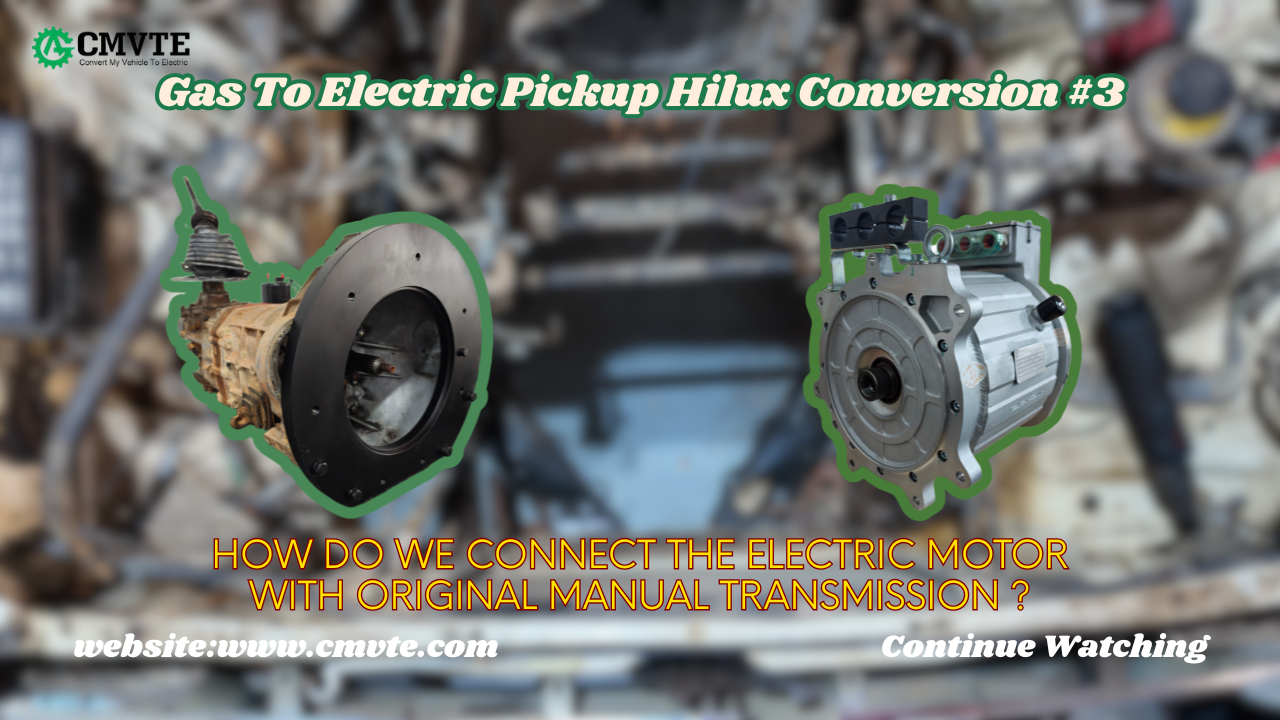
In the previous episode, we completely removed the diesel powertrain from our Toyota Hilux, leaving a clean chassis ready for its new electric drivetrain.
Now comes one of the most important—and most frequently asked—questions in any EV conversion:
How do you connect an electric motor to the original manual transmission?
Many people assume that converting a vehicle to electric means replacing the entire drivetrain. In reality, retaining the factory manual gearbox is often one of the smartest choices, especially for commercial pickups like the Toyota Hilux.
In this week’s episode, we show exactly how we make that connection.
Why Keep the Original Manual Transmission?
One of the biggest advantages of an EV conversion is flexibility.
Instead of replacing the entire drivetrain, many projects retain the factory manual gearbox because it offers several important benefits:
- Lower conversion cost
- Less fabrication work
- Proven reliability
- Retains the original 4WD and transfer case
- Familiar driving experience
The Hilux transmission was originally designed to handle demanding workloads, making it an excellent match for a properly selected electric motor.
For many owners, keeping the gearbox provides the best balance between performance, simplicity, and cost.
The Challenge: Connecting Two Different Worlds
An electric motor cannot simply be bolted onto a manual gearbox.
The motor and transmission were never designed to work together, so they must be connected through specially engineered components.
The most important parts include:
- A custom adapter plate that precisely aligns the motor with the transmission bellhousing.
- A precision coupling system that transfers torque from the motor shaft to the gearbox input shaft.
- Carefully designed mounting points that maintain alignment under load.
Even a small alignment error can lead to excessive vibration, premature bearing wear, or drivetrain failure.
That’s why accuracy at this stage is critical.
Precision Is Everything
During this stage of the project, we carefully measure every critical dimension before any parts are manufactured.
These measurements ensure that:
- The motor shaft and gearbox input shaft are perfectly aligned.
- The coupling operates smoothly.
- The drivetrain remains reliable under real-world driving conditions.
Good engineering at this stage helps prevent problems later—and lays the foundation for a smooth, dependable electric pickup.
🎥 Watch Episode 3
In this episode, you’ll see how we:
- Measure the original transmission
- Design the custom adapter plate
- Prepare the coupling system
- Align the electric motor with the factory gearbox
This is one of the most important mechanical stages of the entire conversion, and it’s where the electric powertrain begins to come together.
▶ Watch Episode 3 here:
Why This Step Matters
People often focus on the battery or motor when planning an EV conversion.
However, without a properly engineered motor-to-transmission interface, even the best components won’t perform as intended.
A well-designed adapter system ensures:
- Smooth power delivery
- Reduced vibration
- Longer component life
- Reliable performance on and off the road
It’s one of those components you’ll rarely see once the vehicle is finished—but it’s absolutely essential to the success of the conversion.
What’s Coming Next?
With the motor and transmission interface designed, the next challenge is deciding where the batteries should go.
In Episode 4, we’ll explore one of the most important design decisions in any electric vehicle conversion:
Where do you install the battery packs?
We’ll explain how battery placement affects weight distribution, vehicle balance, safety, maintenance, and overall driving performance—and why simply filling every empty space with batteries isn’t always the best solution.
Stay tuned as our Toyota Hilux EV Conversion Project continues.
Planning Your Own Hilux EV Conversion?
Every EV conversion is unique.
Choosing the right motor, battery, controller, and transmission configuration depends on how the vehicle will be be used.
At GMT, we’ve already helped customers electrify vehicles such as the Toyota Hilux, Isuzu D-Max, and other commercial vehicles. We’re also documenting our own Hilux EV conversion project step by step to share the real engineering process behind a successful conversion.
If you’re considering converting your own pickup truck, we’d be happy to help.
Simply contact us by [email protected] with your vehicle details, and we’ll provide a preliminary Bill of Materials (BOM), recommended system configuration, and an estimated project budget based on your project requirements.

