

Choosing the right motor is the most important decision in any boat conversion. The wrong choice means wasted power, poor range, or an installation that does not fit your hull. This guide compares the three main configurations — outboard, inboard PMSM, and mid-drive kits — so you can match the right system to your vessel.
Outboard Motors: Simple Swap, Limited Power
Outboard conversions replace the lower unit of a gasoline outboard with an electric motor, or mount a complete electric outboard on the transom. Best suited for small boats, dinghies, and light fishing vessels up to 6-7 metres.
- Power range: 1kW – 20kW
- Voltage: 24V – 48V typical
- Cooling: Air-cooled or direct water pickup
- Installation: Bolt-on, no hull modification needed
- Best for: Small craft where simplicity matters most
Limitations: lower power ceiling, exposed mounting, limited battery space in the boat.
Inboard PMSM Motors: Maximum Efficiency for Larger Vessels
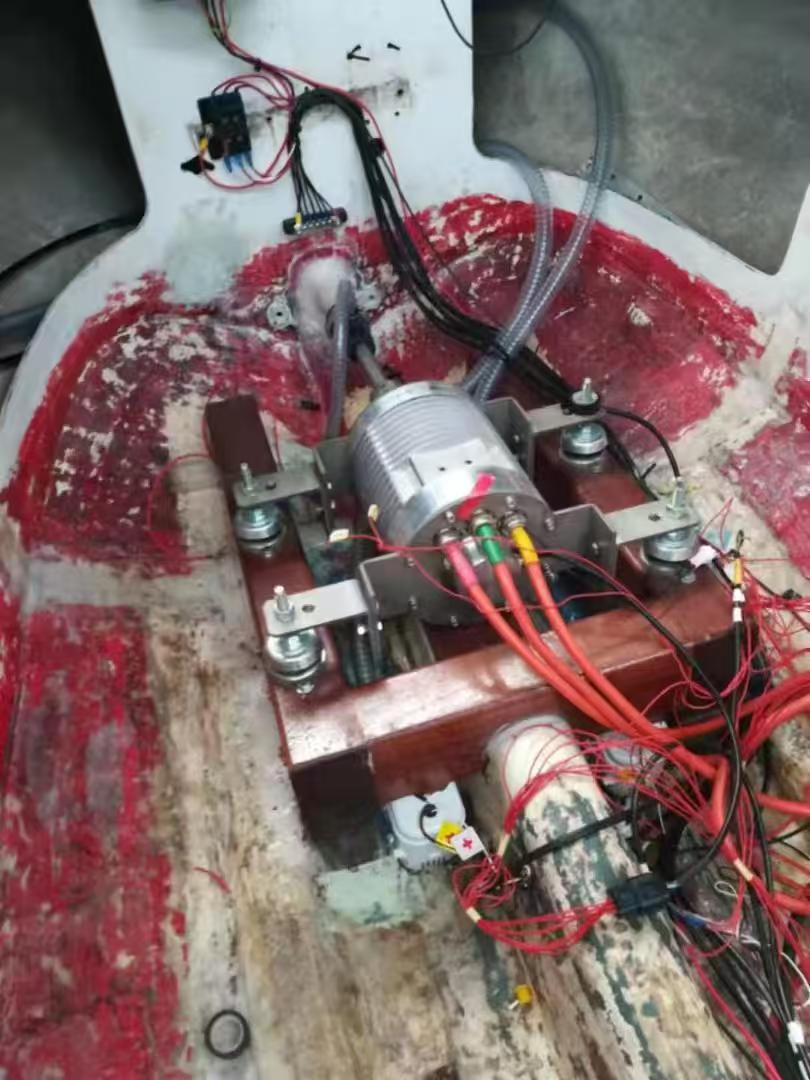
Permanent Magnet Synchronous Motors (PMSM) are the dominant choice for modern electric boat conversions. They deliver up to 96% efficiency, near-silent operation, and high torque density — ideal for displacement hulls, sailboats, and commercial vessels.
- Power range: 10kW – 150kW+
- Voltage: 72V – 600V
- Cooling: Water-cooled standard
- Installation: Requires engine bed modification and shaft alignment
- Best for: Sailboats, yachts, tour boats, ferries
CMVTE's PMSM inboard range covers 3kW to 150kW, with matched controllers, water-cooling loops, and digital displays. Every system is tested before shipment. A US Parts Retailer Kit for inboard marine often ships an industrial motor adapted for boat use — CMVTE designs purpose-built marine PMSM motors with corrosion-resistant housings and IP67-rated connectors.

Mid-Drive Kits: Modular Flexibility
Mid-drive systems mount the motor in the bilge and connect to the existing propeller shaft via a belt or direct coupling. They offer a balance between outboard simplicity and inboard power, with modular components that fit tight engine compartments.
- Power range: 3kW – 60kW
- Voltage: 48V – 144V
- Cooling: Custom — air or water
- Installation: Moderate — mounts to existing shaft beds
- Best for: Refits where the original prop shaft and stern gland are in good condition
Quick Comparison
| Factor | Outboard | Inboard PMSM | Mid-Drive |
| Power Range | 1-20kW | 10-150kW+ | 3-60kW |
| Efficiency | 80-88% | 92-96% | 88-93% |
| Install Complexity | Low | High | Medium |
| Hull Modification | None | Engine bed work | Minimal |
| Cooling Method | Air / water pickup | Water-cooled loop | Air or water |
| Maintenance | Low | Very low | Low |
| Best Boat Size | Under 7m | 7m – 20m+ | 6m – 12m |
How to Choose the Right Power
A general rule: allow 1kW of motor power per 250-300 kg of fully loaded vessel weight for displacement hulls. Planing hulls need roughly 3-4x more power for the same weight to reach planing speed. Battery voltage must match the motor — CMVTE offers packs from 48V to 600V to match every drive system.
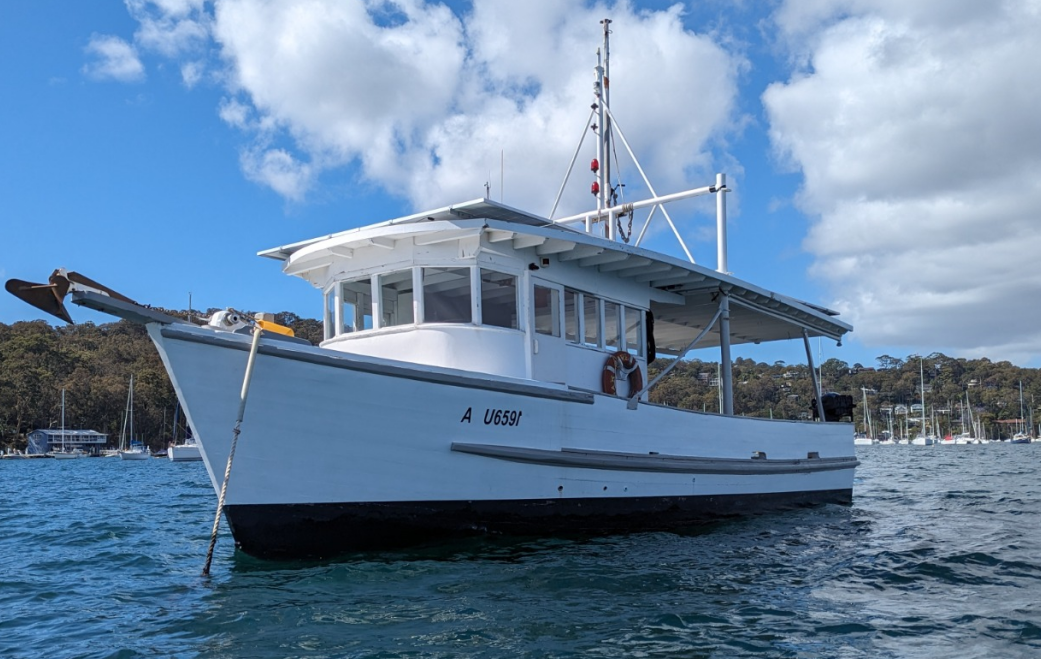
Range depends on battery capacity, cruising speed, and hull efficiency. A 10kW motor running at 6 knots on a 7m fishing boat typically draws 3-5kW continuous, giving 4-6 hours of operation from a 20kWh battery pack.
Cooling & Installation Considerations
Marine electric motors generate heat under continuous load. Air-cooled motors are simpler but limited to lower power levels (under 15kW). Water-cooled motors use a closed-loop system with a heat exchanger — seawater cools the coolant, never touching the electrical components. CMVTE's PMSM inboard motors use water cooling as standard, with the pump and heat exchanger included in the kit. For outboard installations, direct water pickup from the lower unit provides cooling without additional plumbing.
Controller, BMS & Display Integration
A marine electric drive is more than the motor. The controller must handle the continuous load profile of a boat — steady RPM for hours, not the start-stop pattern of a car. CMVTE's marine controllers use FOC (Field-Oriented Control) with CAN bus communication, providing smooth torque at any RPM and active regen control. The BMS monitors each cell group and communicates state of charge, temperature, and remaining range to the digital display at the helm.
A US Parts Retailer Kit for marine use often pairs an automotive controller with a boat motor, missing the software tuning needed for marine duty cycles. CMVTE's systems are programmed for marine applications from the factory, with parameters for continuous power ratings, regen curves, and thermal limits that match the vessel's operating profile.
CMVTE Difference for Marine Conversions
CMVTE has been manufacturing electric motors since 1995 and supplies complete marine drive systems — motor, controller, battery, display, and wiring — from a single factory. Every marine component is tested for saltwater resistance, vibration tolerance, and insulation integrity before shipment. Our engineering team provides remote support during installation and documents every system for local registration requirements.
Whether you are converting a 5m fishing skiff or a 20m passenger ferry, CMVTE has a proven marine system sized for your hull.
Get a Marine Motor Recommendation →
Tell us your vessel length, weight, and typical use — we will match the right drive system


