

Introduction
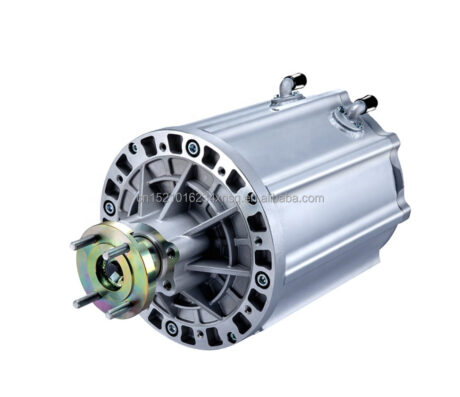
Permanent Magnet Synchronous Motors (PMSM) have become one of the most widely used motor types in modern electric vehicles (EVs) and conversion projects. With their high efficiency, compact size, and strong performance characteristics, PMSM motors are often considered the top choice for EV drivetrain systems.
In this guide, we will cover everything you need to know about PMSM motors — from how they work to why they are ideal for EV conversions.
What is a PMSM Motor?
A PMSM (Permanent Magnet Synchronous Motor) is an AC motor that uses permanent magnets embedded in the rotor to create a constant magnetic field. Unlike traditional induction motors, PMSMs do not require current in the rotor to generate magnetism.
Key Characteristics:
- Rotor uses permanent magnets instead of windings
- Operates synchronously with the stator magnetic field
- High efficiency and power density
- Requires advanced motor controllers
Because of these advantages, PMSM motors are widely used in electric vehicles, industrial automation, and robotics.
How Does a PMSM Motor Work?
A PMSM motor operates based on the interaction between the stator’s rotating magnetic field and the rotor’s permanent magnetic field.
Working Principle:
- The inverter supplies AC current to the stator windings
- This creates a rotating magnetic field
- The rotor magnets align with this rotating field
- The rotor spins at the same speed (synchronous speed)
Unlike induction motors, there is no slip between rotor and stator, which results in higher efficiency.
PMSM vs BLDC Motor
Although PMSM and BLDC motors are often grouped together, they have important differences in control methods and performance.
For a detailed comparison, please read the differences between BLDC and PMSM motors.
Quick Differences:
| Feature | PMSM | BLDC |
|---|---|---|
| Back EMF | Sinusoidal | Trapezoidal |
| Control | FOC (Field-Oriented Control) | Trapezoidal / FOC |
| Efficiency | Higher | Slightly lower |
| Noise | Lower | Higher |
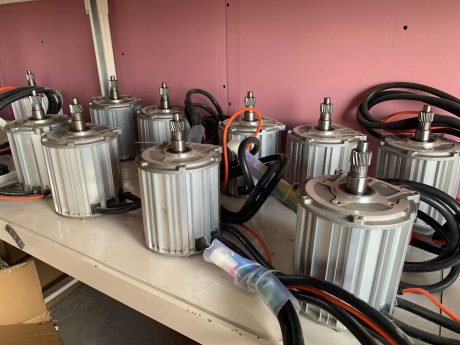
In EV applications, PMSM motors are generally preferred due to smoother torque output and better efficiency.
Advantages of PMSM Motor
1. High Efficiency
PMSM motors eliminate rotor copper losses, resulting in significantly higher efficiency compared to induction motors.
2. High Power Density
They provide more power in a smaller size, which is critical for EV conversions where space is limited.
3. Excellent Torque Performance
PMSM motors offer strong torque at both low and high speeds, making them ideal for acceleration and climbing.
4. Better Thermal Performance
Lower heat generation improves system reliability and lifespan.
5. Precise Control
With modern controllers, PMSM motors allow precise speed and torque control.
Why PMSM is Ideal for EV Conversion
PMSM motors are widely used in EV conversions due to their balance of efficiency, performance, and reliability.
Key Reasons:
1. High Efficiency = Longer Range
Less energy loss means more driving distance per charge.
2. Compact Size
Easier to integrate into existing vehicle platforms.
3. Strong Low-Speed Torque
Ideal for city driving and off-road applications.
4. Mature Technology
Used by many leading EV manufacturers.
Once you understand why PMSM motors are ideal for EV conversion, the next step is choosing the right supplier.
👉 Explore top PMSM motor manufacturers.
This guide will help you compare different suppliers and find the best solution for your project.
🚀 Get a Custom PMSM Motor Solution (CTA)
If you are planning an EV conversion project, choosing the right PMSM motor and controller is critical to performance, efficiency, and cost.
👉 What we can help you with:
- PMSM motor selection based on your vehicle
- Complete EV drivetrain solutions
- Controller and system matching
- Technical support for integration
👉 Start your project today:
- Request a custom solution
- Get a quote within 24 hours
👉 Contact us now to get expert support for your EV conversion.
How to Start a PMSM Motor
Starting a PMSM motor requires a motor controller (inverter), as it cannot self-start like some traditional motors.
Common Startup Method:
- Field-Oriented Control (FOC)
- Rotor position detection (sensor or sensorless)
Key Components:
- Inverter (controller)
- Position sensor (encoder or resolver)
- Battery pack
Without proper control algorithms, PMSM motors cannot operate efficiently.
How to Calculate PMSM Motor Parameters
In real-world EV conversion projects, you typically do not need deep mathematical calculations, but understanding key parameters is helpful.
Important Parameters:
- Stator resistance
- Inductance
- Back EMF constant
- Torque constant
Practical Tip:
Instead of calculating everything manually, most engineers select motors based on:
- Power requirement (kW)
- Voltage system
- Vehicle weight
Choosing the Right PMSM Motor for Your Project
When selecting a PMSM motor for EV conversion, consider:
- Vehicle type (car, truck, off-road)
- Required power (kW)
- Battery voltage
- Cooling system
- Controller compatibility
👉 If you are unsure, working with an experienced supplier is highly recommended.
Find Reliable PMSM Motor Manufacturers
Choosing the right supplier is just as important as choosing the motor itself.
You can explore leading suppliers here:
👉 /pmsm-motor-manufacturers/
This will help you compare different manufacturers based on performance, cost, and application suitability.
FAQs About PMSM Motors
1. What is the difference between PMSM and induction motor?
PMSM motors use permanent magnets in the rotor, while induction motors rely on electromagnetic induction. PMSMs are generally more efficient and compact.
2. Are PMSM motors better than BLDC motors?
Permanent magnet synchronous motors typically offer smoother operation and higher efficiency, making them more suitable for electric vehicle applications. For a complete comparison, please refer to the differences between BLDC and PMSM motors.
3. Why are PMSM motors used in electric vehicles?
Because they provide high efficiency, strong torque, and compact size, which are essential for EV performance and range.
4. Do PMSM motors require a controller?
Yes. PMSM motors must use an inverter with advanced control algorithms such as FOC to operate properly.
5. How do I choose the right PMSM motor for my EV conversion?
You should consider power requirements, vehicle weight, battery voltage, and application scenario. Working with a professional supplier can simplify the process.
Conclusion
PMSM motors are one of the best choices for EV conversion thanks to their high efficiency, compact design, and excellent performance. Whether you are converting a classic car or building a custom electric vehicle, understanding how PMSM motors work will help you make better decisions.
Get a PMSM Motor Solution for Your EV Conversion
👉 Contact us today to get a customized PMSM motor and drivetrain solution tailored to your project.
👉 Our team will help you choose the most suitable configuration based on your needs and budget.

