

A Universal EV Conversion Kit can be a smart fit when you want a faster path to electrifying a classic car, light truck, or specialty build without starting from zero. The right kit gives you the core high-voltage hardware and a clear installation path, significantly reducing your initial sourcing effort. This guide breaks down what works, what does not, and how to choose a solution that actually fits your project.
Is a Universal EV Conversion Kit the Right Choice for Your Vehicle?
A universal kit works best on vehicles with a layout that leaves room for custom mounts and wiring. It is often a good fit for older cars, trucks, buses, and specialty builds where custom fabrication is possible. A quick check: if the body, frame, and drivetrain tunnel can accept new hardware without major structural surgery, the project is likely viable.
| Decision Factor | Ideal Condition (Universal Kit Fits) | Red Flag (Universal Kit Not Recommended) |
| Available Space | Open layout with ample room for custom mounts and wiring. | Tightly packaged layout with no room for additional components. |
| Vehicle Category | Older cars, classic trucks, buses, and specialty builds. | Modern, highly integrated vehicles with complex factory electronics. |
| Structural Impact | Body, frame, and drivetrain tunnel accept new hardware easily. | Requires major structural surgery or heavy frame modifications to fit parts. |
What’s Actually Included in a Universal EV Conversion Kit (And What’s Missing)
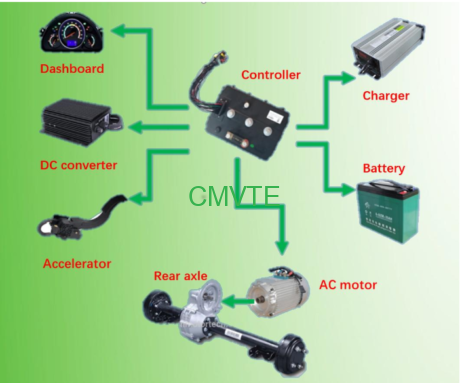
A “universal” kit usually covers the drive side of the build, not the entire vehicle. In EV West’s universal Tesla package, the included items go beyond the motor and controller and can also cover the throttle pedal, charger, DC/DC converter, charge port, contactor box, high-voltage cabling, and battery-related hardware. What is still missing is just as important: custom motor mounts, custom axles, vehicle-specific cooling, battery packaging, and often fabrication work to make everything fit your platform.
The most common mistake is assuming “universal” means plug-and-play for every car. In practice, the kit reduces sourcing time, but the project still needs custom integration work. That is why suppliers often separate the power package from the final vehicle installation scope.
Typically Included in a Universal Kit:
- High-voltage Motor & Controller
- Throttle pedal assembly
- On-board Charger (OBC) & DC/DC Converter
- High-voltage cabling & Contactor box
Usually Missing (Requires Custom Fabrication):
- Custom motor mounts & brackets
- Custom drive axles
- Vehicle-specific battery boxes & packaging
- Tailored thermal management (Cooling)
Key Factors That Determine Compatibility
Compatibility comes down to three critical elements: where the parts will go, how much weight the vehicle can handle, and the precise performance metrics the build demands. Instead of guessing, successful converters rely on industry benchmarks to evaluate feasibility.
- Vehicle Weight and Load Requirements: The heavier the donor vehicle, the more battery capacity and structural reinforcement you need. For example, electrifying a classic light-duty truck requires an original chassis capable of safely supporting an additional 800 to 1,200 lbs of high-voltage components. Shop and fleet buyers must evaluate payload, axle load limits, and brake capacity before ordering.
- Available Space for Battery Systems: A universal kit may fit the motor bay well, but the vehicle still needs sufficient usable volume. For a standard 400V architecture, you typically need enough space for a 50kWh to 85kWh battery pack to achieve a practical driving range, alongside room for distribution boxes, cooling lines, and safety clearances. Older vehicles with larger engine bays or cargo areas are generally easier to adapt.
- Power and Performance Targets: The kit must match your real-world use case. A weekend cruiser might only require a 100kW to 150kW motor setup. In contrast, a commercial shuttle or a high-performance restomod will demand a 200kW to 300kW+ output, which directly necessitates advanced thermal management and a higher discharge-rate battery pack.
Universal EV Conversion Kit vs Custom EV Conversion: Cost, Risk, and Outcome
Universal EV Conversion Kit vs Custom EV Conversion: Cost, Risk, and Outcome
A universal kit significantly lowers the first layer of project risk. By utilizing a pre-packaged and documented core system, B2B buyers and shops can save an estimated 30% to 40% in early R&D and component sourcing time. Custom conversions, however, deliver a tailor-made fit but require ground-up engineering that can quickly inflate budgets.
| Feature | Universal EV Conversion Kit | Custom EV Conversion |
| Engineering Time | Lower (Pre-packaged core components) | High (Ground-up engineering) |
| Cost (Initial Parts) | Predictable upfront cost | Variable and usually higher |
| Sourcing Effort | Streamlined (Reduces vendor fatigue) | Complex (Multiple suppliers needed) |
| Best For | Classic cars, standard trucks, tight deadlines | Niche platforms, ultra-tight packaging |
In practice, universal kits are about speed, cost control, and flexibility, while custom builds are about precision and ultimate refinement.
Typical Use Cases: When a Universal EV Conversion Kit Makes Sense
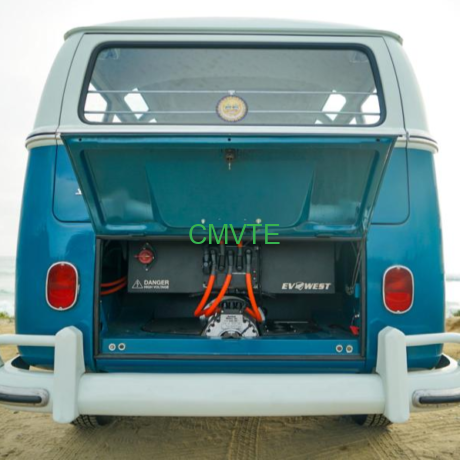
A universal kit makes the most sense for classic cars, restomods, shop demo builds, and niche vehicles where the owner values flexibility more than factory-like integration. Electric GT’s V8-to-EV and classic bus examples show how a defined platform can benefit from a packaged powertrain approach, while EV West’s universal Tesla packages show the same idea for custom builds that still need fabrication. This option is especially attractive when the buyer wants strong torque, a faster timeline, and a proven parts base without commissioning a full ground-up engineering program.
What B2B Buyers Should Look for in a Supplier
B2B buyers should look for more than parts pricing. The supplier should be able to explain fitment, provide documentation, support the install, and stand behind the hardware. EV West highlights hands-on technical support and limited battery warranty coverage, while Electric GT emphasizes preassembled systems, engineering support, and low-volume manufacturer solutions. That combination matters for fleets, builders, and resellers because it reduces project delays and helps protect margin when the build moves from prototype to production. A good supplier sells confidence, not just components.
Project Workflow: From Kit Selection to Final Conversion
The best workflow starts with feasibility, not shopping. First, confirm the vehicle’s weight, available battery space, and target performance. Next, compare universal kits against custom options and map the missing parts that will still need fabrication. After that, lock the battery strategy, mounting plan, cooling plan, and compliance path before ordering hardware. EPA guidance on conversions also shows why documentation and proper system integration matter for safe, legal results. A disciplined workflow helps teams avoid rework, control cost, and finish with a vehicle that drives the way it was promised.
- Feasibility Check: Confirm vehicle weight, battery space, and performance target.
- Kit Selection & Gap Analysis: Map out what the kit provides vs. what fabrication is needed.
- Packaging Strategy: Lock in battery mounting and cooling plans.
- Integration & Compliance: Install hardware following EPA/local safety guidelines.
- Testing & Calibration: Safely test the high-voltage system.
How CMVTE Delivers Flexible EV Conversion Solutions
At CMVTE, we understand that “universal” should not mean “compromise.” We focus on providing highly adaptable EV conversion solutions tailored to your project’s specific constraints. Unlike rigid off-the-shelf packages, CMVTE offers modular drive units that support a wide range of voltage platforms—from standard 400V architectures up to high-performance 800V systems.
We back our hardware with fast global shipping, comprehensive technical wiring diagrams, and direct engineering support to drastically reduce your installation downtime. CMVTE positions itself as the partner that helps you design the right system, protecting your margins when your build moves from prototype to production.
Ready to accelerate your electrification project? Contact CMVTE engineers today to configure a modular EV drive unit perfectly matched to your chassis and performance goals.
Read More: 1 Universal Kit Fits 15+ Trucks: Save $7,000 Without Sacrificing Performance
FAQ
1. Can I get an electric car conversion kit with battery included?
Yes, some suppliers offer comprehensive kits with batteries included. However, due to strict hazardous shipping regulations and varying chassis space, batteries are often sold as optional modular add-ons. Purchasing them together from a single supplier ensures optimal system compatibility and simplifies your high-voltage integration.
2. What is a high-performance EV conversion kit?
A high-performance kit is engineered for maximum torque and speed, often featuring 400V or 800V architectures and motor outputs exceeding 200kW. These premium systems require advanced liquid thermal management and high-discharge battery packs, making them perfect for high-end restomods, racing applications, and heavy-duty vehicles.
3. Are there conversion kits for specific vehicles like Ford or VW Beetle?
Absolutely. Many suppliers offer “bolt-in” kits tailored for popular classics like vintage VW Beetles, Porsche 911s, or early Ford Broncos and trucks. Unlike universal kits, these packages include vehicle-specific custom motor mounts, adapted axles, and pre-measured battery boxes to minimize custom fabrication.

