

Why Cogging Torque Should Decide Which Motor You Buy
Most DIY EV builders choose a motor by peak kilowatts. That is a mistake. A datasheet can shout "20 kW peak" and still deliver a drivetrain that judders at walking pace, refuses to creep smoothly in traffic, and makes parking an adventure. The culprit is cogging torque — the most underrated spec on any permanent magnet motor.
What Is Cogging Torque?
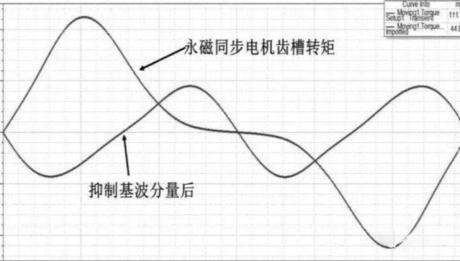
Cogging torque, also called detent torque, is the magnetic "grab" between the permanent magnets on the rotor and the steel teeth of the stator. Even with no power applied, the rotor wants to lock into the position of lowest magnetic resistance. Turn the shaft of a cheap motor by hand and you feel it — the rotor clicks through discrete steps instead of spinning freely. That click is cogging torque.
Why Cogging Torque Hits EV Conversions Hardest
Almost every ranking article on this topic is written for industrial servo engineers. Your conversion is a harder case:
- You live at low speed. Parking, reversing a trailer, crawling through gates and paddocks — low speed is exactly where cogging is most obvious.
- No gearbox to smooth it. Your old drivetrain masked small torque pulses; an electric one sends them straight to your hands and seat.
- Noise gets amplified. Each "grab and release" becomes a whine, and at the right frequency it resonates through the whole frame.
Ignore cogging and you will spend months chasing a jerky, whining build — only to discover the real fix is a different motor.
5 Factory-Level Fixes That Kill Cogging
Good news: cogging can be engineered down to near zero. These are production methods, not marketing language.
1. Fractional-Slot Winding
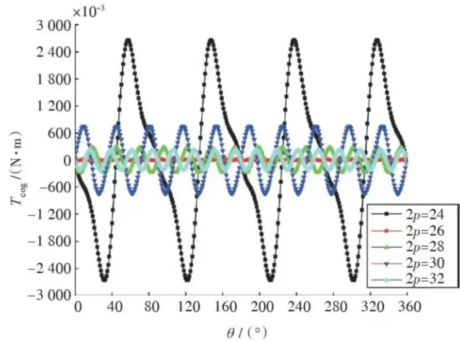
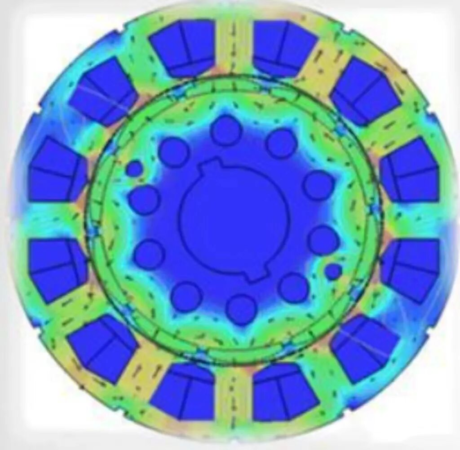
Choose a slot-and-pole combination with a high least common multiple. A 9-slot stator with a 6-pole rotor produces about 30 mNm of cogging; the same stator with an 8-pole rotor drops to roughly 2 mNm — a 15x reduction at zero extra cost.
2. Stator Skewing
Twist the lamination stack so stator teeth never align with the magnets all at once. Each section's torque pulse cancels the next. It is one of the oldest, most reliable fixes in motor manufacturing.
3. Optimized Pole Arc
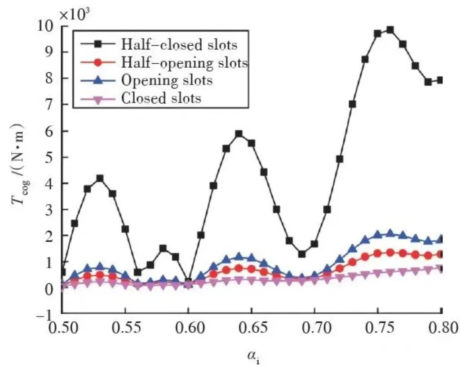
Shape the magnet so its arc sits near 70-80% of the pole pitch. The flux distribution flattens toward a sine wave, cutting both cogging torque and torque ripple.
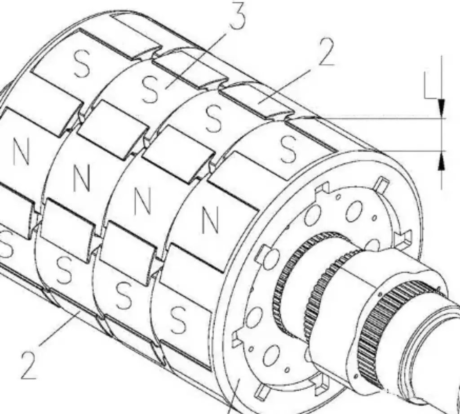
4. Rotor Segmenting & Pole Shifting
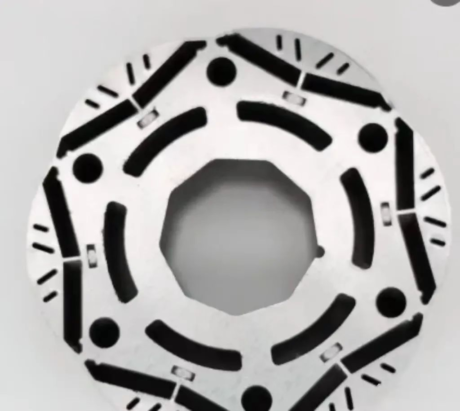
Build the rotor from offset segments, or shift poles a few degrees off-center. Five rotor segments make cogging essentially negligible, and pole shifting on a 4-pole 24-slot motor cuts it from 0.2 Nm to 0.02 Nm — a 90% drop.
5. Auxiliary Slots
Small extra notches in the stator teeth multiply the cogging frequency so the pulses cancel. A 4-pole 6-slot motor drops from 1.04 Nm to 0.2 Nm with just two auxiliary slots.
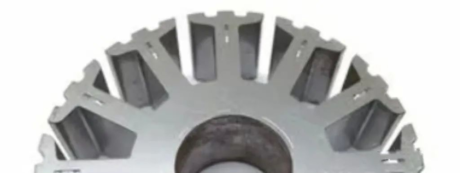
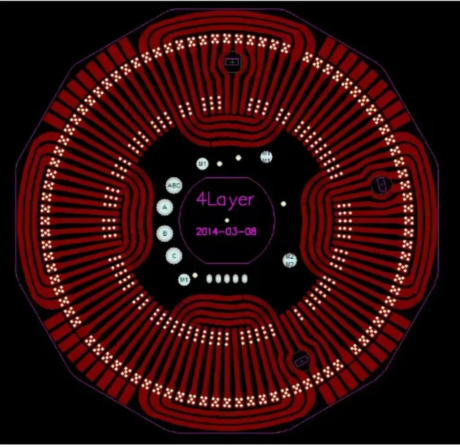
The ultimate cure is a slotless stator — no teeth, no cogging at all. But it needs far more magnet material, so it stays rare outside aerospace.
Why CMVTE Motors Ship with Low Cogging — Factory Direct
Buying from a factory changes everything. When you order a CMVTE PMSM motor, you are not getting a generic marketplace motor with a pretty spec sheet:
| What You Get | Generic Marketplace Motor | CMVTE Factory-Direct Motor |
|---|---|---|
| Cogging engineering | None — bare lamination | Fractional-slot winding, tuned pole arc |
| Testing | Static photos | Dynamometer-tested, data on request |
| Controller match | Guess and tune for weeks | Pre-programmed FOC controller |
| Price | 40-60% retail markup | Factory-direct pricing |
| Support | Forum threads | English-speaking engineers, video support |
A US Parts Retailer Kit often carries a 40-60% markup on identical components. Buying from the manufacturer puts that margin back in your pocket — sometimes the difference between a $2,000 and a $4,000 motor budget. And we ship worldwide to 130+ countries by air or sea, with full customs documentation.
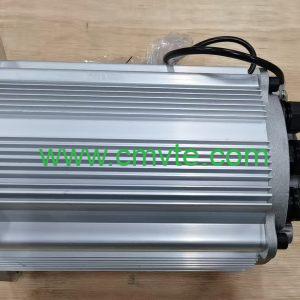

Get a Motor Spec'd for Smooth Low-Speed Drive
Don't gamble your build on a datasheet. Tell us your vehicle, weight, and how you drive it — we will spec a motor with the power you need and the low-speed smoothness your conversion deserves. Ask us for the cogging test data before you buy.
Not sure which motor fits your build? Send your vehicle details and we will recommend a matched motor + controller within 24 hours.
Related guides:

