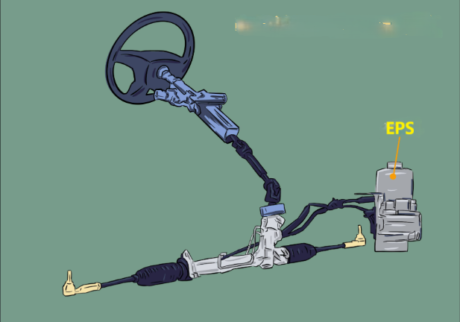
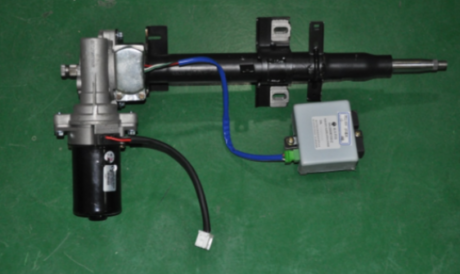
EPS: Which models are leading the silent revolution?

With the deepening of global carbon emission regulations and the wave of intelligent travel, electric power steering system (EPS) is moving from the background to the front stage, leading a silent revolution.

In the wave of electric vehicle, electric power steering system (EPS) has evolved from a simple “labor-saving” tool in the early stage to an “intelligent” core supporting vehicle intelligence and high-level automatic driving. Its technological transition profoundly reflects the internal logic of the transformation of the automotive industry from electrification to intellectualization.

Remember the heaviness of the steering wheel more than a decade ago? Hydraulic system has brought about comfortable changes, but under the goal of “double carbon”, it has become a thing of the past-EPS, with direct and efficient motor power, not only greatly reduces energy consumption, but also becomes the nerve endings of smart cars.

Energy saving, intelligence and safety have become the three key words of global automotive steering technology.

Nowadays, electric power steering system (EPS) has gradually penetrated into the mainstream models from “high-end configuration” and become an indispensable part of the intelligent transformation of automobiles.

Unlike the traditional hydraulic power system, EPS provides steering power directly through the motor, which not only greatly reduces energy consumption, but also deeply cooperates with the automatic driving technology.

So, which models are more inclined to carry EPS? What are the new trends?

Let’s analyze from the three dimensions of technology adaptability, regional market differentiation and technology evolution.

图片1 2

Technical Suitability: Which Models Fit EPS Naturally?

  1. New energy vehicles (pure electric/hybrid)
  • Pure electric vehicle:EPS is the only choice due to the complete abandonment of the engine and the inability to rely on the hydraulic pump to provide power. Its “on-demand energy supply” feature can reduce the energy consumption of the whole vehicle by 3%-5.5%, and directly improve the endurance mileage.
  • Plug-in hybrid vehicles:About 60% of hybrid vehicles use EPS to balance the cooperative work of motor and engine and avoid the problem of continuous energy consumption of hydraulic system.
    1. Compact and economical passenger car
  • Small and medium-sized cars and SUVs are the “main battlefield” of EPS. Its lightweight body has a low demand for steering power, which can be met by EPS small motors, and the cost is controllable. For example, the penetration rate of EPS has exceeded 80% in compact vehicles with a displacement of less than 1.6L in overseas markets.
    1. Intelligent upgrade of high-end luxury models
  • Luxury cars are moving from basic EPS to “variable steering ratio” and “steer-by-wire (SBW)”. By adjusting the steering force and angle through software, it can realize the driving texture of low-speed lightness and high-speed stability, and support ADAS functions such as automatic parking.


Regional Market Differentiation: EPS Popularization in Europe, America and Asia

Region Technical route Policy-driven Typical vehicle preferences
North America EPS dominated (92% penetration) Stringent fuel economy regulations (CAFE standards) Full-size SUV and pickup truck gradually turn to EPS + wire control integration
Europe Transition from EHPS to EPS Euro 7 emission standard, mandatory smart steering in 2028 Medium-sized cars and luxury SUVs are preferentially equipped with intelligent EPS.
Asia Pacific Multi-technology Parallel, China Leads EPS Production Capacity China’s “double integral” policy and demand for hybrid vehicles in Japan Compact electric vehicle, economical hybrid

图片2 2

Technology Evolution: The Core Transition from “Labor Saving” to “Intelligence”

  1. Advantages of energy saving and environmental protection
    EPS eliminates hydraulic oil pumps and hoses, avoids oil leakage pollution, reduces the carbon footprint of the whole life cycle by 25% compared with hydraulic systems, and is more in line with the requirements of the EU Circular Economy Act (95% material recovery rate).
  2. Very high energy efficiency

Compared with the traditional hydraulic power system (HPS), EPS has achieved a qualitative leap. HPS relies on the engine to drive the hydraulic pump continuously, with an efficiency of only 60% -70%, and increases the fuel consumption of the vehicle by 4% -6%. EPS only works by the motor when steering, and does not consume energy when not steering. Its system efficiency can be as high as 90%, and its impact on vehicle energy consumption is minimal (only about 0.5%). This is very important for new energy vehicles pursuing extreme endurance.

  1. Deep collaboration with autopilot
  • L2 auxiliary driving:EPS realizes lane keeping and automatic fine tuning of steering wheel;
  • Level L3 and above:Steer-by-wire (SBW) gradually replaces mechanical transmission, and the response speed reaches millisecond level to meet the requirements of unmanned control.
    1. Customized driving experience
      Through software programming, EPS can provide “comfort” and “sport” modes, such as:
  • Urban congested road section:the steering force is reduced to 2-3 N · m, which can be operated with one hand;
  • High-speed cruise:the steering force is increased to 5-8 N · m to improve the stability.


Function and safety transition of enabling high-level automatic driving

With the improvement of the intelligent level of new energy vehicles, especially the popularization of advanced driving assistance system (ADAS) above L2 level, the role of EPS has undergone a fundamental change. It is no longer just the driver’s “labor-saving assistant”, but also the “intelligent actuator” of the automatic driving system, whose technological evolution revolves around “redundant safety”, “precise control” and “deep interaction”.

  1. Redundant safety design becomes standard:in order to meet the functional safety requirements of L3 and above automatic driving, redundant EPS system emerges as the times require. Its core objective is to ensure that the system can still maintain a certain power capability in the event of a single-point electrical failure, so as to gain time for the driver to take over or the system to enter a safe state. The mainstream scheme adopts a fully redundant architecture with dual three-phase brushless DC motors, dual power supply, dual communication and dual-core MCU (with lock-step core). When one system fails, the other can take over immediately, and the maximum possible loss is only 50% of the power, which guarantees the bottom line of life safety.
  2. The control algorithm is highly complex and intelligent:the EPS algorithm in the intelligent stage is far beyond the basic speed-following assistance. It includes basic power algorithms (such as yaw damping control, active return control, inertia compensation, etc.) aimed at improving handling texture and stability, as well as advanced power functions (such as crosswind compensation, acceleration deviation compensation, road tremor suppression, etc.) to cope with complex working conditions. These algorithms enable EPS to actively identify and compensate for various external disturbances, providing a smoother and safer driving experience.
  3. Deep integration with ADAS/autopilot systems: this is the most central symbol of the “smart” transition. EPS needs to be able to seamlessly respond to the request of the autopilot controller to achieve torque superposition control, steering angle superposition control, absolute steering angle control and other functions. This means that in lane keeping, automatic parking, path tracking and other scenarios, EPS can directly execute precise steering angle or torque commands from the intelligent driving domain, and become the key execution link in the closed-loop control of automatic driving.
  4. High performance iteration of hardware architecture:In order to support the above intelligent functions, the hardware form of EPS is also being upgraded. Rack-assisted (R-EPS) and double-pinion-assisted (DP-EPS) with higher transmission efficiency and stronger carrying capacity are gradually replacing the early steering column-assisted (C-EPS) to meet the needs of heavier new energy body and more accurate and fast force control. At the same time, the computing power demand of the core ECU has also increased from 100 MIPS to more than 500 MIPS to process more complex sensor signals and algorithms.


Future Directions: Smooth Evolution to Steer-by-Wire (SBW)

The ultimate form of the “smart” phase is steer-by-wire (SBW), which eliminates the mechanical connection between the steering wheel and the steering wheel and is controlled entirely by electrical signals.

SBW has the advantages of faster response (Tesla’s response time is shortened to 50ms), flexible arrangement and customizable steering feel, which is the cornerstone of high-level automatic driving and new cockpit design.

From redundant EPS to SBW, it is another revolutionary leap in the degree of “intelligence”.


Future challenges and opportunities

  1. Supply chain risk
  • EPS relies on rare earth permanent magnet motors, while the price of NdFeB materials fluctuates sharply (demand is expected to grow by 170% in 2030), which promotes the development of alternatives such as ferrite motors.
    1. Upgrading of laws and regulations forces technology iteration
  • The United Nations WP.29 Forum intends to incorporate EPS into the mandatory standard of automatic driving.
  • Increased requirements for functional safety certification of ISO 26262 (76% of new systems in 2028 to meet ASIL Level C).
    1. Outbreak of after-sales market
      The global EPS replacement market will reach 2.8 billion US dollars in 2030, but the maintenance technology threshold is high and special diagnostic equipment is needed, which is both a blue sea and a challenge for spare parts suppliers.


EPS — — “Invisible Cornerstone” in the Wave of Automotive Intelligence

The electric power steering system is reshaping the driving experience in the way of “moistening things silently”.

It is not only the “labor-saving tool” of the steering wheel, but also the core carrier for automobile enterprises to achieve carbon emission reduction, intelligent and personalized services.

What we see is not just a technological upgrade, but a new driving philosophy: steering no longer requires brute force, but the art of intelligent power.

From the high efficiency and energy saving of compact electric vehicles to the “variable steering ratio” of luxury cars, EPS is becoming a key partner in energy saving and emission reduction-it reduces the carbon footprint by 25%, conforms to environmental regulations such as “double integral”, and may even make the steering wheel disappear in the future.

The transition of EPS technology from “labor-saving” to “intelligent” is a clear path from improving energy efficiency to ensuring safety, and then from executing instructions to active collaboration.

Driven by the electrification of automobiles, it is eventually reshaped by the demand for intellectualization, evolving from an independent chassis subsystem to the key end of the central nervous system of Intelligent Network United Automobile, and its value has changed from a simple “cost component” to a “core technology” that defines the driving experience and safety level.

As a driver, every light turn reminds us that EPS, a seemingly ordinary component, is silently changing road safety, personalized experience and climate goals.

Previous Post

The Ultimate Guide to Choosing a Vacuum Brake Booster Pump System for Your Toyota Pickup

Next Post

“Electric Transformation” of Million-Yuan Gasoline-Powered Three-Wheeled Vehicles: The Technical Logic and Commercial Value of Retrofit Kits

Leave a Reply

Shopping cart