

The Battery Management System (BMS) is the most important safety component in any lithium battery pack. Its primary job is preventing over-charge and over-discharge — two conditions that can permanently damage cells and, in extreme cases, cause thermal runaway. This guide explains how a BMS protects your battery pack and what to look for when selecting one for your EV conversion.
How Over-Charge and Over-Discharge Damage Cells
Lithium cells have a defined voltage operating window. For LFP cells, the safe range is typically 2.5V-3.65V per cell. For NMC cells, it is 2.7V-4.2V. Charging above the upper limit forces lithium metal plating on the anode, which reduces capacity permanently and can create internal short circuits. Discharging below the lower limit dissolves the copper current collector, causing cell internal resistance to spike and making the cell unusable.
A single over-charge or over-discharge event may not cause immediate failure, but it accelerates capacity loss. Repeated events can lead to cell swelling, electrolyte leakage, or thermal runaway.
Voltage Monitoring and Threshold Setting
The BMS monitors the voltage of every individual cell in the pack through high-precision voltage sensing circuits. Readings are taken every 10-100 milliseconds depending on the BMS design. CMVTE's BMS uses a 16-bit ADC with ±5 mV accuracy across the full temperature range.
Based on the cell chemistry, the BMS stores configurable voltage thresholds:
- Over-voltage protection (OVP): Typically set to 3.65V for LFP, 4.2V for NMC. If any cell exceeds this voltage, the BMS opens the charge contactor.
- Under-voltage protection (UVP): Typically set to 2.5V for LFP, 2.7V for NMC. If any cell drops below this voltage, the BMS opens the discharge contactor.
- Over-voltage warning: A pre-trip threshold set ~50 mV below OVP. The BMS signals the charger to reduce current, avoiding a hard shutoff.
- Under-voltage warning: A pre-trip threshold ~100 mV above UVP. The driver receives a low-SOC warning before the contactor opens.
Over-Charge Protection Sequence
- During charging, the BMS monitors every cell voltage in real time.
- If any cell reaches the OVP threshold, the BMS sends a CAN signal to the charger commanding it to stop charging, or opens the charge contactor directly.
- The BMS latches the fault state until the charger is disconnected and the cell voltage drops below the recovery threshold.
- If the fault persists after recovery attempts, the BMS locks out charging and logs the event.
CMVTE's BMS implements this sequence in under 100 ms from detection to contactor open — fast enough to prevent voltage overshoot even during high-rate DC fast charging.
Over-Discharge Protection Sequence
- During driving, the BMS monitors cell voltages continuously.
- When any cell approaches the UVP threshold, the BMS first sends a warning to the VCU or dashboard display. The driver has time to reduce load or find a charging station.
- If the cell voltage drops to UVP, the BMS opens the discharge contactor. The motor controller receives a torque limit signal, reducing power smoothly before the contactor opens.
- After shutdown, the BMS enters a low-power monitoring state, periodically checking cell voltage. If cells recover above the UVP recovery threshold, the system can be re-enabled after charging.
Cell Balancing
Even cells from the same production batch drift apart over hundreds of cycles. The BMS uses passive balancing — discharging cells that are at higher voltage through a bleed resistor — to keep all cells within 10-20 mV of each other. Balancing occurs during the top of the charge cycle when cells are above 3.4V (LFP) or 3.9V (NMC). CMVTE's BMS has a 100 mA balancing current per cell, sufficient to correct typical drift in a 20-30 kWh pack within a single charge cycle.
Temperature Compensation
Cell voltage readings shift with temperature. A cold cell reads lower voltage than its actual SOC, which can trigger false under-voltage protection. A hot cell reads higher voltage, risking false over-voltage protection. CMVTE's BMS includes temperature compensation algorithms that adjust thresholds based on the pack temperature sensor input.
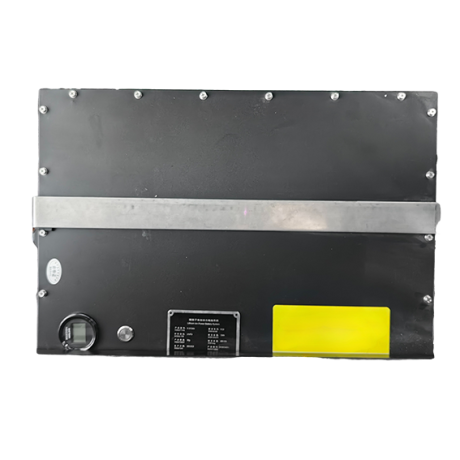
CMVTE Advantage
CMVTE manufactures BMS units designed for EV conversion battery packs from 48V to 800V. Every BMS includes cell voltage monitoring, temperature sensing, passive balancing, CAN bus communication, and programmable OVP/UVP thresholds. Dr. Kevin Wang's engineering team can configure the BMS parameters for your specific cell chemistry and pack configuration.
Tell us your cell type, pack voltage, and capacity — we will recommend the right BMS configuration


