

The Toyota MR2 is one of the best sports cars for EV conversion — it's light (~1,100 kg), mid-engine, and has a dedicated fan base. But its tight engine bay and critical weight distribution make battery selection trickier than in a front-engine car. Pick the wrong pack and you'll ruin the handling that makes the MR2 special. Here's how to get it right.
Why the MR2 Is Different
| Factor | MR2 (SW20) | Typical Front-Engine Car |
|---|---|---|
| Curb weight | ~1,100-1,200 kg | ~1,500-2,000 kg |
| Battery location options | Frunk + engine bay (split) | Engine bay + underfloor |
| Motor location | Mid/rear (replaces engine) | Front (replaces engine) |
| Weight distribution target | 40/60 front/rear (stock) | 55/45 front/rear |
| Battery space | ~120L frunk + ~80L engine bay | ~200-300L total |
The MR2's mid-engine layout means you can split the battery pack — one module in the frunk, one in the engine bay — to maintain near-stock weight distribution. A single large pack placed entirely in the frunk makes the front end too heavy and ruins turn-in.
CMVTE Battery Options for the MR2
| Pack | Voltage | Capacity | Weight | Dimensions (approx) | Best Location | Est. Range (MR2) | Price |
|---|---|---|---|---|---|---|---|
| 96V 100Ah LFP | 96V | 9.6 kWh | ~65 kg | 520×300×180 mm | Frunk | 40-55 km | $3,000-$4,000 |
| 144V 105Ah LFP | 144V | 15.1 kWh | ~95 kg | 650×350×200 mm | Frunk + engine bay (1 box each) | 65-85 km | $5,000-$6,500 |
| 169.6V 105Ah LFP | 169.6V | 17.8 kWh | ~110 kg | 700×380×220 mm | Split: 60% frunk, 40% engine bay | 80-100 km | $6,000-$7,500 |
Recommended for most MR2 builds: 144V 105Ah LFP split between frunk and engine bay. This keeps the front/rear weight balance close to stock, delivers 80 km of fun driving, and pairs perfectly with a 25-30 kW PMSM motor.
Where the Battery Goes: MR2-Specific Placement
Frunk (Front Trunk)
- Available space: ~120L, roughly 700×400×250 mm
- Max pack size: Up to 12 kWh comfortably
- Pros: Easy access, short cable run to front accessories, well-ventilated
- Cons: Adding weight to the front changes steering feel; keep it under 80 kg in the frunk
Engine Bay (Behind the seats)
- Available space: ~80L after removing the engine, ~500×400×200 mm
- Max pack size: Up to 8 kWh
- Pros: Keeps weight near the rear axle where the MR2 needs it for traction
- Cons: Tight space for cooling; use LFP (passive cooling) not NMC (needs liquid cooling)
Recommended Split Configuration
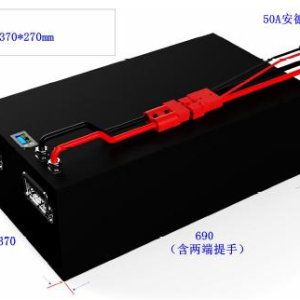
60% frunk / 40% engine bay. Using a 144V 105Ah pack split into two boxes:
- Frunk box: 96V 70Ah module (60% of cells) — ~55 kg
- Engine bay box: 48V 105Ah module (40% of cells) — ~40 kg
- Total: ~95 kg, distributed 55/45 front/rear — very close to the stock MR2 balance
Chemistry Choice for MR2
| Factor | LFP (Recommended) | NMC |
|---|---|---|
| Thermal management | Passive — no liquid cooling needed | Active — requires cooling lines in tight spaces |
| Weight for 15 kWh | ~95 kg | ~65 kg |
| Cycle life | 3,000-5,000 | 1,000-2,000 |
| Fit in MR2 engine bay | Easier — no cooling hardware needed | Harder — must fit radiator, pump, hoses |
| Cost per kWh | $280-$350 | $380-$500 |
LFP is the right choice for the MR2 because the engine bay has no room for liquid cooling hardware. NMC's weight advantage matters less in a car that already weighs only 1,100 kg.
What You Need from CMVTE
- LFP Battery Pack — 96V, 144V, or 169.6V, with integrated BMS and CAN bus
- Split-pack harness — pre-made HV cabling to connect frunk and engine bay modules
- BMS with CAN — communicates with CMVTE motor controller and display for real-time SOC
- Charger — 3.3 kW OBC matched to your pack voltage
Build Your MR2 Battery System
Send us your MR2 generation (AW11 / SW20 / ZZW30), target range, and motor power. We'll design a split-pack configuration with exact dimensions, weight distribution calculations, and a firm price.
WhatsApp / Phone: +86 181 2358 8272
Email: [email protected]
Mention "MR2 Battery" so our team knows you need a mid-engine split-pack configuration.

